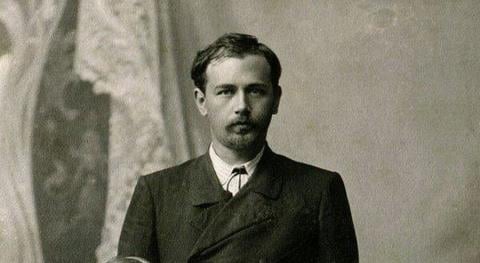
Mykola Leontovych – A Complete Biography
Introduction
Mykola Leontovych stands among the most cherished figures in Ukrainian classical music, remembered as both a talented composer and a national symbol of artistic identity. Best known internationally for his choral masterpiece “Shchedryk”—which became the famous “Carol of the Bells”—Leontovych’s work embodies the rich folk traditions and spiritual depth of his homeland. His career as a composer, conductor, and teacher reflects a life devoted to nurturing Ukrainian music during a period of profound political and cultural change. Despite his tragic and untimely death, Leontovych’s legacy continues to resonate worldwide through the enduring beauty of his melodies and the patriotic spirit of his compositions.
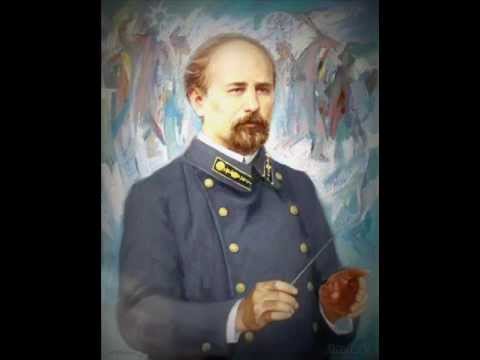
Childhood
Mykola Dmytrovych Leontovych was born on December 13, 1877 (December 1, Old Style), in the village of Monastyrok, in the Podolia region of Ukraine, then part of the Russian Empire. He was born into a deeply musical family; his father, Dmytro Leontovych, was a village priest who also played several instruments and composed church music. His mother, Mariya, encouraged his musical curiosity, fostering a warm home environment filled with song.
From an early age, Mykola was exposed to both sacred and folk music. His father often trained local choirs, and young Leontovych quickly learned to sing and play the violin. These early experiences shaped his lifelong devotion to vocal music and Ukrainian folk traditions. Even as a child, he demonstrated an ear for harmony and a fascination with the distinctive rhythms of his native land’s songs.
Youth
Leontovych’s formal education began at the Sharhorod Theological School, where he studied between 1887 and 1892. There, his talent for music flourished alongside his academic studies. Encouraged by teachers and classmates, he became active in the school choir and began arranging folk songs for small ensembles.
In 1892, he entered the Kamianets-Podilskyi Theological Seminary, following the family tradition of preparing for the priesthood. However, his passion for music soon eclipsed his religious studies. During his seminary years, Leontovych deepened his understanding of harmony, counterpoint, and composition. He began arranging folk songs not merely as transcriptions but as creative reimaginings—imbuing them with polyphonic sophistication while preserving their folk character. This approach would later become a defining feature of his mature style.
After graduating in 1899, he chose not to pursue ordination, instead dedicating his life to music and education.
Adulthood
Leontovych’s early professional life was shaped by his work as a teacher and choral conductor. Between 1901 and 1904, he taught in various schools throughout Podolia, Poltava, and Kyiv provinces, spreading his passion for choral music among students and communities. His teaching philosophy emphasized not only technical skill but also the cultural and emotional power of folk traditions.
In 1904, he married Claudia Zhovtenko, and together they had two daughters. His family life was modest but filled with music and creativity. Around this time, he also began corresponding with the prominent Ukrainian composer Mykola Lysenko, who became an important mentor and supporter. Lysenko encouraged Leontovych to pursue formal studies in music theory and composition and introduced him to broader artistic circles.
Leontovych continued to refine his musical style while studying at the St. Petersburg Court Chapel and later through self-guided study. He gradually became recognized as one of Ukraine’s leading arrangers of folk songs. His work combined academic rigor with heartfelt lyricism, transforming simple melodies into complex choral masterpieces.
In the 1910s, Leontovych taught at the Kyiv Theological Academy and collaborated with numerous choirs and cultural organizations. His arrangements and original works gained popularity across Ukraine, celebrated for their elegance, clarity, and distinctly national spirit.
Major Compositions
Leontovych’s creative output centers primarily on choral music, particularly arrangements of Ukrainian folk songs. His best-known piece, “Shchedryk”, composed in 1914 and revised in 1916, exemplifies his mastery of polyphonic texture and rhythmic vitality. The song’s lilting ostinato and joyful character made it a national favorite. In 1921, American composer Peter J. Wilhousky adapted “Shchedryk” into “Carol of the Bells”, giving Leontovych’s music international fame.
Beyond “Shchedryk”, Leontovych composed numerous other remarkable works, including “Dudaryk” (“The Duda Player”), “Oi, Hlybe, Hlybe” (“Oh, Deep Water”), and “Preliud”. His sacred choral compositions, such as “Khrystos Voskres” (“Christ Is Risen”) and “Liturgical Music in the Ukrainian Rite”, reflect his deep spiritual faith and his effort to modernize Ukrainian church music.
In his later years, he also began work on an opera titled “Na Rusalchyn Velykden” (“On the Mermaid’s Easter”), based on a story by Borys Hrinchenko. Left unfinished at his death, it was later completed by his contemporaries and performed posthumously.
Leontovych’s choral music stands out for its use of folk modes, delicate dissonances, and rich textures that evoke both the beauty and melancholy of Ukrainian life. His works remain central to Ukrainian choral repertoire and are performed around the world.
Death
Mykola Leontovych’s life was tragically cut short during one of the most turbulent periods in Ukrainian history. On January 23, 1921, while visiting his family in the village of Markivka, he was murdered by a Soviet agent who had been given shelter in their home under the guise of a traveler. The assassin robbed the family and shot Leontovych in his sleep. He was only 43 years old.
His death shocked the Ukrainian artistic community. Many saw it as emblematic of the political repression and cultural destruction that accompanied the early Soviet era. Despite his peaceful nature and dedication to education and art, Leontovych became one of the countless victims of political violence during this time.
Conclusion
Mykola Leontovych’s life and work represent the soul of Ukrainian choral art—a blend of faith, folk tradition, and creative innovation. Through his sensitive arrangements and original compositions, he elevated the humble melodies of rural Ukraine to the level of world-class art. His “Shchedryk” continues to ring out every holiday season around the world, a timeless echo of his genius.
Although his career was brief, Leontovych’s influence endures in the hearts of musicians, scholars, and listeners alike. He remains not only a national hero of Ukraine but also a symbol of how music can preserve and celebrate a people’s spirit, even in times of great adversity.
Comments are closed