
Reinhold Glière – A Complete Biography
Introduction
Reinhold Moritzevich Glière (1875–1956) was a prominent Russian and Soviet composer renowned for his contributions to the Romantic and early Soviet musical traditions. His works are celebrated for their lush orchestration, expansive structures, and integration of folk elements from various Soviet republics. Despite the political upheavals of his time, Glière maintained a prolific output and played a significant role in shaping Soviet music.
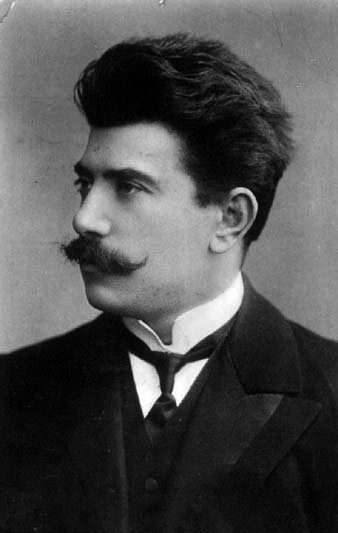
Childhood
Born on January 11, 1875, in Kyiv, then part of the Russian Empire, Glière hailed from a family with a rich musical heritage. His father, Ernst Moritz Glier, was a skilled wind instrument maker from Klingenthal, Germany, who had emigrated to the Russian Empire. His mother, Józefa Korczak, was of Polish descent. Growing up in this environment, Glière was immersed in music from an early age. He began his formal music education at the Kyiv Music School in 1891, where he studied violin under the guidance of the esteemed teacher Otakar Ševčík.
Youth
In 1894, Glière moved to Moscow to attend the prestigious Moscow Conservatory. There, he studied under notable instructors such as Sergei Taneyev (counterpoint), Mikhail Ippolitov-Ivanov (composition), and Jan Hřímalý (violin). His education at the conservatory laid a solid foundation for his compositional skills. Upon graduating in 1900, Glière composed his first symphony and began to establish himself as a promising young composer.
Adulthood
After completing his studies, Glière embarked on a career that combined composition with teaching. He accepted a teaching position at the Moscow Gnesin School of Music, where he mentored several future luminaries, including Sergei Prokofiev and Nikolai Miaskovsky. In 1905, he furthered his studies in Berlin, focusing on conducting under the tutelage of Oskar Fried. Returning to Russia in 1908, Glière continued his teaching and composing endeavors.
Glière’s compositional output during this period was diverse, encompassing symphonic works, chamber music, and operas. Notably, his Symphony No. 3 in B minor, Op. 42, titled “Ilya Muromets,” completed in 1911, stands as a monumental work in the Russian symphonic tradition. The symphony, inspired by the legendary hero Ilya Muromets, is characterized by its grand scale and vivid orchestration.
Major Compositions
Glière’s oeuvre is extensive and varied, reflecting his versatility as a composer. His major works include:
- Symphony No. 3 in B minor, Op. 42 (“Ilya Muromets”): A monumental symphony inspired by the legendary Russian hero, showcasing Glière’s mastery in orchestration.
- The Red Poppy (Krasny Tsvetok): A ballet composed in 1927, recognized as the first Soviet ballet with a modern revolutionary theme. The ballet’s “Russian Sailor’s Dance” became a signature piece, celebrated for its vibrant energy.
- Harp Concerto in B-flat major, Op. 74: Completed in 1938, this concerto is one of the few in the harp repertoire, noted for its lyrical beauty and technical demands.
- Horn Concerto in B-flat major, Op. 91: Composed in 1951, this concerto is a significant addition to the horn repertoire, admired for its expressive depth.
- Opera Shakh-Senem: An opera based on Azerbaijani folk themes, marking a significant contribution to the national opera traditions of the Soviet republics.
Throughout his career, Glière also composed numerous chamber works, songs, and educational pieces, contributing to the development of Soviet music education.
Death
Reinhold Glière passed away on June 23, 1956, in Moscow, at the age of 81. His death marked the end of an era in Russian and Soviet music, as he was one of the last prominent composers to have been active before the Russian Revolution. Glière was laid to rest at the Novodevichy Cemetery in Moscow, a final resting place for many notable Russian cultural figures.
Conclusion
Reinhold Glière’s legacy as a composer is marked by his ability to blend the rich traditions of Russian Romanticism with the evolving demands of Soviet musical ideology. His works continue to be celebrated for their melodic richness, structural complexity, and orchestral brilliance. As a teacher, he influenced a generation of composers who would go on to shape the future of Soviet music. Despite the political challenges of his time, Glière’s commitment to his artistic vision ensured his place as a central figure in the history of Russian and Soviet classical music.
Comments are closed