Vasily Kalinnikov – A Complete Biography
Introduction
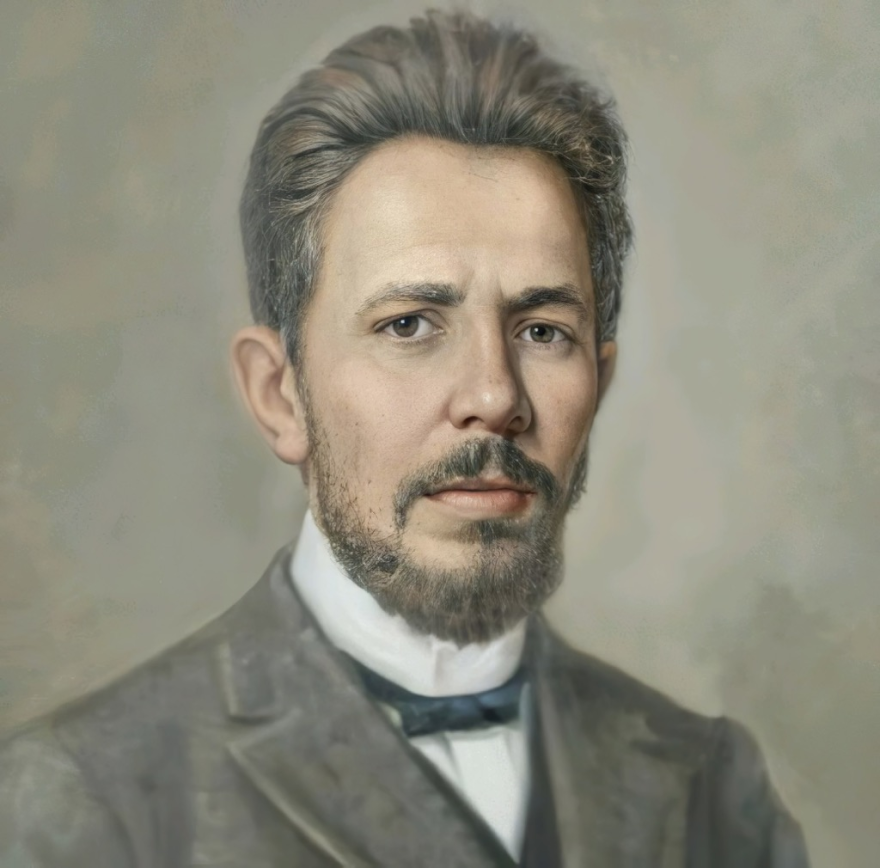
Vasily Sergeyevich Kalinnikov (1866–1901) was a Russian composer whose brief but brilliant career left an indelible mark on the Russian Romantic tradition. Despite a life tragically cut short by illness, his body of work, particularly his two symphonies, is celebrated for its expressive melodies, lush orchestration, and deep connection to Russian folksong. His musical style, while clearly influenced by his contemporaries such as Pyotr Ilyich Tchaikovsky and Nikolai Rimsky-Korsakov, possesses a distinctive warmth and lyrical quality that secures his place among the promising composers of the late 19th century. Kalinnikov’s legacy is a testament to unfulfilled potential, a collection of works that hint at the greatness he might have achieved had he been granted a longer life.
Childhood
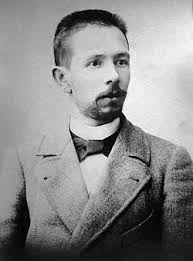
Vasily Kalinnikov was born on January 13, 1866 (January 1, Old Style), in the village of Voina, located in the Oryol District of the Russian Empire. He came from humble beginnings, the son of a police official, and his early life was marked by the financial constraints typical of a family of modest means. Despite these limitations, his innate musical talent became apparent early on. His formal education began at the seminary in Oryol, where his gifts quickly led to a significant responsibility: by the age of fourteen, the young Kalinnikov was appointed the director of the seminary’s choir. This early experience provided him with valuable practical training in choral music and conducting, laying the foundation for his future career in composition.
Youth
Driven by his ambition to pursue serious musical studies, Kalinnikov moved to Moscow. His initial goal was to enroll at the prestigious Moscow Conservatory, but he was ultimately unable to afford the tuition fees. This financial barrier forced him to seek an alternative path. Fortunately, his talent earned him a scholarship to the Moscow Philharmonic Society School, where he was able to continue his education. There, he studied composition under the tutelage of Alexander Ilyinsky, a respected figure in the Russian musical world. To support himself during his studies, Kalinnikov took on various arduous and low-paying jobs, including playing bassoon, timpani, and violin in theater orchestras, and working as a music copyist. These years were characterized by a constant struggle against poverty, a struggle that would tragically contribute to his later health decline.
Adulthood
Kalinnikov’s professional prospects brightened considerably in 1892 when he received a crucial endorsement from the most influential composer of the time, Pyotr Ilyich Tchaikovsky. Tchaikovsky, recognizing Kalinnikov’s promise, recommended him for the position of main conductor at the Maly Theatre in Moscow, and later that same year, for a similar role at the Moscow Italian Theatre. This period marked the beginning of his professional conducting career and his emergence in the capital’s musical life. However, his success was short-lived. The years of financial hardship and overwork had taken a severe toll on his health, and he contracted tuberculosis, a disease that was then incurable. By 1893, his worsening condition forced him to resign from his conducting appointments. On the advice of his doctors, he relocated to the warmer, more temperate climate of Yalta in the Crimea, where he would spend the remainder of his life. Despite his debilitating illness, this move to Yalta became his most productive period for composition. It was here that he wrote the majority of his works, including his two symphonies. During his time in Yalta, he was also in the company of other famous Russian figures suffering from the same disease, such as the writer Anton Chekhov and the playwright Maxim Gorky.
Major Compositions
Kalinnikov’s relatively small output is dominated by his orchestral works, which are highly regarded for their melodic invention and masterful orchestration.
| Composition | Genre | Completion Year | Notable Features |
| Symphony No. 1 in G minor | Symphony | 1894–1895 | His most famous work; features a sweeping, distinctly Russian main theme in the first movement and a vibrant, celebratory finale. |
| Symphony No. 2 in A major | Symphony | 1895–1897 | A more introspective work, dedicated to his friend and former teacher Semyon Kruglikov. |
| Tsar Boris | Incidental Music | 1898–1899 | Music for the tragedy by Alexey Tolstoy, showcasing his dramatic flair. |
| The Cedar and the Palm | Symphonic Picture | 1898 | Based on a poem by Heinrich Heine, an example of his pictorial, programmatic music. |
The Symphony No. 1 brought him his first major public success after its premiere in Kyiv in 1897. The work was quickly taken up and performed in major European cities like Vienna, Berlin, and Paris, establishing his reputation internationally. The success of his music was also aided by the support of his friends and colleagues, notably Sergei Rachmaninoff, who helped ensure his works were published and performed.
Death
Vasily Kalinnikov’s life was tragically brief. After years of battling tuberculosis in the Crimean climate, his health deteriorated rapidly. He died in Yalta on January 11, 1901, just two days before his 35th birthday. His death was a profound loss to the Russian musical world. Following his passing, his publisher, P. Jurgenson, who had previously bought a few of his songs, acquired his remaining works, including the Symphony No. 2, for a considerable sum from his widow. The publisher reportedly commented that the composer’s death had “multiplied the value of his works by ten,” a somber reflection on the posthumous recognition his talent received.
Conclusion
Although his life ended prematurely, Vasily Kalinnikov’s music continues to hold a cherished place in the Russian repertoire. His First Symphony, in particular, remains a staple of concert programs in Russia and is occasionally performed by orchestras worldwide. His style is characterized by a seamless blend of the Russian nationalist school’s melodic richness and the emotional depth of the late Romantic era. The enduring appeal of his music lies in its sincerity, its vibrant use of orchestration, and its unmistakably Russian soul. Kalinnikov’s story is a poignant reminder of a gifted composer who, despite facing immense personal adversity and a debilitating illness, managed to produce works of lasting beauty and emotional power, leaving behind a legacy that continues to resonate with audiences more than a century later.
Comments are closed