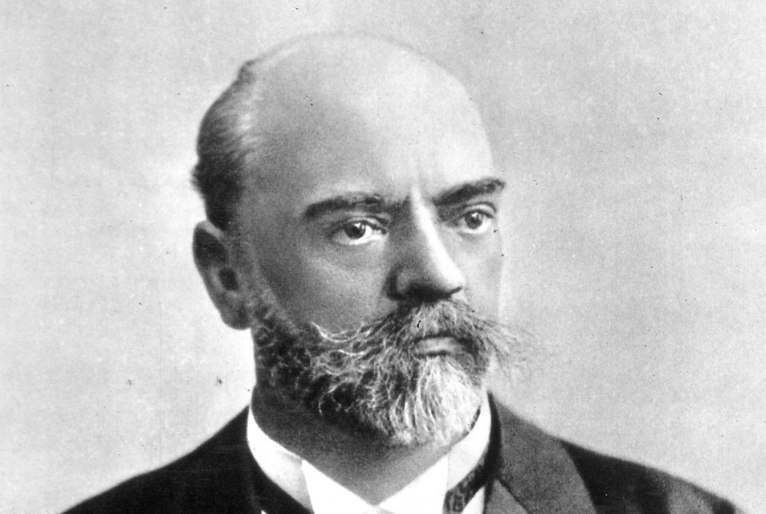
Antonín Dvorak – A Complete Biography
Introduction
Antonín Dvořák stands among the most beloved composers in Western classical music, distinguished for his ability to combine Bohemian folk melody, classical form, and expressive emotional depth. His music bridges national traditions and global appeal, making him one of the prominent figures of the late Romantic era. Unlike many of his contemporaries, Dvořák achieved widespread recognition during his lifetime, celebrated for music that was both original and instantly accessible. Over the course of his career, he produced symphonies, operas, chamber works, concertos, sacred music, and choral compositions that continue to be performed worldwide. His blend of folk-inspired lyricism with masterful orchestration made him a crucial figure in elevating Czech national music to international prominence.

Childhood
Antonín Leopold Dvořák was born on September 8, 1841, in the small village of Nelahozeves, near Prague, then part of the Austrian Empire. His family was modest in means but rich in cultural tradition. His father was an innkeeper and butcher who also played the zither, filling the household with music. Dvořák grew up immersed in the rhythms and melodies of Bohemian village life—polkas, dances, and folk songs that would later form the backbone of his musical voice.
Recognizing his son’s musical aptitude, Dvořák’s parents allowed him to take violin lessons at the age of six. He excelled quickly, showing natural musical sensitivity and an exceptional ear. Although his family initially hoped he would take over the family business, it became clear that his true talents lay elsewhere. By his early teens, Dvořák had begun to study not only violin but also organ, harmony, and musical theory, setting the foundation for a future professional career.
Youth
In 1857, at the age of sixteen, Dvořák entered the Prague Organ School, one of the principal musical institutions in the region. Here he studied performance, composition, and counterpoint with great seriousness. Although his early works remained largely academic, classmates and teachers noted his strong work ethic and ambition.
After graduating in 1859, he joined Karel Komzák’s Bohemian Provisional Theater Orchestra as a violist. This ensemble eventually came under the direction of Bedřich Smetana, a leading figure in Czech national music. Performing daily under Smetana’s baton exposed Dvořák to new orchestral colors, operatic structures, and the expressive possibilities of Romantic music. At the same time, he earned additional income by teaching and playing in small ensembles, slowly gaining confidence as a composer.
During these early years, Dvořák wrote chamber pieces, songs, and symphonic works, though most went unnoticed. Financial hardship and professional obscurity marked this period, but it was vital in shaping his musical identity. His growing interest in integrating Czech folk elements into classical forms became increasingly apparent.
Adulthood
Dvořák’s fortunes changed dramatically in the 1870s. After submitting compositions to a competition intended to assist young artists, he began receiving government stipends that alleviated financial pressure and attracted the attention of influential musicians. One of the judges, Johannes Brahms, became an ardent supporter and introduced Dvořák’s work to major publishers. This exposure helped launch Dvořák onto the international stage.
By the 1880s, Dvořák was hailed as one of Europe’s leading composers. His “Slavonic Dances” charmed audiences with their rhythmic vitality and melodic inventiveness, while works such as the Seventh Symphony, Stabat Mater, and various chamber compositions solidified his reputation. He toured England multiple times, where he enjoyed great popularity and received honorary degrees from major universities.
In 1892, Dvořák accepted an invitation to direct the National Conservatory of Music in New York City. His time in America proved profoundly influential. Encouraged to help develop a distinctly American classical style, he became fascinated with African American spirituals and Native American melodies. These influences culminated in his Symphony No. 9, “From the New World,” which became one of the most celebrated symphonies ever written.
Returning to Bohemia in 1895, he spent his later years writing operas and symphonic poems and serving as director of the Prague Conservatory. Despite his fame, he remained personally modest, devoted to family, teaching, and the musical life of his homeland.
Major Compositions
Dvořák’s output is remarkable in breadth, beauty, and originality. Among his most important works are:
Symphonic Works
- Symphony No. 9 in E minor, “From the New World” – Inspired by Dvořák’s experiences in America, it blends classical structure with spiritual-like melodies and evocative orchestral color.
- Symphony No. 7 – A powerful and dramatic work considered one of his finest achievements in the form.
- Symphony No. 8 – Brighter and more pastoral, reflecting the rich natural beauty of the Czech countryside.
Concertos
- Cello Concerto in B minor – Widely regarded as the greatest cello concerto ever written.
- Violin Concerto in A minor – A virtuosic yet melodic work influenced by Slavic folk rhythms.
Chamber Music
- String Quartet No. 12, “American” – Composed during his stay in the United States; filled with open, spacious melodies.
- Piano Quintet No. 2 – A cornerstone of Romantic chamber music.
- Dumky Trio – A uniquely structured and deeply expressive work based on the Slavic “dumka.”
Vocal and Choral Music
- Stabat Mater – A moving sacred composition written after the loss of his children.
- Requiem – A masterpiece of solemn beauty.
- Songs My Mother Taught Me – One of his most beloved lyrical creations.
Operas and Symphonic Poems
- Rusalka – His most successful opera, including the famous aria “Song to the Moon.”
- The Water Goblin, The Noon Witch, and The Golden Spinning Wheel – Symphonic poems inspired by Czech folklore.
Through these works and many others, Dvořák demonstrated a remarkable mastery of melody, form, and orchestration, making him one of the essential composers of the Romantic era.
Death
Antonín Dvořák remained active and respected until his final days. In the early months of 1904, he suffered a brief illness, likely due to complications from influenza. He died on May 1, 1904, in Prague, surrounded by family. His passing was widely mourned across Europe and the United States. Thousands attended his funeral, and he was buried in the Vyšehrad Cemetery, final resting place of many great Czech artists.
Conclusion
Antonín Dvořák’s legacy stands as a testament to the power of national identity blended with universal human expression. His music, rooted in the landscapes and traditions of his Czech homeland, resonates far beyond national borders. With its lyrical beauty, rhythmic vitality, and emotional honesty, his oeuvre continues to inspire musicians, scholars, and audiences around the world.
Dvořák’s ability to elevate folk material into symphonic art, his influential role in shaping American classical identity, and his extraordinary melodic gift secure his place as one of the greatest composers of the Romantic era. More than a century after his death, his music remains vibrant, beloved, and essential.
Comments are closed