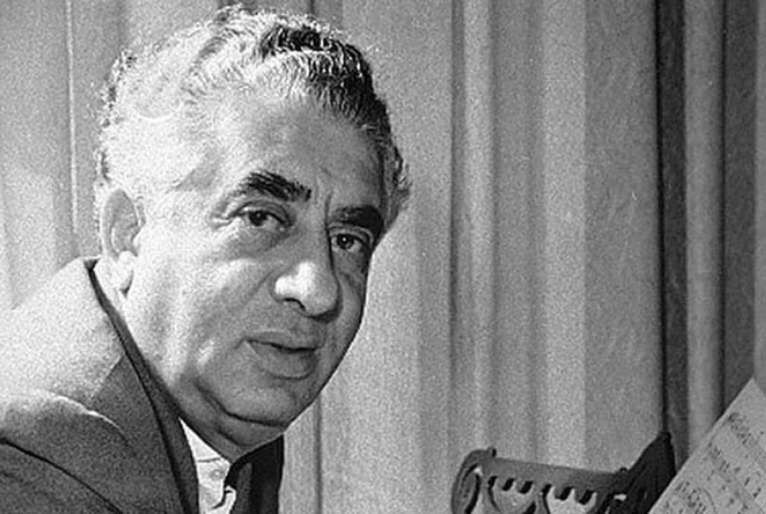
Aram Khachaturian – A Complete Biography
Introduction
Aram Khachaturian stands as one of the most influential composers of the twentieth century and the foremost musical figure of modern Armenia. His works are distinguished by their brilliant orchestration, vibrant rhythmic language, and deeply expressive melodies rooted in the musical folklore of the Caucasus. Over a career that spanned six decades, he produced ballets, symphonies, concertos, film scores, chamber works, and incidental music that helped define Soviet musical identity while simultaneously articulating a distinct Armenian national voice. His ballet Gayane—especially its famed “Sabre Dance”—became an international phenomenon, and his broader oeuvre established him as a central figure of twentieth-century orchestral and theatrical music.
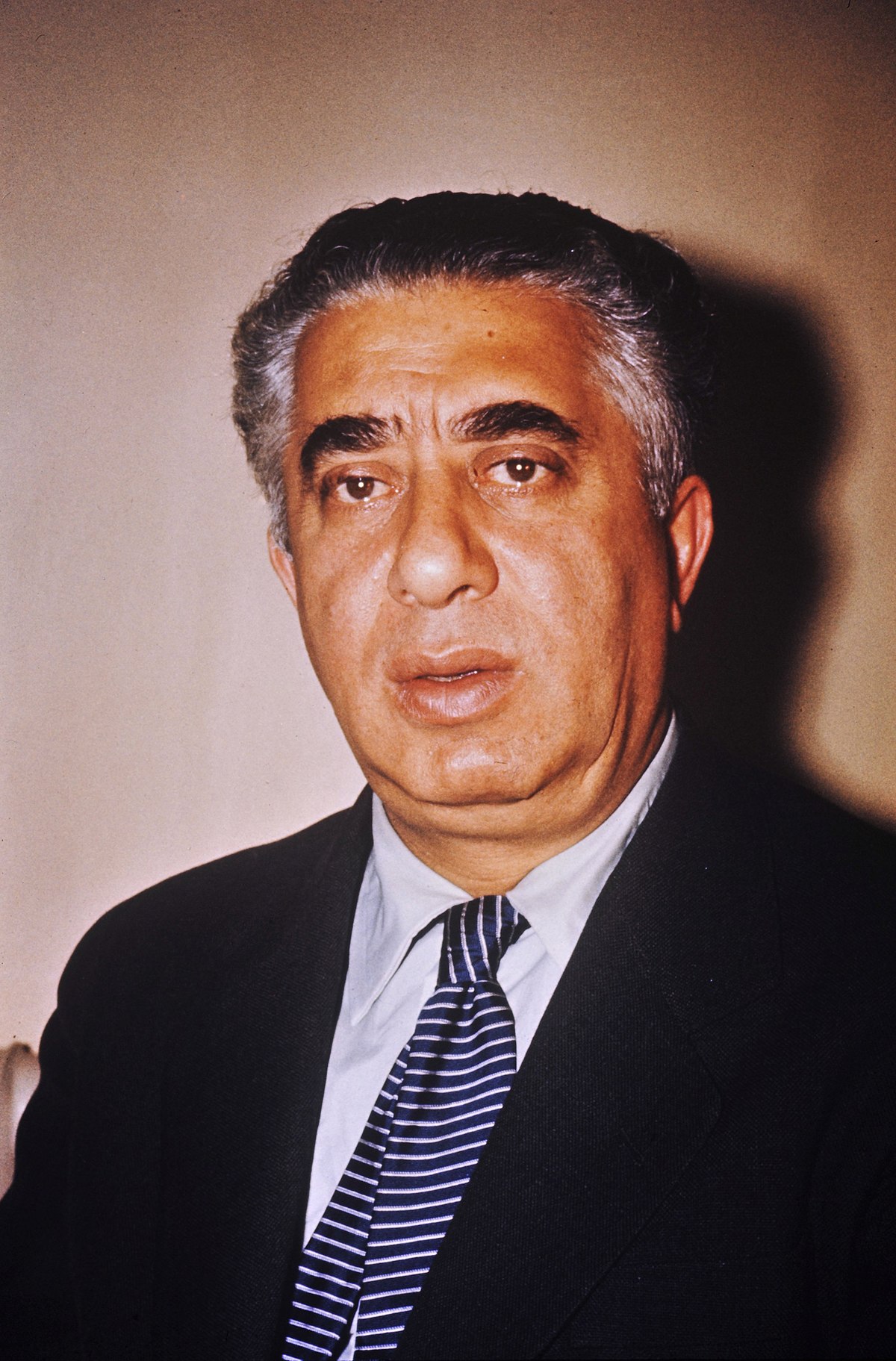
Childhood (1903–1918)
Aram Ilyich Khachaturian was born on June 6, 1903, in Tiflis (present-day Tbilisi, Georgia), a multicultural center of the Caucasus within the Russian Empire. His parents were Armenian immigrants who raised their four sons in a close-knit household steeped in Armenian traditions. Although the family was not affluent, Khachaturian’s youth was filled with exposure to a wide variety of musical influences. The multicultural atmosphere of Tiflis—where Armenian, Georgian, Azerbaijani, Persian, Kurdish, and Russian traditions converged—provided him with an unusually rich sonic environment.
Khachaturian demonstrated an early interest in music, particularly folk songs and the timbres of Eastern instruments, yet he did not receive formal musical training during childhood. Instead, he absorbed musical impressions naturally through community festivals, street musicians, liturgical chant, and the lively musical culture of the city. He also learned to play the bugle and later the tuba during his school years, experiences that cultivated his affinity for powerful orchestral colors—a hallmark of his mature style.
The political upheavals of the early twentieth century, including the collapse of the Russian Empire and the turmoil following the 1917 Revolution, shaped the young Khachaturian’s worldview but also disrupted the rhythm of daily life in Tiflis. Nevertheless, he remained deeply connected to the arts, attending theater performances and concerts whenever he could.
Youth (1918–1929)
In 1921, Khachaturian moved to Moscow, following his older brother Suren, who had already established himself in the theatrical world. At first, Aram intended to pursue a career in the sciences, enrolling in the biology department of Moscow State University. However, his enduring fascination with music soon redirected his ambitions.
Khachaturian entered the Gnessin Musical Institute, initially studying cello before transitioning to composition under the guidance of Mikhail Gnessin. Gnessin, himself deeply connected to Jewish folk traditions, encouraged Khachaturian to embrace the Armenian folk idioms that had shaped his early experiences. This period marked the beginning of the composer’s lifelong integration of national folk elements with Western classical forms.
In 1929, Khachaturian was admitted to the Moscow Conservatory, where he studied under leading figures of Soviet music, including Nikolai Myaskovsky. His early works from this period—including the Trio for Clarinet, Violin, and Piano and the Dance Suite—demonstrated an extraordinary sense of rhythm, color, and thematic invention. His talent quickly brought him recognition within the conservatory and the broader Soviet cultural establishment.
Adulthood (1929–1978)
Khachaturian’s professional career advanced rapidly. During the 1930s, he produced a series of compositions that established him as one of the most promising young voices in Soviet music. His First Piano Concerto (1936) achieved remarkable success, earning widespread admiration for its virtuosity and bold folk-inspired gestures. Shortly thereafter came the Violin Concerto (1940), composed for the celebrated violinist David Oistrakh. The work reinforced his growing reputation for melodic immediacy and emotional vigor.
During World War II, Khachaturian contributed to the Soviet war effort by writing patriotic music and continuing his concert activity. His Second Symphony (1943), often called the “Symphony with Bells,” expressed the anguish and determination of the wartime Soviet Union and was widely performed.
The composer’s career faced a significant setback in 1948 when he, along with Shostakovich and Prokofiev, was denounced in the Zhdanov Decree for alleged “formalism.” Khachaturian responded with public contrition, but he privately disagreed with the accusations and continued refining his musical language. By the early 1950s, he was fully rehabilitated by Soviet authorities, due in part to his contributions to film music and his growing stature as a national cultural icon.
Khachaturian spent much of the 1950s and 1960s teaching at the Moscow Conservatory and the Gnessin Institute. He also traveled internationally, representing Soviet music abroad, and served in several prominent cultural leadership roles. Throughout adulthood, he remained committed to integrating Armenian musical idioms into classical structures, believing that national identity and universal artistic expression were mutually reinforcing.
Major Compositions
Aram Khachaturian’s oeuvre is extensive, yet several works stand out for their historical impact, artistic ingenuity, and enduring popularity.
Ballets
- Gayane (1942)
Gayane remains Khachaturian’s best-known work. Its dynamic score blends Armenian, Kurdish, and Georgian folk elements with modern orchestral techniques. The “Sabre Dance,” a wildly energetic movement, achieved global fame and has been featured in countless cultural contexts. - Spartacus (1954; revised 1968)
This ballet, based on the story of the Thracian gladiator who led a rebellion against Rome, represents Khachaturian’s grandest theatrical achievement. Its “Adagio of Spartacus and Phrygia” is celebrated for its sweeping lyricism and remains a staple of symphonic concerts and recordings.
Concertos
- Piano Concerto in D-flat major (1936)
A virtuosic and rhythmically charged masterpiece that helped launch Khachaturian’s international career. - Violin Concerto in D minor (1940)
Commissioned by David Oistrakh, this concerto blends folk-inflected themes with dazzling technical demands, making it a cornerstone of the twentieth-century violin repertoire. - Cello Concerto in E minor (1946)
Although less frequently performed than the earlier concertos, this work demonstrates expressive intensity and sophisticated orchestration.
Orchestral Works
- Symphony No. 2, “The Symphony with Bells” (1943)
A war-time symphony reflecting tragedy, resilience, and national spirit. - Symphony No. 3 (1947)
Originally conceived as a celebratory piece, it incorporates an organ and a large brass section to create monumental sonorities.
Chamber and Incidental Music
Khachaturian also contributed significantly to theater and film music, producing scores that conveyed drama through inventive orchestral textures. His early Trio for Clarinet, Violin, and Piano (1932) remains a favorite in chamber repertoire for its rhythmic vitality.
Death (1978)
Aram Khachaturian died on May 1, 1978, in Moscow after several years of declining health. He was 74. His passing marked the end of an era in Soviet music, as he was among the last surviving composers of the generation that had shaped Soviet musical identity before, during, and after World War II. He was buried with state honors at the Komitas Pantheon in Yerevan, Armenia, signifying his status as a national cultural hero.
Conclusion
Aram Khachaturian occupies a singular position in twentieth-century classical music. His works synthesize Armenian folk traditions with Western classical structures and Soviet artistic ideals, creating a repertoire distinguished by its dynamism, color, and emotional directness. His ballets and concertos, in particular, continue to resonate with global audiences, while his contributions as a teacher, cultural ambassador, and national icon ensure his enduring legacy.
Khachaturian’s music exemplifies the power of cultural identity expressed through modern orchestral art. His ability to transform the vibrant musical landscape of the Caucasus into symphonic language places him among the most innovative and expressive composers of his time. His legacy remains firmly rooted not only in Armenia and Russia but across the international musical community.
Comments are closed