
Arcangelo Corelli – A Complete Biography
Introduction
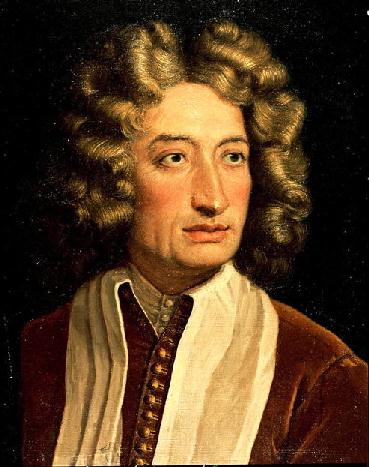
Arcangelo Corelli (February 17, 1653 – January 8, 1713) is widely regarded as one of the most important composers and violinists of the Baroque era. His published works, though few in number, played a decisive role in shaping the development of the sonata and concerto genres, as well as the evolution of violin performance. Through a musical language marked by clarity, balance, and expressive refinement, Corelli established models of form and harmony that influenced generations of composers across Europe. His legacy is foundational to the history of Western instrumental music.
Childhood
Arcangelo Corelli was born in the small town of Fusignano in northern Italy. His father died shortly before his birth, leaving his mother, Santa Raffini, to raise him and his siblings. Although his family came from a background of landowners rather than professional musicians, Corelli displayed early signs of musical talent.
Stories from his early life suggest that he first encountered the violin through local clergy who provided basic musical instruction. While specific details of his first years of training are sparse, it is clear that by adolescence he had developed a strong aptitude for the instrument. His family’s relative social stability likely enabled him to pursue serious musical education beyond his hometown.
Youth
As a teenager, Corelli moved to Bologna, an influential musical center known for its advanced violin schools. There he undertook formal instruction in violin performance and composition. His exceptional progress led to his admission into the Accademia Filarmonica di Bologna while still a young man—an honor reserved for highly skilled musicians.
In Bologna he absorbed the city’s traditions of counterpoint, violin technique, and ensemble performance. These formative years provided the technical foundation and stylistic discipline that would later define his mature works. By the early 1670s he likely relocated to Rome, where his professional career began to take clear shape.
Adulthood
Corelli established himself in Rome by the mid-1670s. He joined church orchestras and quickly secured roles of increasing responsibility. His reputation as a refined and expressive violinist grew steadily.
In 1681 he published his first set of trio sonatas, attracting the attention of Rome’s aristocracy and cultural elite. Over the following two decades he released additional volumes of sonatas, each dedicated to powerful patrons, which enhanced his prestige. His connections included influential cardinals and noble families who provided him with financial support, performance venues, and artistic opportunities.
Corelli became especially known for directing and performing in large-scale orchestral concerts held in Roman palaces. His leadership style emphasized elegance, precision, and unity. His violin playing was admired for its lyrical, singing quality, avoiding the excessive virtuosity that characterized some of his contemporaries. He trained numerous students who carried his techniques throughout Europe, extending his reach far beyond Italy.
By the early eighteenth century, Corelli’s public appearances diminished, though he remained a respected figure in Roman music. His later years were quieter, marked by teaching, composing, and participating in private musical gatherings.
Major Compositions
Corelli’s surviving output consists of six opus-numbered collections that shaped Baroque instrumental music:
Opus 1–4: Trio Sonatas
These sets include church sonatas and chamber sonatas for two violins and continuo. They demonstrate Corelli’s command of counterpoint, melodic clarity, and structural balance. His trio sonatas became standard models studied by musicians throughout Europe.
Opus 5: Violin Sonatas
Published around 1700, this influential collection features solo violin sonatas with continuo. These works provided essential material for violin pedagogy and helped define expressive violin writing for future generations.
Opus 6: Concerti Grossi
Published after Corelli’s death, these twelve concerti grossi represent some of the most admired orchestral works of the Baroque period. They formalized the concerto grosso structure, built on the contrast between a small group of soloists and a larger ensemble. Their elegance, harmonic clarity, and expressive phrasing became models for later composers, including Handel and Geminiani.
Across all these works, Corelli’s music is characterized by proportional form, balanced textures, and luminous harmony. His compositions helped solidify the emerging major–minor tonal system and influenced the evolution of instrumental style across Europe.
Death
In his later years Corelli gradually withdrew from public performance, possibly due to declining health. He spent his final period in Rome, surrounded by students, colleagues, and his collection of musical manuscripts and artwork.
On January 5, 1713, he completed his last will, distributing his possessions among trusted associates. He died on January 8, 1713, at the age of 59. His burial in the Pantheon—one of Rome’s most revered monuments—attests to the high esteem in which he was held by contemporaries.
Conclusion
Arcangelo Corelli’s life, though not marked by dramatic events, was profoundly influential in the history of Western music. Through his carefully crafted compositions, his refined violin playing, and his rigorous teaching, he defined essential elements of Baroque instrumental style. His works set standards of form, harmony, and expressive clarity that shaped the evolution of the sonata and concerto and helped elevate the violin to its modern stature.
Today, Corelli remains a central figure in music history. His output continues to be studied and performed, and his influence is heard in the works of composers from the late Baroque through the Classical era. His legacy endures as one of disciplined artistry, structural innovation, and enduring musical beauty.
Comments are closed