Arnold Schönberg – A Complete Biography
Introduction
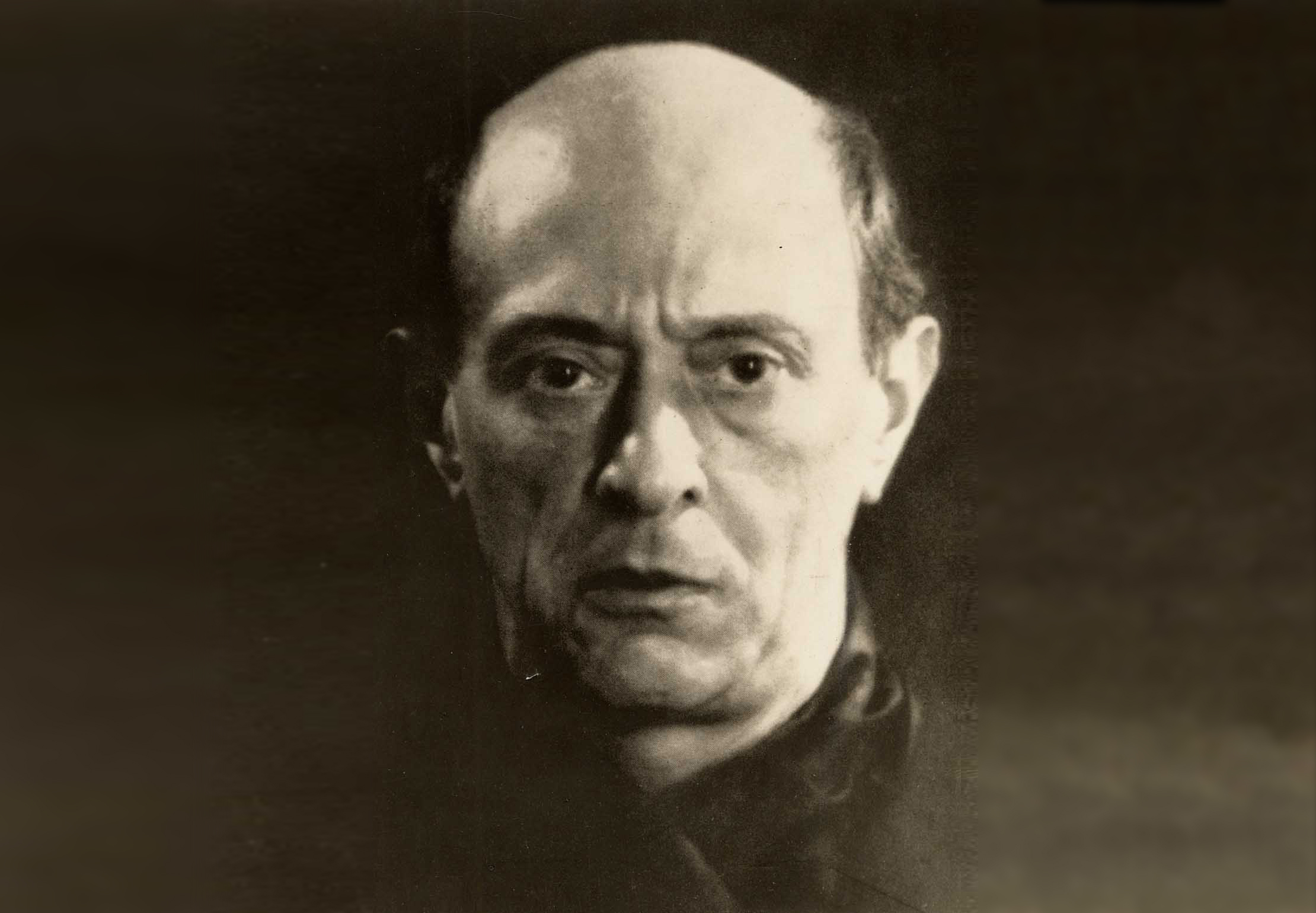
Arnold Schönberg stands as one of the most transformative figures in the history of Western classical music. Active during a period of immense cultural and artistic change, he became both a symbol of continuity with the Austro-German musical tradition and a pioneer whose innovations reshaped the language of modern composition. His development of the twelve-tone method, his seminal role in the emergence of musical Expressionism, and his influence as a teacher and thinker firmly established him as the intellectual center of what would come to be known as the Second Viennese School. Throughout his life, Schönberg’s work challenged assumptions about harmony, structure, and artistic purpose, leaving a legacy that continues to define the course of twentieth-century music and beyond.
Childhood
Arnold Schönberg was born on September 13, 1874, in the Leopoldstadt district of Vienna, a neighborhood with a vibrant cultural mix that contributed to the shaping of his early sensibilities. His parents, Samuel and Pauline Schönberg, were of modest means; his father operated a small shoe business, and the household embodied the values of hard work and education typical of lower-middle-class Viennese families of the period.
From childhood, Schönberg showed a remarkable inclination toward music. He began playing the violin at an early age and soon started experimenting with composition, writing small pieces without formal instruction. Although he was not raised in a professional musical environment, he gained exposure to Vienna’s rich musical life—opera, chamber music, and popular entertainment all played formative roles. The death of his father when Arnold was still young placed financial strain on the family, requiring him to work while continuing his musical pursuits. Nonetheless, the foundations of his future as a composer were firmly laid during these early years.
Youth
As a teenager, Schönberg deepened his commitment to composition, drawing inspiration from the music of Brahms and Wagner, whose contrasting approaches to harmony and structure strongly influenced the young composer. He formed close friendships with fellow aspiring musicians, including Oskar Adler and David Josef Bach, both of whom encouraged his artistic development and exposed him to broader intellectual traditions.
Without access to a conservatory education, Schönberg pursued a largely self-directed course of study. A major milestone occurred when he met Alexander von Zemlinsky, an already established composer and conductor, who became Schönberg’s formal teacher and soon his brother-in-law. Zemlinsky’s rigorous training in counterpoint, orchestration, and form provided the technical basis Schönberg needed to grow quickly as a composer.
During this phase, Schönberg produced early works that reveal a desire to reconcile late-Romantic harmony with increasing chromatic complexity. He also began conducting choirs and small ensembles, establishing himself within Vienna’s musical circles. His circle of acquaintances expanded to include writers, painters, and intellectuals, marking the beginning of his engagement with broader artistic movements.
Adulthood
Schönberg’s adulthood was defined by periods of intense creativity, controversy, personal upheaval, and historical displacement. His early mature works, such as Verklärte Nacht and Gurre-Lieder, represent the climax of late-Romantic expressiveness. Yet by the early 1900s, he began to push beyond traditional tonal boundaries. His compositions from this period, including the Chamber Symphony No. 1 and the monodrama Erwartung, signaled a decisive break with conventional tonal harmony and placed him at the forefront of musical Expressionism.
By 1908–1909, Schönberg abandoned traditional tonality altogether, entering a period often described as atonal or freely chromatic. This shift was met with hostility from many critics and audiences, resulting in public scandals and deepening his reputation as a radical figure. Despite the backlash, he became a highly influential teacher, whose pupils included Alban Berg and Anton Webern. Together they formed the nucleus of what would later be called the Second Viennese School, a movement committed to exploring new structural principles in music.
In the early 1920s, Schönberg created the twelve-tone method, a system designed to restore order and coherence to music that had moved beyond tonality. This innovation marked one of the most significant turning points in twentieth-century composition. He also composed theoretical writings that articulated his views on musical logic, progression, and aesthetics.
The rise of the Nazi regime in the 1930s forced Schönberg, who was Jewish, to leave Germany, where he had been teaching. He resettled in the United States, first in Boston and then in Los Angeles, where he taught at institutions such as USC and UCLA. Although he never achieved widespread popular acceptance, he found a dedicated community of students and admirers. His American years were productive, yielding important compositions and essays that continued to shape the musical discourse of his time.
Major Compositions
Throughout his long career, Schönberg produced a wide array of compositions that not only document his stylistic evolution but also mark pivotal moments in music history.
Verklärte Nacht (1899)
A lush, late-Romantic string sextet inspired by poetry, this work remains one of his most frequently performed compositions. It demonstrates his early mastery of chromatic harmony and expressive narrative structure.
Gurre-Lieder (1900–1911)
A massive cantata for soloists, choir, and orchestra, this work represents the apex of his late-Romantic period. Its scale, emotional power, and orchestral richness affirm his place among the great symphonic dramatists.
Chamber Symphony No. 1 (1906)
This score shows Schönberg’s transition toward more concise and structurally unified composition, reflecting his interest in motivic development and transparent textures.
Pierrot Lunaire (1912)
One of his most influential works, this cycle for voice and chamber ensemble employs Sprechstimme, a speech-song technique, and exemplifies musical Expressionism. It became a defining piece of twentieth-century modernism.
Five Orchestral Pieces (1909)
A radical exploration of color, dissonance, and abstraction, these pieces pushed orchestral writing into unprecedented territory.
Suite for Piano, Op. 25 (1921–1923)
The first major work to employ the twelve-tone method systematically, it demonstrates Schönberg’s commitment to structural rigor within non-tonal frameworks.
Moses und Aron (1930–1932)
An unfinished opera exploring themes of faith, representation, and divine law, it stands as one of his most ambitious and intellectually profound compositions.
A Survivor from Warsaw (1947)
A dramatic cantata reflecting the horrors of the Holocaust, it is one of Schönberg’s most emotionally gripping late works.
Death
Arnold Schönberg died on July 13, 1951, in Los Angeles, after years of declining health. Even in his final decade, he continued composing, teaching, and writing, though at a slower pace. His death marked the end of a career that had fundamentally reshaped the trajectory of Western music. Although his work was often misunderstood or resisted during his lifetime, his stature grew steadily after his passing, and he became recognized as one of the essential architects of musical modernism.
Conclusion
Arnold Schönberg’s life and work represent a profound transformation in the language and philosophy of music. From his beginnings in the cultural landscape of late-nineteenth-century Vienna to his pioneering explorations of atonality and his creation of the twelve-tone method, he consistently challenged the boundaries of artistic convention. His influence extends far beyond his own compositions, shaping generations of composers, theorists, and performers. The Second Viennese School, his treatises on musical structure, and his monumental scores collectively embody a legacy defined by intellectual rigor, expressive depth, and an unyielding commitment to artistic innovation. Today, Schönberg stands as one of the central figures of twentieth-century music—a composer whose ideas continue to inspire analysis, debate, and creative exploration.
Comments are closed