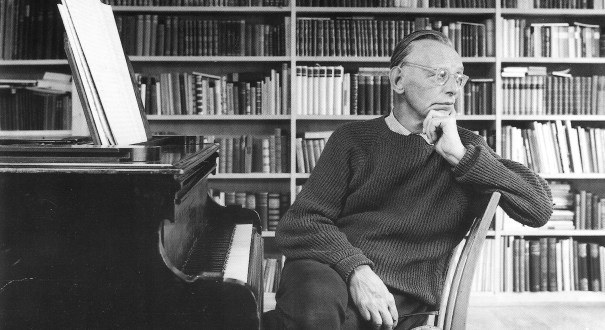
Carl Orff – A Complete Biography
Introduction
Carl Heinrich Maria Orff (July 10, 1895 – March 29, 1982) was a German composer, pedagogue, and cultural figure whose works and teaching methods left a lasting imprint on twentieth-century music. Best known worldwide for the dramatic cantata Carmina Burana, Orff was also the architect of the Orff-Schulwerk, an influential approach to music education that emphasizes rhythm, movement, speech, and improvisation for children. His compositional voice combined elemental rhythms, clear textures, and theatrical immediacy; his teaching combined body, voice, and instrumental play as inseparable components of musical learning. Orff’s life and legacy are inseparable from the turbulent political and cultural currents of twentieth-century Germany, and his career invites continued examination both for artistic achievements and for the complex moral questions raised by artists working under authoritarian regimes.
Childhood
Carl Orff was born into a Bavarian family in Munich on July 10, 1895. His upbringing combined conservative familial expectations with a rich domestic musical life: his parents encouraged early musical training and frequent attendance at the theater and opera. He began piano lessons at age five and later took up cello and organ; he showed an early aptitude for composition and published his first song while still a teenager. Orff’s youthful exposure to performance and German romantic culture informed both his later theatrical instincts and his interest in music as communal, bodily expression rather than merely cerebral craft. The social and intellectual milieu of Munich—its operatic traditions, theater life, and academies—provided the cultural scaffolding for his formative years.
Youth
Orff’s formal study continued at the Munich Academy of Music, where he studied composition and was exposed to the contemporary currents of early twentieth-century German music. His early adulthood was interrupted by the First World War: conscription and wartime service—with the attendant physical and psychological pressures suffered by many of his generation—left marks on his life and art. In the 1920s he became active as a composer for the theater and worked with dance and movement practitioners; this period of practical collaboration with performers became crucial to his emerging aesthetic, which privileged rhythmic vitality, declamatory vocal writing, and staged action. He co-founded educational projects and schools that combined music, movement, and play—settings that would later become laboratories for his pedagogical ideas.
Adulthood
During the 1930s and 1940s Orff matured as both composer and educator. His work increasingly fused ancient and medieval textual sources, modal and primitive-sounding sonorities, and straightforward, potent rhythms. He developed and codified his pedagogical approach—the Orff-Schulwerk—through practical teaching, publications, and collaborations; the Schulwerk sought to harness speech, movement, and percussive instrumentation (xylophones, glockenspiels, drums, etc.) to engage children musically from an early age. Orff’s adult life also coincided with the rise and fall of National Socialism in Germany. Carmina Burana (completed in the mid-1930s and premiered in 1937) became enormously popular and brought Orff international recognition; its immediate success altered the trajectory of his career. The relationship between Orff’s music, his public standing during the Nazi era, and the political circumstances of the time has been the subject of extensive scholarly inquiry and debate. After the war Orff continued to compose, to teach, and to promote his pedagogical methods; he spent his later decades consolidating his educational legacy and refining large-scale works and projects.
Major compositions
Orff’s compositional output is diverse, but certain works dominate his reputation.
- Carmina Burana (1936–1937) — A scenic cantata built on thirteenth-century goliardic poems discovered in the Codex Buranus. With large chorus, soloists, and orchestra, the work’s rhythmic drive, orchestral coloration, and instantly memorable choral preludes and finales (notably “O Fortuna”) secured its place in concert repertory and popular culture. Orff conceived Carmina Burana as part of a trilogy of stage cantatas—Carmina Burana, Catulli Carmina, and Trionfo di Afrodite—which together explore aspects of fortune, love, and human ritual.
- Trionfi (the trilogy) — Following Carmina Burana, Orff completed Catulli Carmina (1943) and Trionfo di Afrodite (1950), forming a connected cycle that blends ancient texts, dramatic staging, and his characteristic rhythmic and vocal idiom.
- Stage works and theatrical cantatas — Much of Orff’s music was conceived with theatrical or staged action in mind. He composed incidental music, stage cantatas, and music for dance and drama that emphasize rhythm, gesture, and a marriage of music with physical movement.
- Pedagogical works and collections — Parallel to his concert music, Orff produced method books, collections, and arrangements that prescribe musical activities for children. The Schulwerk materials include simple songs, instrumental pieces, and graded activities emphasizing improvisation and collective music-making. These works are less known to the general concertgoing public but have had a broad and lasting impact in schools and conservatories worldwide.
Musically, Orff’s style resists the dense chromaticism and complex developmental procedures typical of many mid-twentieth-century composers. Instead, he favored ostinato, clear modal or diatonic harmonies, percussive textures, and a declamatory vocal style that traces back to both medieval models and modern theatrical needs.
Death
Carl Orff died on March 29, 1982, in Munich at the age of eighty-six. He had spent his final years continuing to teach, refining his pedagogical materials, and overseeing institutions connected to his legacy. He was buried in the Andechs Abbey, and his memory remains institutionally preserved in centers and foundations dedicated to his music and to the Orff approach to music education.
Conclusion
Carl Orff’s significance lies not only in a handful of widely known concert pieces but also in a coherent approach to music as embodied, communal, and educative. Carmina Burana ensured his name a permanent place in the public imagination; the Orff-Schulwerk ensured his influence inside classrooms and studios across the globe. At the same time, Orff’s life raises difficult questions about the artist’s role under repressive regimes, the ethics of cultural success achieved during troubling political times, and how subsequent generations should interpret works that became prominent within contested historical contexts. Appreciating Orff means attending both to the visceral power and theatrical genius of much of his music and to the complex moral and historical framing in which that music circulated. His dual legacy—as a composer of dramatic, rhythmically urgent music and as a pedagogue who reshaped early music learning—ensures that debates about him, his methods, and his masterpieces will continue in scholarship and performance.
Comments are closed