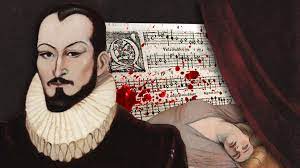
Carlo Gesualdo – A Complete Biography
Introduction
Carlo Gesualdo, prince of Venosa and count of Conza (c. 1566–1613), occupies a singular place in music history: a nobleman-composer whose life story—marked by violence, withdrawal, and intense introspection—has long rivaled his music for attention. He is remembered today primarily for his madrigals and sacred works, which push the harmonic language of the late Renaissance to extremes of chromaticism and emotional expression that were unmatched by his contemporaries.
Childhood
Gesualdo was born into a powerful aristocratic family in southern Italy, most likely in 1566. His lineage provided him with immense privilege and influence; his mother belonged to the prominent Borromeo family, and his uncle was Charles Borromeo, later canonized as a saint. Although detailed records of his early musical education are scarce, Gesualdo’s social status ensured access to skilled tutors, professional musicians, and refined cultural environments. From an early age, he was exposed to both sacred and secular music, laying the foundation for his later compositional pursuits.
Youth
During his youth, Gesualdo lived as a courtly nobleman, engaging in music primarily as an avocation rather than a profession. In 1586 he married his cousin, Donna Maria d’Avalos, a noblewoman celebrated for her beauty and social standing. Around this time, Gesualdo became increasingly involved in music-making, singing and playing the lute, and associating with musicians in aristocratic circles. His early madrigals already show an interest in expressive intensity, although they still adhere more closely to prevailing Renaissance conventions.
Adulthood
Gesualdo’s adult life was irrevocably shaped by a dramatic and violent event. In 1590 he discovered his wife in an adulterous relationship with Fabrizio Carafa, Duke of Andria, and murdered both lovers. While shocking, the act did not result in severe legal consequences due to his noble rank and contemporary legal norms. Nevertheless, the incident isolated Gesualdo socially and psychologically. After inheriting the title of prince of Venosa following his father’s death, he withdrew increasingly from public life. He later remarried and spent extended periods at his castle in Gesualdo, living in relative seclusion while continuing to compose music with growing intensity and originality.
Major Compositions
Gesualdo’s musical legacy rests largely on his six books of five-voice madrigals and his sacred compositions. These works are renowned for their daring harmonic language, characterized by abrupt chromatic shifts, unexpected dissonances, and dramatic contrasts. His madrigals frequently explore themes of love, pain, guilt, and death, with music closely mirroring the emotional content of the text. In sacred music, especially the Tenebrae Responsories, Gesualdo achieved an austere yet deeply expressive style that blends liturgical function with personal anguish. His compositions stand apart from those of his peers and have often been described as anticipating harmonic practices that would not become common until centuries later.
Death
Carlo Gesualdo died in Naples in 1613. In his final years, he appears to have suffered from periods of deep melancholy and religious obsession, devoting himself to penitential practices and intense musical experimentation. His last published works reflect a somber, inward-looking character, reinforcing the perception of a composer grappling with both spiritual and psychological turmoil until the end of his life.
Conclusion
Carlo Gesualdo remains one of the most enigmatic figures in Western music history. His personal actions, particularly the murders that defined his public reputation, have often overshadowed his artistic achievements. Yet his music endures as a testament to extraordinary originality, emotional depth, and technical daring. Today, Gesualdo is widely recognized as a composer who challenged the expressive limits of Renaissance music, leaving a body of work that continues to intrigue performers, scholars, and listeners alike.
Comments are closed