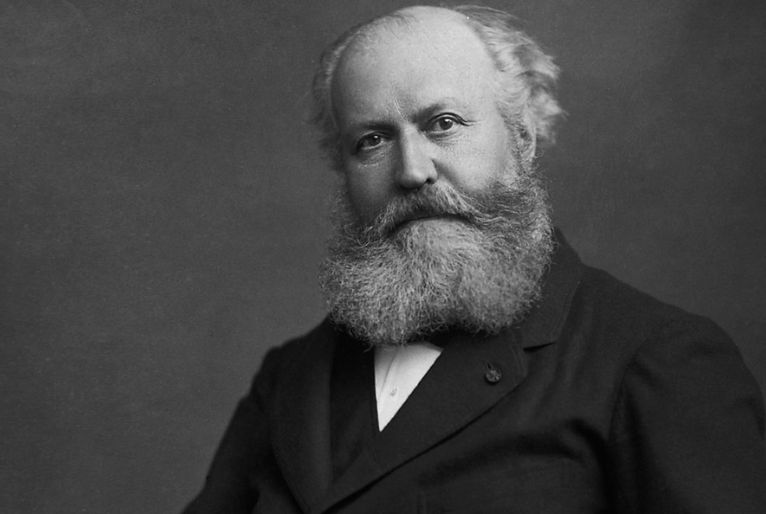
Charles Gounod – A Complete Biography
Introduction
Charles-François Gounod (June 17, 1818 – October 18, 1893) was one of the most influential French composers of the 19th century. He played a decisive role in shaping French lyric opera while also maintaining a deep and lifelong engagement with sacred music. Best known for the opera Faust and for the widely performed Ave Maria based on a prelude by Johann Sebastian Bach, Gounod’s career balanced theatrical success with spiritual introspection. His music reflects a synthesis of Romantic lyricism, classical formal training, and religious devotion, qualities that ensured both popular appeal and enduring artistic value.
Childhood
Charles Gounod was born in Paris into a cultured and artistic family. His father, François-Louis Gounod, was a painter and drawing instructor, while his mother, Victoire Lemachois, was a gifted pianist and music teacher. The death of his father when Charles was still young placed increased responsibility on his mother, who became the primary influence on his early musical development. Through her guidance, he received a strong foundation in piano playing and musical literacy.
Gounod’s upbringing unfolded in an intellectually rich environment, reinforced by classical education at institutions such as the Lycée Saint-Louis. He demonstrated aptitude not only for music but also for literature and classical languages, interests that later shaped his sensitivity to text and dramatic expression. Exposure to church music during childhood left a lasting impression and planted the seeds of the religious inclination that would periodically dominate his adult life.
Youth
Gounod pursued formal musical training at the Paris Conservatoire, where he studied composition and theory under respected teachers of the French academic tradition. His perseverance was rewarded in 1839 when he won the Prix de Rome, France’s most prestigious musical scholarship. This achievement granted him the opportunity to study in Italy, where he immersed himself in Renaissance sacred music and encountered the operatic traditions of the Italian stage.
During his time abroad, Gounod also traveled through Austria and Germany, absorbing influences from German sacred choral music and classical symphonic traditions. These experiences broadened his stylistic palette and deepened his appreciation for contrapuntal writing. Upon returning to Paris, he accepted positions connected to church music, serving as a choirmaster and composing liturgical works. In this period, Gounod underwent a profound religious awakening and seriously considered entering the priesthood. Although he ultimately chose to continue as a composer, this spiritual crisis left a permanent mark on his artistic identity.
Adulthood
Gounod’s adult career was defined by a steady output of operas, songs, sacred works, and instrumental compositions. His breakthrough as an opera composer came relatively late, but when success arrived it was decisive. In 1859, the premiere of Faust established him as a leading figure of French opera. The work’s lyrical richness, dramatic clarity, and moral gravity resonated deeply with audiences and ensured its place in the international repertoire.
Subsequent operas, particularly Roméo et Juliette, confirmed Gounod’s mastery of vocal writing and dramatic pacing. Alongside his theatrical achievements, he continued to compose religious music, including masses, oratorios, and motets, which reflected his enduring spiritual concerns. His celebrated Ave Maria, created by overlaying a new melody on a prelude by Bach, exemplifies his ability to merge devotional sentiment with accessible lyricism.
Gounod also spent extended periods in England, where he enjoyed professional success and wrote music for British audiences. Throughout his later years, he remained a respected public figure in French musical life, receiving honors and contributing to debates on aesthetics, education, and the role of religion in art.
Major Compositions
Among Gounod’s extensive output, several works stand as milestones of 19th-century music. Faust remains his most famous opera and one of the most frequently performed works in the French operatic tradition. Roméo et Juliette is admired for its emotional immediacy and elegant vocal writing. His sacred compositions, including numerous masses and choral works, reveal a composer deeply attuned to spiritual expression.
In addition to large-scale works, Gounod composed a substantial body of songs and piano pieces that were popular in salons and private musical gatherings. These smaller forms allowed him to explore lyrical intimacy and poetic nuance, complementing the grandeur of his operatic and religious works.
Death
Charles Gounod died on October 18, 1893, in Saint-Cloud, near Paris. His passing marked the end of a career that had spanned more than half a century and witnessed significant changes in musical taste. By the time of his death, newer musical movements were beginning to challenge the Romantic idiom he had helped define, yet his most important works remained firmly established in both sacred and theatrical repertoires.
Conclusion
Charles Gounod occupies a distinctive place in the history of Western classical music. His ability to reconcile lyrical beauty with moral and spiritual depth allowed him to speak to both the public stage and the inner life of the listener. While his operas secured his fame, his sacred works reveal the deeper motivations that guided his creative life. Today, Gounod is remembered as a composer who embodied the tensions and aspirations of 19th-century French music, leaving behind a legacy that continues to inspire performers and audiences alike.
Comments are closed