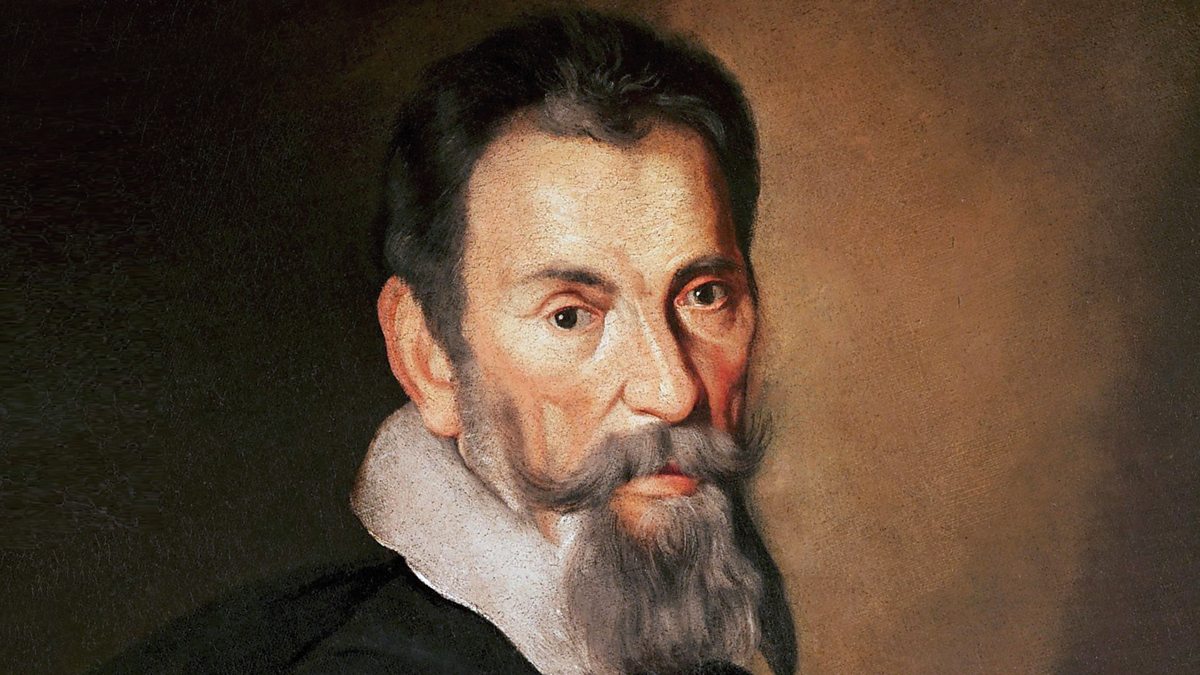
Claudio Monteverdi – A Complete Biography
Introduction
Claudio Giovanni Antonio Monteverdi (baptized May 15, 1567 — November 29, 1643) stands among the pivotal figures who bridged Renaissance polyphony and the emerging Baroque idiom. A virtuoso of vocal writing and an innovator in dramatic music, Monteverdi transformed the madrigal, helped establish opera as a dramatic genre, and left a body of sacred music that reshaped liturgical practice. His career at the courts of northern Italy and, later, as maestro di cappella at St. Mark’s Basilica in Venice placed him at the center of major musical developments of the late sixteenth and early seventeenth centuries.
Childhood
Monteverdi was born in Cremona to Baldassare Monteverdi, an apothecary and barber-surgeon, and his wife Maddalena Zignani. He was baptized in the parish church of Santi Nazaro e Celso. Little documentary evidence survives about Monteverdi’s earliest musical training, but his precocity is evident from his early publications. While still in his teens, he issued printed collections of sacred vocal music, demonstrating advanced compositional skill and familiarity with contemporary styles. The cultural environment of Cremona, positioned near important musical centers, provided access to both ecclesiastical and secular traditions that shaped his early artistic development.
Youth
During his late teens and early twenties, Monteverdi entered the world of aristocratic patronage. By the early 1590s he had joined the court of Duke Vincenzo I Gonzaga in Mantua, initially as an instrumentalist and later as a composer. His responsibilities included performing, composing, and accompanying the duke on travels.
While in Mantua, Monteverdi published several books of madrigals that reveal a rapid evolution in style. These works show a transition from dense polyphony toward greater clarity of text and heightened emotional expression. His bold harmonic language and rhetorical treatment of poetry provoked controversy, particularly among conservative theorists who criticized his departure from established contrapuntal rules. Monteverdi defended his approach by arguing that music should serve the text, a principle that became central to his aesthetic philosophy.
Adulthood
Monteverdi’s years at the Mantuan court were artistically fruitful but personally taxing. He produced large-scale dramatic works and continued to refine his expressive language. In 1607 he composed L’Orfeo, a dramatic work that stands as one of the earliest fully realized operas. Its integration of music, poetry, and stagecraft marked a decisive step in the development of musical drama.
Following years of intense labor, personal losses, and disputes with his employers, Monteverdi left Mantua. In 1613 he was appointed maestro di cappella at the Basilica of San Marco in Venice, one of the most prestigious musical posts in Europe. There he reorganized the chapel, raised performance standards, and composed extensively for liturgical use. Venice also offered new opportunities in the emerging public opera scene, which transformed opera from a courtly entertainment into a commercial art form accessible to broader audiences.
Major Compositions
Monteverdi’s surviving works span sacred and secular genres, vocal and instrumental forms, and nearly his entire adult life.
His madrigals, published in multiple books, chart the evolution of his musical language. Early collections reflect Renaissance polyphony, while later volumes emphasize dramatic contrast, soloistic writing, and expressive dissonance. These works profoundly influenced the future of vocal chamber music.
In sacred music, Monteverdi achieved a synthesis of tradition and innovation. His large-scale liturgical compositions combine Gregorian chant, polyphonic writing, and modern concerted techniques with basso continuo and instrumental color. These works demonstrate his ability to adapt contemporary styles to devotional contexts without sacrificing spiritual gravity.
Monteverdi’s operas represent some of the most significant achievements of early Baroque music. L’Orfeo established many conventions of operatic form, including orchestral differentiation and expressive recitative. Although much of L’Arianna is lost, its surviving lament became one of the most influential pieces of dramatic vocal music of the era. In his later Venetian operas, Monteverdi explored psychological realism, flexible musical forms, and vivid characterization, anticipating later developments in opera seria and opera buffa.
Death
Monteverdi remained in Venice for the rest of his life, continuing his duties at San Marco while composing sacred and theatrical works into his seventies. His health declined in his final years, but his reputation remained secure. He died on November 29, 1643, and was buried in the church of Santa Maria Gloriosa dei Frari. His death marked the passing of a composer whose work had fundamentally reshaped European music.
Conclusion
Claudio Monteverdi occupies a unique position in music history as both the culmination of Renaissance traditions and the architect of Baroque expressivity. His insistence that music should serve the emotional and rhetorical demands of text transformed compositional priorities across genres. Through madrigals, sacred works, and operas, he expanded harmonic language, redefined vocal expression, and laid the foundations for modern musical drama. Monteverdi’s legacy endures not only in the survival of his masterpieces but in the expressive principles that continue to inform Western art music centuries later.
Comments are closed