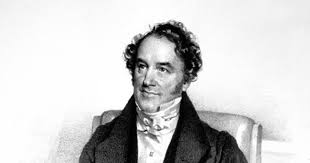
Conradin Kreutzer – A Complete Biography
Introduction
Conradin Kreutzer (also spelled Kreuzer) was a German composer, conductor, and kapellmeister active in the first half of the nineteenth century. Although his wide-ranging output included operas, church music, chamber works, and prolific part-songs, his popular reputation in his lifetime rested chiefly on stage works such as the romantic opera Das Nachtlager in Granada. Kreutzer’s career bridged the late Classical and early Romantic eras and took him through key musical centers including Vienna, Stuttgart, and Cologne; he spent his final years in Riga.
Childhood
Conradin Kreutzer was born on November 22, 1780, in the vicinity of Meßkirch (sometimes cited as Thalmühle or Talmalmühle) in southwestern Germany, a region then part of the small principalities of the Holy Roman Empire. He grew up in a region with active local musical life; early accounts indicate that his first musical experiences came through local choirs and instrumental ensembles. Like many musical figures of his era, Kreutzer received a mixture of informal practical training and limited formal instruction that prepared him to play multiple roles—singer, instrumentalist, and later composer—rather than a single specialized career path.
Youth
In his late teens and early twenties Kreutzer pursued further education and relocated to larger cultural centers. He initially began studies in a non-musical field (law) but increasingly gravitated to musical life. Around the early 1800s he went to Vienna, then the premier musical capital of German-speaking Europe. There he moved in musical circles and is reported to have come into contact with luminaries such as Joseph Haydn’s pupils and contemporaries; surviving accounts and later catalogues indicate he studied with or was influenced by teachers in the Viennese tradition, including Johann Georg Albrechtsberger. While in Vienna he performed as an instrumentalist and singer in salons and theatres and began composing for the stage and the salon market.
Adulthood
Kreutzer’s professional life was itinerant but increasingly successful. He spent significant time in Stuttgart, where he produced several early operas and, by 1812, was appointed Hofkapellmeister (court conductor) and served as Kapellmeister to the king of Württemberg (a post he held in the 1812–1816 period). After establishing his reputation as a conductor and stage composer, he wrote numerous operatic works for German theatres (including houses in Vienna and elsewhere) and compiled an extensive catalogue of Lieder, part-songs (notably for male chorus), sacred works, and instrumental compositions.
Throughout his adult career Kreutzer combined practical musical duties—conducting, directing ensembles, and producing stage works—with steady composition. He was a prolific correspondent (a large body of letters survives) and maintained professional relationships with other composers and performers of his day. In the 1820s and 1830s he continued to compose for leading theatres in Vienna and Germany; in 1840 he took the conductorship of the opera in Cologne. His daughters, Cecilia and Marie Kreutzer, became known as sopranos, indicating that musical activity continued inside his household as well as in the public sphere.
Major Compositions
Kreutzer’s compositional output was broad; the following works and genres illustrate his range and the pieces that had the most lasting impact:
- Operas and stage works. Kreutzer wrote a substantial number of operas and incidental scores. His best-known stage work is the romantic opera Das Nachtlager in Granada (The Night Camp in Granada), first staged in the 1830s, which enjoyed long-term popularity and continued performances for decades after its premiere. He also produced incidental music for plays such as Der Verschwender and a one-act drama Cordelia among many theatrical pieces.
- Part-songs and vocal music. Kreutzer was particularly successful with part-songs for male voices; these works were widely sung in German vocal societies throughout the 19th century. These compositions contributed significantly to his contemporary reputation.
- Chamber and instrumental music. Among his smaller-scale pieces the Septet in E-flat major, Op. 62, has maintained a place in the chamber-music repertoire. He also composed clarinet trios and quartets, piano pieces (including variations and smaller concert works), and a piano concerto (Op. 65). His instrumental writing demonstrates familiarity with both Classical forms and the emerging Romantic expressivity of his time.
- Sacred music and larger forms. Kreutzer’s catalogue contains church music, part of which was intended for liturgical use, and at least one oratorio (sometimes cited under titles such as Die Sendung Mosis). His sacred works reflect his role as a court and civic musician responsible for a variety of public musical functions.
- Contributions to contemporary projects. He participated among a group of composers who contributed variations on Anton Diabelli’s waltz for the collaborative publication commonly known as the Vaterländischer Künstlerverein, which situates him within the network of composers active in Vienna’s publishing culture.
Stylistically, Kreutzer’s stage writing shows the influence of earlier German Romantic opera (for instance, traces of Carl Maria von Weber’s idiom), while his chamber and vocal pieces combine clarity of classical form with the melodic emphasis typical of early nineteenth-century song and choral writing.
Death
Conradin Kreutzer died on December 14, 1849, in Riga (then part of the Russian Empire). Reports indicate that his final years were spent away from the principal German stage centers where he had earlier been most active; nevertheless, his music had circulated widely and his name remained attached to several works that continued to be performed and published after his death.
Conclusion
Conradin Kreutzer was a versatile and industrious figure of the early Romantic period whose professional life spanned teaching, conducting, and composing for a broad array of genres. Although many of his operas have fallen from the standard repertoire, he achieved lasting fame in his day—especially through Das Nachtlager in Granada and his widely sung part-songs—and left several chamber works that still attract occasional performance. Kreutzer’s career illustrates the multi-faceted role of 19th-century musicians who moved between court appointments, theatre work, and the burgeoning public sphere of concerts and publishers. His surviving letters and scores provide musicologists and performers a substantial record of an accomplished musician who negotiated the stylistic transitions of his era while serving a range of musical institutions across German-speaking Europe.
Comments are closed