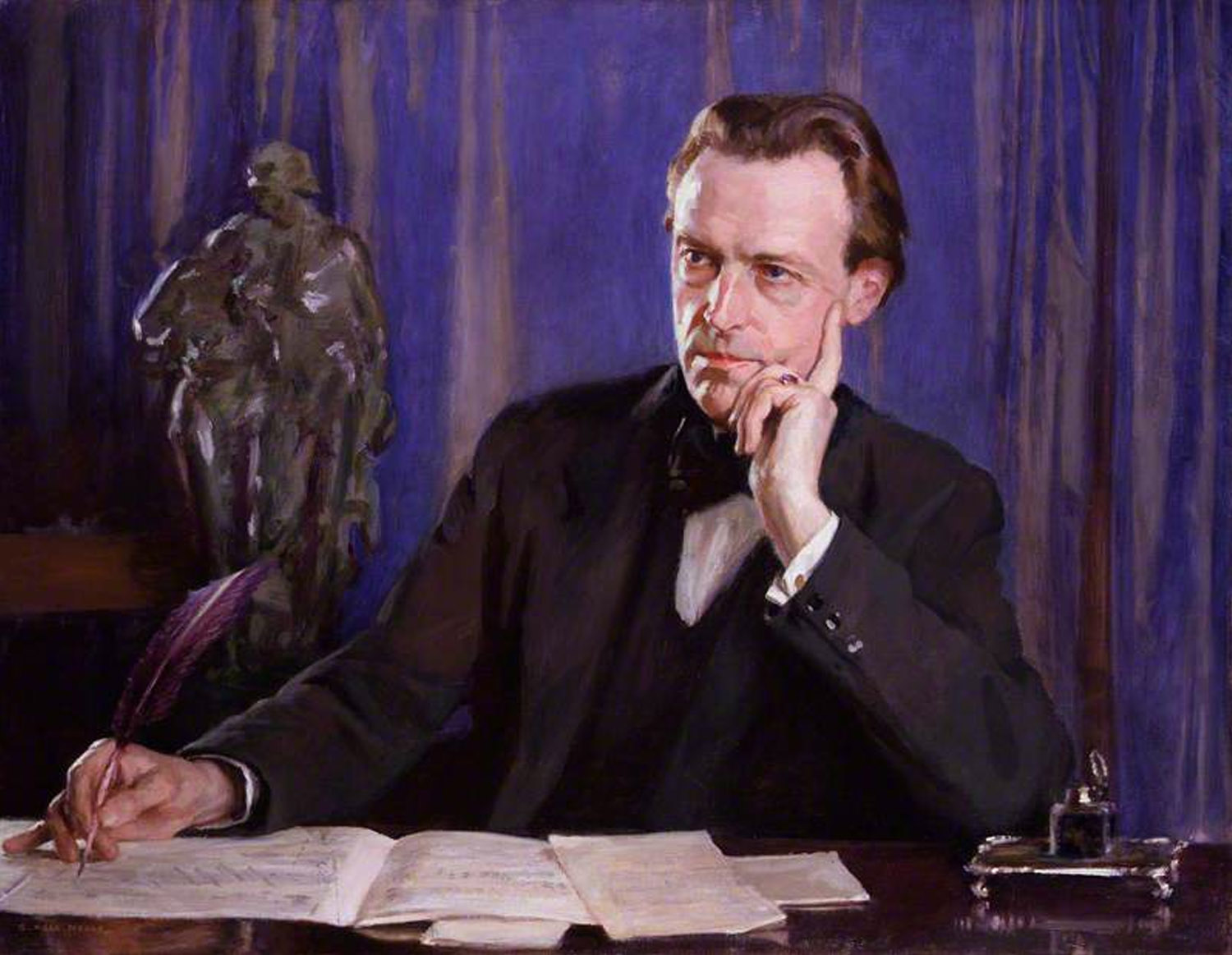
Cyril Scott – A Complete Biography
Introduction
Cyril Meir Scott (27 September 1879 – 31 December 1970) was an English composer, pianist, writer and poet whose prolific output and unconventional interests made him one of the more singular figures in early 20th-century British music. Scott composed across genres—piano and chamber music, symphonies, concertos, operas, oratorios and songs—and also published extensively on literature, health and esoteric subjects. His music, often described as impressionistic and at times mystical, achieved considerable recognition in continental Europe and among contemporaries such as Percy Grainger and Eugene Goossens.
Childhood
Cyril Scott was born on 27 September 1879 in Oxton, Cheshire, into a household that combined intellectual curiosity with musical encouragement. His father, Henry Scott, was a scholar with interests in classical languages and his mother played the piano; both parents fostered Cyril’s early musical development. He displayed precocious musical talent and received early piano training at home before formal studies took him abroad. The family environment and early instruction provided Scott with the technical foundation and intellectual independence that would mark his later creative life.
Youth
At age twelve Scott left England to study at the Hoch Conservatory in Frankfurt (entering in 1892), where he studied piano with Iwan Knorr and fell into a circle of young composers studying in Germany. His formative years in Frankfurt exposed him to late-Romantic and emerging modernist currents on the continent; these influences — together with French impressionism he encountered later — shaped his evolving harmonic language. In the first decade of the twentieth century Scott began to attract attention as a composer: his Piano Quartet in E minor and his early orchestral writing were performed and praised on the continent, helping establish an international reputation while he was still in his twenties.
Adulthood
During his mature years Scott maintained a dual career as composer and writer. He continued to produce a steady stream of music—piano works, chamber pieces, orchestral works, vocal music, stage works and concertos—while also authoring books and essays on topics as varied as music criticism, poetic texts, occultism, natural health and philosophy. Musically, Scott’s style evolved from late-Romantic solidity toward a more atmospheric, coloristic idiom that frequently invited comparisons to Debussy; at the same time his work retained a distinct personal profile, combining lyrical lines with unconventional harmonies and rhythmic flexibility.
Scott was socially and artistically connected to several notable figures of his era. He counted friends and admirers among leading musicians and conductors and enjoyed intermittent recognition in Britain and abroad. Yet his esoteric interests—including Theosophy, alternative medicine, yoga and occult themes—separated him from the mainstream musical establishment and contributed to an image of eccentricity that sometimes overshadowed discussion of his music. He also published poetry and numerous nonfiction works, which further diversified his public persona.
Major compositions
Cyril Scott’s catalogue is extensive and varied—running to several hundred individual works—and can be grouped into certain prominent categories:
- Piano and chamber music. Scott wrote substantial piano repertoire (including sonatas, character pieces and miniatures) and numerous chamber works that reveal his refined handling of texture and color. His piano writing, in particular, is praised for its atmospheric breadth and technical imagination.
- Orchestral music and symphonies. He produced multiple symphonies and tone-poems that explore large-scale orchestral color. His earlier orchestral successes helped secure performances in Europe at a comparatively young age.
- Concertos and soloist pieces. Scott wrote concertos for piano, violin, cello and other solo instruments, as well as concertante pieces that showcased his interest in timbre and interplay between soloist and ensemble.
- Stage and vocal works. His output includes operas, oratorios and many songs; the vocal music often sets literary texts and reflects his interest in poetic atmosphere.
- Writings on music and other topics. In addition to his scores, Scott authored many books and pamphlets—on music, mysticism and health—that expanded his influence beyond purely musical circles.
Examples frequently cited as representative of Scott’s achievement include early large-scale works that introduced him to continental audiences (for instance, his Piano Quartet in E minor and his Second Symphony), a broad series of piano miniatures and sonorous orchestral pieces that display his mature coloristic style, and numerous concerted works that demonstrate his contrapuntal and formal abilities. Across these genres his music balances lyricism with harmonic adventurousness and an often meditative, atmospheric temperament.
Death
Cyril Scott died on 31 December 1970 in Eastbourne, England, at the age of ninety-one. His long life allowed him to witness several generations of musical change; by the time of his death his reputation had gone through phases of attention, neglect and later partial rediscovery. After 1970, interest in Scott’s music has revived intermittently among performers and recording projects, and scholars have increasingly reappraised his contribution to British music and to the wider European currents that influenced him.
Conclusion
Cyril Scott remains a complex and intriguing figure: a prolific composer whose stylistic range encompassed late Romanticism, early modern impressionistic color and idiosyncratic personal experiments; a writer whose subjects ranged from music criticism to occult theory and natural health; and an artist whose eccentricities sometimes eclipsed critical consideration of his output. His music—especially for piano and orchestra—offers rich, often overlooked repertoire that rewards attentive performers and listeners. Contemporary reassessments and recordings continue to uncover neglected corners of his oeuvre, and his place in the story of British music is being reconsidered with renewed interest and nuance.
Comments are closed