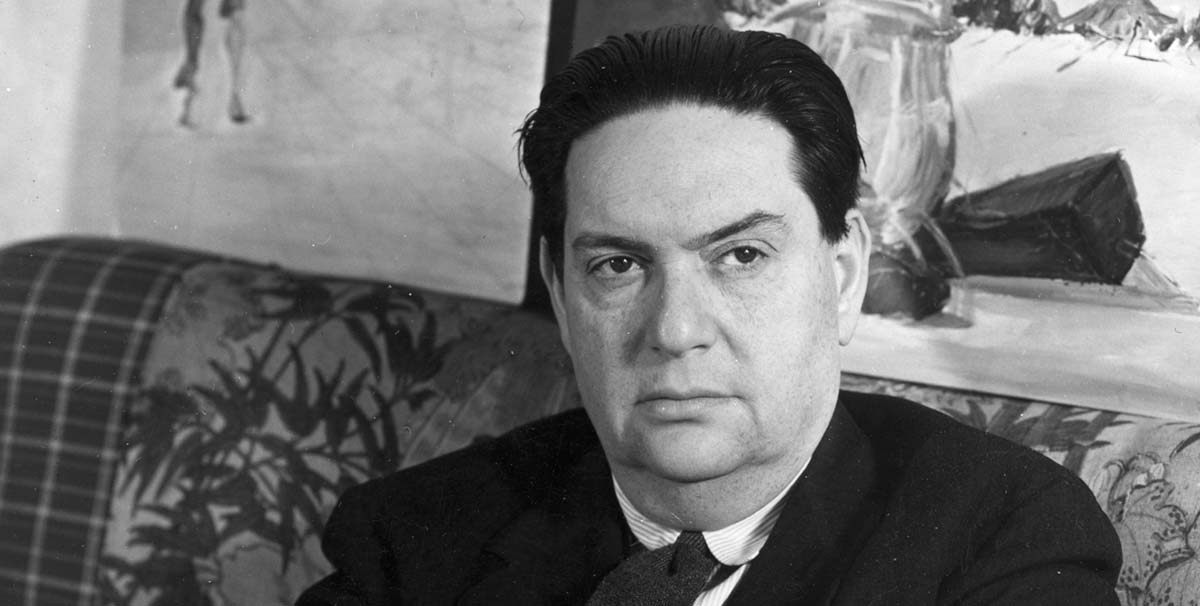
Darius Milhaud – A Complete Biography
Introduction
Darius Milhaud (born September 4, 1892; died June 22, 1974) was a French composer, conductor, and teacher whose vast output and stylistic diversity made him one of the most distinctive figures of twentieth-century classical music. He is best known for his pioneering use of polytonality, his incorporation of jazz and Brazilian popular music into concert works, his association with the group of composers known as Les Six, and his influential teaching career in both Europe and the United States. Milhaud composed in nearly every musical genre, producing hundreds of works that reflect his belief that music should be open, expressive, and connected to everyday life.
Childhood
Milhaud was born into a long-established Jewish family in Provence, southern France. His family background combined strong cultural traditions with practical middle-class values. Music was present in the household, and Milhaud showed early aptitude, beginning violin lessons at a young age. His childhood environment exposed him to local Provençal melodies, synagogue music, and popular street songs, all of which left a lasting impression on his musical imagination. These early experiences helped shape his lifelong openness to diverse musical languages and his resistance to rigid stylistic boundaries.
Youth
Milhaud moved to Paris to pursue formal musical training at the Conservatoire de Paris, where he studied harmony, counterpoint, composition, and violin. His teachers emphasized technical rigor, clarity of form, and contrapuntal skill, foundations that remained central to his work throughout his life. During this period, Milhaud formed friendships with other young composers and artists who were similarly interested in renewing French music after the excesses of late Romanticism.
A defining experience of his youth was his service as secretary to the poet and diplomat Paul Claudel, which took him to Brazil during and shortly after World War I. Living in Rio de Janeiro, Milhaud encountered Brazilian popular music, dance rhythms, and urban soundscapes. This exposure profoundly influenced his musical language and provided material for many later compositions. The years abroad broadened his aesthetic outlook and reinforced his belief that contemporary music should reflect the sounds of the modern world.
Adulthood
In the 1920s Milhaud emerged as a prominent figure in French musical life. Though he was associated with Les Six, he maintained a highly individual artistic voice. He rejected both Romantic emotional excess and strict academic formalism, instead favoring clarity, rhythmic vitality, and direct expression. One of his most innovative techniques was polytonality—the simultaneous use of multiple keys—which he employed not as an abstract system but as a practical expressive tool.
Milhaud’s encounters with jazz, particularly during visits to the United States, further expanded his musical palette. He was among the first European composers to treat jazz not as a novelty but as a serious source of musical ideas. His works from this period combine classical structures with jazz rhythms, harmonies, and instrumental colors, helping to bridge the divide between popular and art music.
The political upheavals of the late 1930s and early 1940s forced Milhaud, who was Jewish, to leave France during the German occupation. He settled in the United States, where he accepted a teaching position at Mills College in California. This period marked a new phase in his career, as he became one of the most influential composition teachers of his generation. After the war, he divided his time between teaching in the United States and at the Paris Conservatoire, maintaining an active international career despite declining health.
Major Compositions
Milhaud’s catalog is extraordinarily extensive and diverse. Among his most celebrated works is La Création du monde, a ballet that integrates jazz idioms within a classical framework and remains a landmark in the history of cross-cultural musical synthesis. Le Bœuf sur le toit reflects his fascination with Brazilian popular music and became emblematic of Parisian artistic life in the early 1920s.
Another important group of works inspired by Brazil is Saudades do Brasil, a suite originally written for piano and later orchestrated, evoking the rhythms and atmosphere of Rio de Janeiro. Scaramouche, written in several versions, has become one of his most frequently performed works, valued for its wit, rhythmic energy, and accessibility.
Beyond these well-known pieces, Milhaud composed operas, symphonies, concertos, string quartets, choral works, film music, and numerous educational compositions. His approach emphasized craftsmanship, contrapuntal clarity, and expressive directness. Rather than pursuing a single stylistic path, Milhaud embraced musical plurality, believing that diversity itself was a defining feature of modern art.
Death
Milhaud’s later years were marked by severe physical illness, particularly rheumatoid arthritis, which left him largely confined to a wheelchair. Despite these limitations, he continued to compose and teach for as long as possible, demonstrating remarkable resilience and dedication to his art. He died on June 22, 1974, in Geneva, Switzerland, at the age of eighty-one. His body was returned to Provence for burial, closing a life deeply connected to both his native region and the wider musical world.
Conclusion
Darius Milhaud occupies a unique position in twentieth-century music as a composer who embraced openness, diversity, and practicality. His work reflects a synthesis of classical tradition with the sounds of everyday life, including jazz, popular music, and non-European influences. As a member of Les Six, a pioneer of polytonality, and an influential teacher, he helped shape modern musical thought while remaining accessible and human in his artistic aims. Milhaud’s legacy endures not only through his vast body of compositions but also through the generations of musicians he inspired to view music as a living, inclusive art form.
Comments are closed