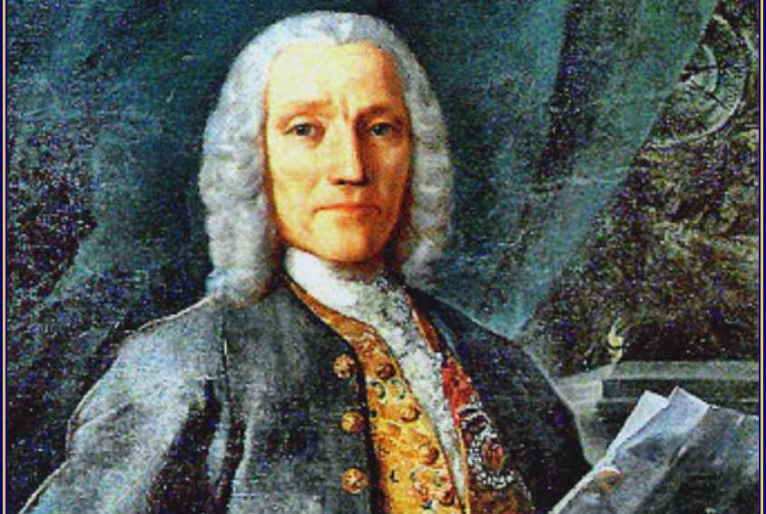
Domenico Scarlatti – A Complete Biography
Introduction
Giuseppe Domenico Scarlatti (October 26, 1685 – July 23, 1757) was an Italian-born composer and keyboard virtuoso whose experiments in harmony, form, and keyboard technique left a lasting imprint on the transition from the Baroque to the Classical era. Best known today for his large corpus of single-movement keyboard sonatas, Scarlatti combined Italian melodic elegance, inventive formal devices, and rhythmic and harmonic elements drawn from the Iberian peninsula to create works that stretched the technical and expressive range of the harpsichord and anticipates later developments in keyboard writing.
Childhood
Domenico Scarlatti was born in Naples in 1685 into a highly musical household. He was the sixth of ten children of Alessandro Scarlatti, one of the leading Neapolitan composers of the day. Under his father’s roof Scarlatti received early musical instruction and immersion in the repertory and professional life of the Italian Baroque. The Scarlatti name and connections placed Domenico in an environment where composition, church service, and the opera world were part of daily life, giving him technical foundations and stylistic models that he would later expand and subvert in his own works.
Youth
Scarlatti’s formal career began in Naples. He served in the chapel there and then spent years in northern Italian musical centers, including Rome and Venice. During this period he took on roles as organist and composer and developed his craft in vocal and dramatic music as well as keyboard works. The early part of his career includes operatic and sacred compositions; Scarlatti’s first opera and other vocal works show his grounding in the conventions of Italian opera seria and sacred music of the early 18th century. By the 1700s he had established a reputation sufficient to attract the attention of patrons and traveling musicians, and he began to circulate beyond Italy.
Adulthood
The defining phase of Scarlatti’s life came with his long employment in the royal courts of Portugal and Spain. In 1709 he entered the service of the exiled Polish queen Marie Casimire in Rome and later found a more consequential post in Lisbon. There he became harpsichord teacher to Maria Bárbara of Portugal (the Infanta), instructing her in keyboard technique and repertoire. When Maria Bárbara married the Infante (later King) Ferdinand of Spain in 1729 and moved to Madrid, Scarlatti followed and entered the Spanish royal household. He remained in Madrid for the rest of his life and was associated with the Spanish court as a teacher, composer, and respected elder statesman of keyboard music.
It was in the Iberian milieu—Lisbon and Madrid—that Scarlatti produced the works that have secured his lasting reputation. In Spain he had close contact with a musical culture and folk traditions that left audible traces in his writing: percussive figurations, guitar-like strumming textures, rapid repeated notes, and modal inflections that suggest local dance rhythms and sonorities. His court duties included teaching and composing for the keyboard, and he wrote prolifically for the harpsichord, tailoring pieces to the abilities and tastes of his royal pupil and court musicians.
Major Compositions
Scarlatti’s central and most influential output is his keyboard sonatas. Modern scholarship attributes 555 keyboard sonatas to him; they are typically single movements but richly varied in character, texture, and technical demand. Formally many are in binary structure, but within that framework Scarlatti exploited abrupt modulations, unexpected dissonances, hand-crossings, ornaments, and idiomatic effects that imitate plucked or percussion instruments. These sonatas range from compact estudios or “exercises” to larger, theatrically vivid pieces that suggest dramatic or programmatic ideas.
Beyond the sonatas, Scarlatti composed operas, cantatas, and sacred works earlier in his career. His operatic and vocal compositions show his mastery of Italian melodic and dramatic practice, though they are less central to his modern reputation. A few religious works—such as settings of the Stabat Mater and other liturgical pieces—remain in performance and recording, but the keyboard sonatas dominate modern programming and scholarship.
The cataloguing and dissemination of Scarlatti’s sonatas followed a complex history. Many sonatas circulated in manuscript or in early printed editions during the 18th century; in 1738 he published a celebrated set of thirty “Esercizi” that gained wide recognition. Modern reference editions and catalogues—most notably the cataloguing work of Ralph Kirkpatrick in the 20th century—helped establish authoritative numbering and brought the full scope of the sonatas to the attention of performers and scholars. The sheer technical originality of many sonatas—hand crossings, repeated-note virtuosity, and boldly chromatic or modal episodes—has led performers to regard Scarlatti as a pivotal figure in keyboard technique.
Death
Domenico Scarlatti died in Madrid on July 23, 1757. He left behind a substantial body of music, most of which only achieved full recognition posthumously as editions, catalogues, and recordings made his sonatas more widely available over the 19th and 20th centuries. The manuscripts and printed sources dispersed among European collections, and scholarly effort over the centuries has reconstructed much of his output and clarified authorship where possible.
Conclusion
Although he lived contemporaneously with Baroque titans such as J. S. Bach and G. F. Handel, Scarlatti occupies a distinctive niche in music history. His large corpus of uniquely inventive keyboard sonatas expanded the technical vocabulary of keyboard playing and foreshadowed elements of Classical style while also absorbing idioms from Iberian folk music. Today his sonatas are studied for their structural ingenuity, expressive variety, and pianistic (or harpsichord) demands. Scarlatti’s work remains a bridge between eras: rooted in Baroque practice but looking forward through unexpected harmonic turns, percussive effects, and kinetic virtuosity that continue to fascinate performers, teachers, and listeners.
Comments are closed