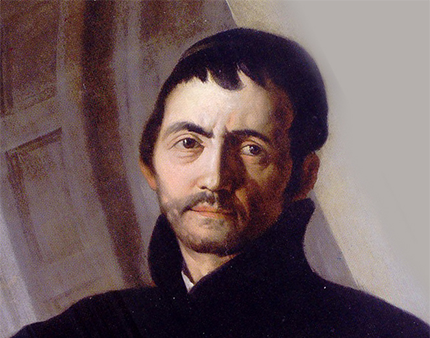
Domenico Zipoli – A Complete Biography
Introduction
Domenico Zipoli (born in Prato, Tuscany, in 1688; died Córdoba, 1726) was an Italian Baroque composer, organist, and Jesuit missionary whose career bridged elite Roman musical circles and the music-making of Spanish-American Jesuit reductions. He is best known today for his keyboard music — particularly the Sonate d’intavolatura per organo e cimbalo — and for a body of sacred music that surfaced in South America in the 20th century, revealing the wider scope of his output and long afterlife in colonial musical practice.

Childhood
Zipoli was born in Prato to Sabatino Zipoli and Eugenia Varocchi and grew up in the musical culture of that Tuscan town. Early records show he sought patronage to study music: in 1707 he petitioned Cosimo III de’ Medici for support to train in Florence. His first formal instruction appears tied to the musical establishments of the region (cathedral and court chapels), where he acquired the foundation in keyboard technique, counterpoint, and liturgical practice that shaped his later work.
Youth (training and early career)
In his late teens and early twenties Zipoli moved through several major Italian musical centers for advanced study. He studied in Florence (with local organist-teachers), briefly in Naples (a short episode under Alessandro Scarlatti is reported), and then in Bologna and Rome, where Bernardo Pasquini was a principal influence on his keyboard style. By the mid-1710s he had secured a prestigious appointment as organist at the Church of the Gesù in Rome (the Society of Jesus’s principal church), a role that placed him at the center of Roman sacred music and gave him an audience for both liturgical and concert works. During these years he composed oratorios and keyboard pieces that show mastery of late-Baroque contrapuntal technique and the Italian keyboard tradition.
Adulthood — conversion to the Jesuits and life in Spanish America
Around 1716 Zipoli made a dramatic vocational and geographic turn: he entered the Society of Jesus in Seville (admitted as a novice on 1 July 1716) and volunteered for mission work in the Spanish colonies of South America. In 1717 he sailed with a group of Jesuit missionaries and arrived in the Río de la Plata region; contemporary travel notes place the party’s landfall and overland progress through Buenos Aires and thence to Córdoba. In Córdoba Zipoli completed his Jesuit formation and took on duties as music director and teacher. Though records indicate he never received priestly ordination (there was no available bishop in the region at the time), he served as organist, chapel director, and—crucially—music teacher for Jesuit mission communities, where he worked with European settlers and the indigenous peoples of the reductions (notably Guaraní ensembles and choirs). Contemporary accounts praise his skill at the organ and his ability to raise the musical level and solemnity of liturgical celebrations across the region.
Major compositions (overview and stylistic notes)
Zipoli’s surviving oeuvre divides into two clear strands:
- Italian/Roman works (keyboard and dramatic): his best known printed collection is the Sonate d’intavolatura per organo e cimbalo (1716), a set of keyboard sonatas and liturgical pieces that display fluent counterpoint, clear melodic lines, and a balance between contrapuntal seriousness and the galant clarity that prefigures later 18th-century keyboard taste. He also wrote oratorios (e.g., San Antonio di Padova c.1712 and Santa Caterina c.1714) and other occasional sacred pieces from his Roman period.
- South American sacred repertory: for a long time little of Zipoli’s colonial output was known in Europe. In the 20th century scholars connected the Roman keyboard composer with a Jesuit missionary of the same name; later archival finds (notably a large cache of manuscripts discovered during restorations in the region of the Chiquitos reductions in Bolivia in the 1970s) revealed numerous Masses, psalm settings, hymns, anthems, and other liturgical works associated with Zipoli. These pieces show how his European training was adapted to the needs and resources of colonial liturgy—often written for small vocal forces with instrumental accompaniment and intended for regular performance in mission chapels. There are also references in colonial sources to his involvement in larger-scale dramatic works connected with Jesuit liturgical drama and, perhaps, a mission-stage opera attributed in part to him.
Stylistically, Zipoli’s music synthesizes Italian Baroque keyboard idioms (influences visible from Frescobaldi and Pasquini through to more modern tendencies) with clear vocal lines and approachable textures that fit both chapel liturgy and the pedagogical needs of his students in the reductions.
Death
Zipoli died in Córdoba on January 2, 1726. Contemporary reports indicate his death followed an illness; exact circumstances vary in accounts and his burial place was not definitively recorded, leaving some uncertainty about the final details. Local testimony and later Jesuit chroniclers emphasize that his death was mourned for the loss of a musician and teacher who had significantly raised local musical standards.
Legacy and reception (conclusionary remarks)
During his lifetime Zipoli was respected as a skilled organist, composer, and educator; in the centuries after his death his reputation took on a bifurcated history. In Europe his keyboard pieces — especially the sonatas — remained in teaching anthologies and collections for keyboard students. For many decades his identity as the author of both the Italian keyboard works and the South American sacred repertoire was unclear; musicologists in the 20th century (notably Lauro Ayestarán and others) clarified the connection between the Roman composer and the missionary active in the Río de la Plata. The 1970s discovery of extensive manuscript material in the former Jesuit reductions of Chiquitos (Bolivia) dramatically expanded the known corpus of his colonial works and proved his long influence on liturgical music across Spanish America. Today Zipoli is remembered both as an important composer in the late Italian Baroque keyboard tradition and as a central musical figure in the Jesuit cultural presence in South America; his works continue to be performed, recorded, and studied for their dual European and colonial significance.
Comments are closed