Introduction
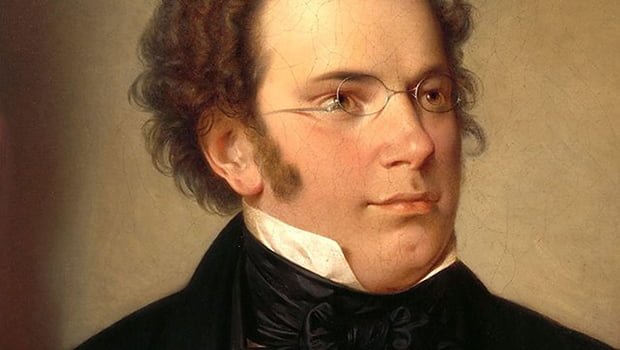
Franz Schubert stands among the greatest composers in the history of Western classical music. Although he lived only thirty-one years, his extraordinary creative output transformed the musical landscape of the early nineteenth century. Schubert served as a bridge between the Classical era of composers such as Wolfgang Amadeus Mozart and Ludwig van Beethoven and the emerging Romantic movement that would later flourish through composers like Robert Schumann and Johannes Brahms.
Renowned for his gift for melody, emotional depth, and innovative harmonic language, Schubert composed over six hundred songs, numerous chamber works, symphonies, piano pieces, sacred compositions, and operas. Many of his works, including his songs and chamber music, are considered among the finest achievements in classical music. Despite receiving limited recognition during his lifetime, Schubert’s reputation grew enormously after his death, securing his place as one of the most beloved and influential composers of all time.
Childhood
Franz Peter Schubert was born on January 31, 1797, in Vienna, Austria, then part of the Habsburg Empire. He was the twelfth child of Franz Theodor Schubert, a respected schoolmaster, and Elisabeth Vietz Schubert. Although many of his siblings died in infancy, Franz grew up in a household where education and music were highly valued.
His father taught him the basics of violin, while his older brother Ignaz introduced him to piano lessons. The young Schubert displayed remarkable musical talent from an early age. Family members quickly recognized his extraordinary ear for melody and his ability to learn music rapidly.
As a child, Schubert sang in the parish church choir and became proficient on several instruments. His musical gifts attracted the attention of local teachers, and in 1808 he earned a scholarship to the Imperial Seminary, known as the Stadtkonvikt. This institution provided excellent musical training and allowed him to participate in a student orchestra.
At the seminary, Schubert became familiar with the works of Mozart, Beethoven, and other major composers. The experience profoundly shaped his artistic development and inspired his earliest attempts at composition.
Youth
During his teenage years, Schubert’s creative abilities blossomed. He began composing prolifically while still a student, producing symphonies, chamber music, piano works, and songs. His teachers quickly realized that he possessed exceptional compositional talent.
One of the most influential figures in his development was Antonio Salieri, the respected court composer and teacher. Salieri provided Schubert with formal instruction in composition and encouraged his growing ambitions.
By the age of seventeen, Schubert had already written a remarkable number of works. His early songs demonstrated an unusual sensitivity to poetry and a natural gift for expressing emotions through music. This combination would become one of his defining characteristics.
After leaving the seminary in 1813, Schubert followed his father’s wishes and trained as a schoolteacher. He spent several years teaching at his father’s school, but the profession failed to satisfy him. His true passion remained composition, and he devoted nearly all of his free time to creating music.
The year 1815 marked a particularly astonishing period of productivity. During that single year, Schubert composed hundreds of works, including many songs that would later become central to his legacy. Among them was “Erlkönig,” a dramatic setting of a poem by Johann Wolfgang von Goethe that revealed his extraordinary ability to unite poetry and music.
Adulthood
By 1818, Schubert decided to leave teaching behind and pursue a career as a composer. Although financial stability remained elusive, he devoted himself fully to music. Unlike many composers of his era, Schubert never secured a prestigious court appointment or long-term patronage.
Instead, he relied on the support of a close circle of friends, admirers, and fellow artists. These gatherings became known as “Schubertiads,” informal social events where his music was performed and celebrated. They provided valuable opportunities for Schubert to share his compositions and connect with intellectual and artistic circles in Vienna.
Throughout the 1820s, Schubert continued composing at an extraordinary pace. His music displayed increasing emotional depth, harmonic sophistication, and originality. During these years, he produced some of his greatest chamber works, piano compositions, and song cycles.
Despite his growing artistic maturity, public recognition came slowly. Beethoven remained the dominant musical figure in Vienna, overshadowing many younger composers. Nevertheless, Schubert deeply admired Beethoven and regarded him as a major inspiration.
In 1822, Schubert began work on what would later become known as the “Unfinished Symphony.” Though only two movements were completed, the work is considered one of the masterpieces of Romantic orchestral music.
His personal life was marked by both artistic triumphs and significant challenges. Around 1823, he contracted a serious illness, believed to have been syphilis, which affected his health for the remainder of his life. Despite periods of physical suffering and emotional distress, his creativity remained astonishingly productive.
The final years of his life witnessed the creation of many masterpieces, including monumental piano sonatas, chamber works, and song collections that demonstrated his mature artistic voice.
Major Compositions
Schubert’s catalog includes more than one thousand works, spanning nearly every major musical genre of his time. Among his most celebrated compositions are:
Songs (Lieder)
Schubert revolutionized the German art song, or Lied. His ability to translate poetic imagery and emotion into music remains unmatched.
Notable songs include:
- Erlkönig (1815)
- Gretchen am Spinnrade (1814)
- Ave Maria (1825)
- An die Musik (1817)
- Ständchen (1828)
Song Cycles
Schubert elevated the song cycle into a major artistic form.
Important examples include:
- Die schöne Müllerin (1823)
- Winterreise (1827)
- Schwanengesang (published posthumously)
Symphonies
His symphonic works reveal both Classical balance and Romantic expressiveness.
Major symphonies include:
- Symphony No. 5 in B-flat Major
- Symphony No. 8 in B Minor (“Unfinished”)
- Symphony No. 9 in C Major (“Great”)
Chamber Music
Schubert’s chamber works are among the treasures of the classical repertoire.
Outstanding examples include:
- String Quintet in C Major
- String Quartet No. 14, “Death and the Maiden”
- Piano Trio No. 2 in E-flat Major
- Trout Quintet
Piano Music
His piano compositions remain central to the repertoire.
Important works include:
- Impromptus
- Moments Musicaux
- Piano Sonata in B-flat Major, D. 960
- Wanderer Fantasy
Sacred and Choral Works
Schubert also composed numerous religious works, including masses and sacred songs.
Notable examples include:
- Mass No. 5 in A-flat Major
- Mass No. 6 in E-flat Major
These compositions demonstrate the remarkable breadth of his musical imagination and his mastery of diverse forms.
Death
In 1828, Schubert’s health deteriorated significantly. Despite his physical decline, he continued composing with remarkable determination. During his final months, he completed several masterpieces that would later be recognized as among the greatest works in classical music.
On November 19, 1828, Franz Schubert died in Vienna at the age of thirty-one. The exact cause of death remains debated by historians and medical scholars, but it is generally believed to have resulted from complications related to illness and severe physical exhaustion.
His death shocked his friends and admirers, who recognized the loss of a unique artistic talent. In accordance with his wishes, Schubert was buried near Beethoven, whom he had admired throughout his life.
Although he achieved only modest fame during his lifetime, his manuscripts and compositions continued to circulate after his death. As musicians and critics discovered the depth and beauty of his works, his reputation steadily expanded across Europe and eventually throughout the world.
Conclusion
Franz Schubert’s life was brief but extraordinarily productive. In just thirty-one years, he created a body of work that ranks among the greatest achievements in Western music. His unparalleled gift for melody, profound emotional sensitivity, and innovative approach to harmony helped shape the development of Romantic music.
Schubert transformed the art song, enriched chamber music, expanded the expressive possibilities of the symphony, and produced piano works of lasting significance. Although he struggled for recognition during his lifetime, posterity has acknowledged his genius.
Today, Schubert’s music continues to inspire performers, scholars, and audiences around the world. His compositions capture the full spectrum of human emotion—from joy and love to loneliness and despair—and remain as moving and relevant as they were nearly two centuries ago. His legacy endures as a testament to the enduring power of musical creativity and artistic vision.
Comments are closed