Introduction
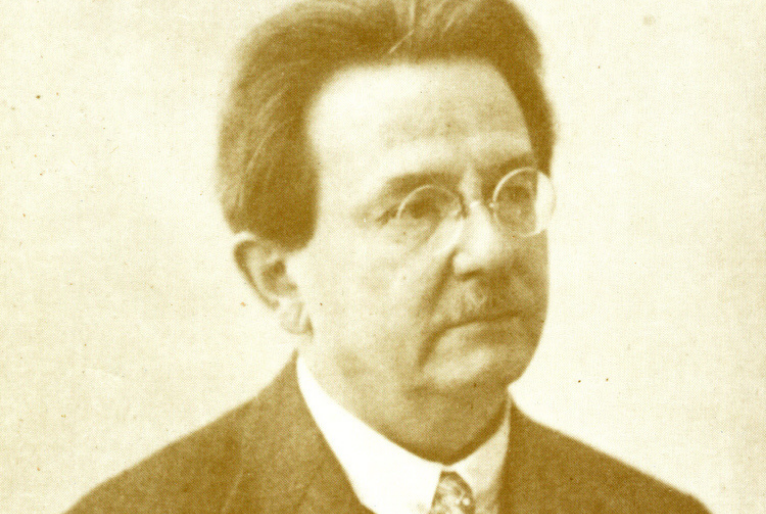
Franz Schmidt was one of the most important Austrian composers of the late Romantic and early twentieth-century periods. A gifted pianist, cellist, organist, conductor, and teacher, he became known for his rich orchestral writing, expressive melodies, and masterful use of counterpoint. While many of his contemporaries embraced modernist musical trends, Schmidt remained committed to the traditions established by composers such as Johannes Brahms, Anton Bruckner, and Franz Liszt. His works combine emotional depth, technical brilliance, and a profound understanding of orchestral color.
Among his most celebrated compositions are his four symphonies, the opera Notre Dame, and the monumental oratorio The Book with Seven Seals. Throughout his life, Schmidt balanced successful careers as both a performer and educator while developing a unique compositional voice that earned him a respected place in Austrian musical history.

Childhood
Franz Schmidt was born on December 22, 1874, in Pressburg, then part of the Kingdom of Hungary within the Austro-Hungarian Empire. The city is known today as Bratislava, the capital of Slovakia. He was born into a German-speaking family and was exposed to music from an early age.
His mother was his first music teacher and quickly recognized his exceptional talent. She provided him with piano lessons during his childhood, nurturing his developing abilities. Schmidt also studied harmony, organ, and music theory with local teachers, demonstrating remarkable musical aptitude while still very young.
Growing up in a culturally diverse region influenced by Hungarian, Austrian, and Slovak traditions, Schmidt experienced a rich musical environment that would later contribute to the distinctive character of his compositions. By his early teenage years, he had already established himself as a highly talented musician with considerable promise.
Youth
In 1888, Schmidt’s family moved to Vienna, one of Europe’s leading centers of musical culture. This move proved crucial to his artistic development. Vienna offered access to world-class musical institutions, renowned teachers, and a thriving concert life.
Schmidt enrolled at the Vienna Conservatory, where he studied piano, cello, composition, and music theory. His teachers included distinguished musicians who recognized his extraordinary abilities. During his studies, he received instruction from the legendary composer Anton Bruckner, whose influence would remain evident throughout Schmidt’s career. Bruckner’s expansive symphonic structures and rich harmonic language left a lasting impression on the young composer.
Schmidt excelled academically and developed into an outstanding performer. His talent as a cellist became particularly apparent, and he soon attracted attention within Vienna’s musical circles. Upon graduating from the conservatory in 1896, he was already well positioned to begin a successful professional career.
Adulthood
Shortly after completing his studies, Schmidt joined the orchestra of the Vienna Court Opera as a cellist. This prestigious position allowed him to work under some of the greatest conductors of the era, including Gustav Mahler. Playing in one of Europe’s finest orchestras provided invaluable experience and deepened his understanding of orchestral writing.
For more than a decade, Schmidt performed regularly with the Vienna Philharmonic Orchestra while continuing to compose. His reputation as both a performer and composer steadily grew.
In 1914, he became a professor at the Vienna Academy of Music. His academic career flourished, and he eventually served as the institution’s director. As a teacher, Schmidt influenced a new generation of Austrian musicians and composers. His dedication to musical education earned widespread respect throughout the Austrian musical community.
Despite his professional accomplishments, Schmidt’s personal life was marked by significant hardship. His first marriage was troubled, and he endured several family tragedies. The death of his daughter Emma in 1932 profoundly affected him and inspired some of his most emotionally powerful music.
Throughout the 1920s and 1930s, Schmidt achieved increasing recognition as a composer. His works were performed throughout Austria and Germany, and he became one of the leading representatives of late Romantic music in Central Europe.
Major Compositions
Symphony No. 1 in E Major (1899)
Schmidt’s First Symphony revealed his mastery of orchestral writing and demonstrated the influence of Bruckner and Brahms. The work established him as a serious symphonic composer.
Symphony No. 2 in E-flat Major (1913)
This symphony displayed greater confidence and originality. Its expansive structure and rich orchestration reflected Schmidt’s growing maturity as a composer.
Opera Notre Dame (1904–1906)
Based on Victor Hugo’s famous novel, Notre Dame became Schmidt’s most successful opera. The work combines dramatic storytelling with lush orchestral textures and memorable vocal writing.
Opera Fredigundis (1916–1921)
This historical opera showcased Schmidt’s ambition and willingness to explore larger dramatic forms. Although less frequently performed, it remains an important part of his operatic legacy.
Symphony No. 3 in A Major (1928)
Often regarded as one of his most optimistic works, the Third Symphony demonstrates Schmidt’s mastery of large-scale musical architecture and lyrical expression.
Symphony No. 4 in C Major (1933)
Widely considered his greatest symphonic achievement, the Fourth Symphony was composed as a memorial to his daughter. Deeply personal and emotionally moving, the work combines sorrow, beauty, and transcendence in a powerful musical statement.
Variations on a Hussar’s Song (1931)
This orchestral work demonstrates Schmidt’s remarkable skill in thematic transformation and orchestration. It remains one of his most frequently performed compositions.
Piano Concerto for the Left Hand (1934)
Written for pianist Paul Wittgenstein, who lost his right arm during World War I, this concerto showcases Schmidt’s ability to create rich musical textures despite unusual technical limitations.
The Book with Seven Seals (1935–1937)
Considered Schmidt’s masterpiece, this monumental oratorio is based on the Book of Revelation. Combining chorus, orchestra, soloists, and organ, the work is one of the most impressive sacred compositions of the twentieth century. Its dramatic power and spiritual depth represent the culmination of Schmidt’s artistic achievements.
Death
During the late 1930s, Schmidt’s health began to decline. Despite physical difficulties, he continued composing and remained active in Vienna’s musical life.
Franz Schmidt died on February 11, 1939, in Perchtoldsdorf, near Vienna, Austria, at the age of sixty-four. His death occurred only months before the outbreak of World War II, a conflict that would dramatically reshape Europe and affect the reception of many composers associated with the Austro-Hungarian tradition.
He was buried near Vienna, where he had spent much of his professional life contributing to Austrian musical culture.
Conclusion
Franz Schmidt occupies a unique place in the history of classical music. Living during a period of tremendous artistic change, he remained devoted to the expressive richness and structural sophistication of the Romantic tradition while creating a highly individual musical voice. His achievements as a composer, performer, and educator made him one of Austria’s most respected musicians.
Although his music was sometimes overshadowed by the rise of modernism, interest in his works has grown steadily in recent decades. His symphonies, operas, chamber works, organ compositions, and sacred music continue to be performed and recorded around the world.
Today, Franz Schmidt is remembered as a master craftsman whose music combines technical brilliance, emotional depth, and profound humanity. His legacy remains an important part of the Austrian musical tradition and a testament to the enduring power of late Romantic art.
Comments are closed