Introduction
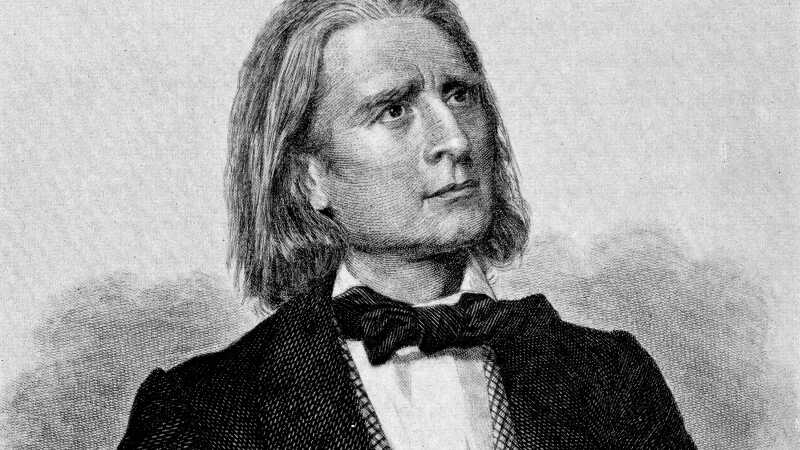
Franz Liszt was one of the most influential musicians of the nineteenth century. Renowned as a virtuoso pianist, innovative composer, conductor, teacher, and writer, he transformed the world of classical music through his extraordinary talent and creative vision. Born in 1811 in the Kingdom of Hungary, Liszt became an international celebrity during his lifetime, attracting audiences throughout Europe with his dazzling piano performances.
Beyond his fame as a performer, Liszt was a groundbreaking composer whose works expanded the possibilities of musical expression. He pioneered the symphonic poem, advanced harmonic language, and inspired future composers such as Richard Wagner, Claude Debussy, and Richard Strauss. His contributions continue to shape classical music today.
Childhood
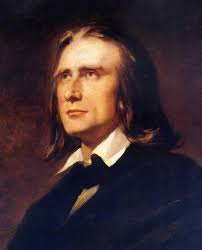
Franz Liszt was born on October 22, 1811, in the village of Raiding, then part of the Kingdom of Hungary within the Austrian Empire. His father, Adam Liszt, worked as a steward for the Esterházy family and was himself an amateur musician. His mother, Anna Liszt, provided a stable and supportive home environment.
From an early age, Franz displayed exceptional musical abilities. His father recognized his talent and began teaching him piano when he was only six years old. The young boy progressed rapidly and soon astonished local audiences with his remarkable technical skill and musical sensitivity.
By the age of nine, Liszt was already performing publicly. His concerts attracted the attention of Hungarian noblemen who agreed to finance his musical education. This support enabled the family to move to Vienna, where Franz could receive instruction from some of the finest musicians of the era.
In Vienna, he studied piano with Carl Czerny, a student of Ludwig van Beethoven, and composition with Antonio Salieri. Under their guidance, Liszt developed a formidable technique and a solid understanding of musical structure.
Youth
During his teenage years, Liszt’s reputation spread throughout Europe. After achieving success in Vienna, he traveled with his family to Paris, which was then one of the most important cultural centers in Europe.
Although he was denied admission to the prestigious Paris Conservatory because he was a foreigner, Liszt continued his studies privately and immersed himself in the city’s vibrant artistic environment. He encountered leading intellectuals, writers, and musicians, broadening his cultural horizons.
The death of his father in 1827 deeply affected him. Still a teenager, Liszt was forced to support himself and his mother by teaching piano. During this difficult period, he became interested in literature, philosophy, and religion, subjects that would later influence many of his compositions.
A turning point came in 1831 when Liszt heard the legendary violinist Niccolò Paganini perform. Inspired by Paganini’s astonishing virtuosity, Liszt resolved to achieve similar mastery on the piano. He devoted countless hours to practice, ultimately developing a technique that revolutionized piano performance.
Throughout the 1830s, he embarked on extensive concert tours, earning admiration across Europe. His extraordinary performances created a phenomenon sometimes referred to as “Lisztomania,” as audiences reacted with unprecedented enthusiasm to his appearances.
Adulthood
By the 1840s, Franz Liszt had become the most celebrated pianist in Europe. He traveled extensively, performing in major cities and captivating audiences with his technical brilliance and charismatic stage presence.
Despite his success as a performer, Liszt gradually shifted his focus toward composition and conducting. In 1848, he settled in the city of Weimar, where he served as Kapellmeister. This period proved highly productive and marked a significant transition in his career.
At Weimar, Liszt championed the music of contemporary composers, particularly Richard Wagner, whose innovative works often faced resistance from traditional audiences. Liszt’s support helped promote many important new compositions.
During these years, he composed many of his greatest masterpieces, including his symphonic poems and large-scale piano works. He sought to create music that conveyed poetic, literary, and philosophical ideas, expanding the expressive possibilities of instrumental composition.
In the 1860s, Liszt moved to Rome and developed a deeper interest in religion. He received minor religious orders within the Catholic Church and became known as Abbé Liszt. His later works often reflected spiritual themes and displayed a more experimental harmonic style.
Throughout his later years, Liszt divided his time among Rome, Weimar, and Budapest. He continued teaching talented young musicians, many of whom became important performers and composers. His generosity as a teacher and mentor further enhanced his legacy.
Major Compositions
Franz Liszt produced an enormous body of work that includes piano music, orchestral compositions, sacred music, songs, and chamber works.
Among his most celebrated piano compositions are:
- Hungarian Rhapsodies
- Piano Sonata in B Minor
- Transcendental Études
- Années de Pèlerinage
- Mephisto Waltz No. 1
- Liebestraum No. 3
- Consolations
His orchestral masterpieces include:
- Les Préludes
- Mazeppa
- Orpheus
- Tasso, Lamento e Trionfo
- Prometheus
- Faust Symphony
- Dante Symphony
Liszt is particularly remembered for inventing and developing the symphonic poem, a form that combines orchestral music with literary or philosophical inspiration. This innovation significantly influenced later composers and contributed to the evolution of orchestral music.
His sacred works include:
- Christus
- Missa Solemnis
- Via Crucis
- Legend of Saint Elizabeth
These compositions demonstrate the breadth of his musical imagination and his ability to combine technical brilliance with emotional and spiritual depth.
Death
In his later years, Liszt remained active despite declining health. He continued teaching, conducting, and attending musical events throughout Europe.
In the summer of 1886, he traveled to Bayreuth to attend the annual Wagner Festival. While there, he became ill with pneumonia. His condition worsened rapidly, and despite medical treatment, he did not recover.
Franz Liszt died on July 31, 1886, at the age of seventy-four. He was buried in Bayreuth, where his grave remains a place of pilgrimage for musicians and admirers from around the world.
His death marked the end of one of the most remarkable careers in music history, but his influence continued to grow long after his passing.
Conclusion
Franz Liszt stands among the greatest figures in the history of classical music. As a pianist, he established new standards of virtuosity that transformed concert performance. As a composer, he expanded the boundaries of musical language and pioneered forms that influenced generations of musicians.
His innovative spirit, dedication to artistic progress, and generosity toward fellow composers helped shape the course of nineteenth-century music. Through masterpieces such as the Hungarian Rhapsodies, the Piano Sonata in B Minor, and the Faust Symphony, Liszt created a legacy that continues to inspire performers, composers, and audiences worldwide.
More than a century after his death, Franz Liszt remains a symbol of artistic excellence, creativity, and musical innovation, securing his place as one of the most important composers of the Romantic era.
Comments are closed