Introduction
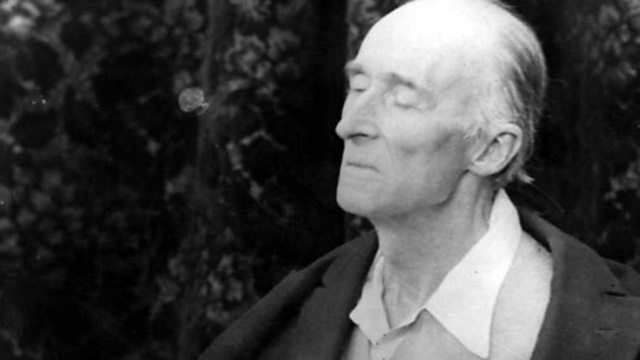
Frederick Delius was one of the most distinctive composers of the late nineteenth and early twentieth centuries. Known for his rich harmonic language, atmospheric orchestration, and deeply personal musical style, Delius created works that often reflected nature, human emotion, and the beauty of the natural world. Although born in England, his artistic development was influenced by experiences in America, Germany, France, and Scandinavia. His music stands apart from the mainstream traditions of his era, blending elements of Romanticism and Impressionism into a unique voice that earned admiration from fellow composers and musicians.
Today, Delius is remembered as one of Britain’s most original composers, whose works continue to captivate audiences through their poetic beauty and expressive depth.
Childhood
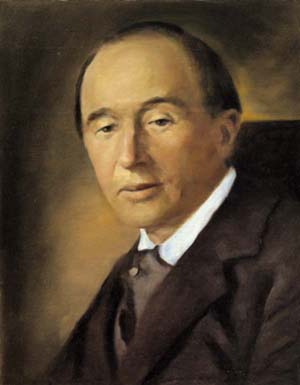
Frederick Theodore Albert Delius was born on January 29, 1862, in Bradford, Yorkshire, England. He was the fourth of fourteen children born to Julius Delius and Elise Pauline Krönig. His parents were of German origin and maintained strong cultural ties to their homeland.
Julius Delius was a prosperous wool merchant who expected his son to enter the family business. While Frederick received a good education and demonstrated intelligence, he showed little interest in commerce. Instead, he became fascinated by music from an early age.
As a child, Delius was exposed to a variety of musical influences. He learned to play the violin and piano and attended concerts whenever possible. Bradford’s growing cultural life provided opportunities for the young musician to hear orchestral performances and develop his appreciation for classical music.
Despite his passion, his father regarded music as an unsuitable profession and discouraged any thoughts of a musical career. This conflict between family expectations and personal ambition would shape much of Delius’s early life.
Youth
After completing his schooling, Delius reluctantly entered the family wool business. His lack of enthusiasm for commercial work became immediately apparent. Rather than focusing on business matters, he devoted much of his energy to studying music and attending performances.
In 1884, hoping to redirect his son’s interests, Julius Delius sent Frederick to Florida in the United States to manage an orange plantation near Jacksonville. Ironically, this move had the opposite effect. Life in America exposed Delius to new musical experiences, including African American spirituals, folk songs, and the sounds of the American South.
These musical encounters left a profound impression on him and would later influence several compositions. During his time in Florida, Delius spent more time studying music than tending orange groves. He began composing seriously and established friendships with local musicians.
Recognizing his son’s determination, Julius eventually relented and agreed to support a formal musical education. In 1886, Delius enrolled at the Leipzig Conservatory in Germany. There he studied composition and became acquainted with many important musicians.
One of the most significant influences during this period was the Norwegian composer Edvard Grieg. Grieg recognized Delius’s talent and encouraged him to pursue composition wholeheartedly. Their friendship proved instrumental in strengthening Delius’s confidence as an artist.
Adulthood
Following his studies in Leipzig, Delius settled in Paris in 1888. The French capital became his permanent home and the center of his creative life. Paris offered artistic freedom and a vibrant cultural environment that suited his independent personality.
During the 1890s, Delius developed his mature compositional style. He drew inspiration from literature, philosophy, and nature rather than traditional musical forms. His music emphasized mood, atmosphere, and emotional expression over strict structural conventions.
In 1903, he married the German painter Jelka Rosen, who became his lifelong companion and supporter. The couple settled in Grez-sur-Loing, a picturesque village near Paris. Their home provided a peaceful setting where Delius composed many of his greatest works.
Although he enjoyed limited success during his early career, Delius gradually gained recognition. Conductors and musicians began championing his music, particularly in Britain and Germany. One of his most important supporters was Thomas Beecham, whose advocacy greatly contributed to Delius’s reputation.
Throughout the first decades of the twentieth century, Delius produced a remarkable body of work that established him as a major composer. His compositions reflected themes of nature, love, memory, and the passage of time. Rather than dramatic conflict, his music often conveyed contemplation and serenity.
As he aged, Delius faced severe health challenges. He suffered from a debilitating illness that gradually left him blind and paralyzed. Despite these difficulties, he continued composing with the assistance of the young musician Eric Fenby, who acted as his amanuensis and helped preserve his creative output during his final years.
Major Compositions
Frederick Delius composed works across a wide range of genres, including orchestral music, concertos, choral works, chamber music, and opera. Among his most celebrated compositions are:
On Hearing the First Cuckoo in Spring (1912)
Perhaps Delius’s most famous orchestral work, this tone poem captures the arrival of spring with delicate orchestration and lyrical melodies. It remains one of the most frequently performed pieces in his catalog.
Summer Night on the River (1911)
This atmospheric work evokes the tranquility of a river at dusk. Its flowing textures and subtle harmonies demonstrate Delius’s mastery of orchestral color.
Brigg Fair (1907)
Inspired by an English folk song, this orchestral rhapsody combines traditional melodies with Delius’s distinctive harmonic language. It is considered one of the masterpieces of British orchestral music.
Sea Drift (1903–1904)
A large-scale work for baritone, chorus, and orchestra based on poetry by Walt Whitman. The composition explores themes of love, loss, and nature with profound emotional depth.
A Mass of Life (1904–1905)
Based on the writings of Friedrich Nietzsche, this ambitious choral work reflects Delius’s philosophical interests and ranks among his most important achievements.
Appalachia (1896–1903)
Inspired by melodies Delius encountered during his time in America, this composition blends orchestral and choral elements into a powerful musical tribute to the American South.
Paris: The Song of a Great City (1899)
This orchestral work portrays the energy and atmosphere of Paris, reflecting the composer’s affection for the city where he spent most of his adult life.
A Village Romeo and Juliet (1900–1901)
One of Delius’s most successful operas, based on a novella by Gottfried Keller, it contains the famous orchestral interlude “The Walk to the Paradise Garden.”
Death
By the 1920s, Delius’s health had deteriorated significantly. The illness that afflicted him caused increasing physical limitations and eventually left him unable to write music independently. Nevertheless, his determination to compose remained strong.
With the assistance of Eric Fenby, Delius completed several important late works. Fenby’s dedication allowed the composer to continue expressing his musical ideas despite overwhelming physical challenges.
Frederick Delius died on June 10, 1934, in Grez-sur-Loing, France, at the age of seventy-two. Following his death, his remains were eventually reinterred in England, fulfilling the wishes of his family and admirers.
His passing marked the end of a remarkable artistic journey that had spanned multiple countries, cultures, and musical traditions.
Conclusion
Frederick Delius occupies a unique place in the history of classical music. Neither fully English nor entirely continental in style, he created a musical language that was unmistakably his own. His works emphasized atmosphere, color, and emotional subtlety, offering listeners an alternative to the dramatic intensity that characterized much of late Romantic music.
Although his music was sometimes misunderstood during his lifetime, his reputation has steadily grown. Today, Delius is recognized as one of the most original composers of the twentieth century’s early years. His ability to transform landscapes, memories, and emotions into richly expressive music continues to inspire performers and audiences around the world.
Through works such as On Hearing the First Cuckoo in Spring, Brigg Fair, Sea Drift, and A Mass of Life, Frederick Delius secured a lasting legacy as a composer whose music celebrates beauty, reflection, and the enduring connection between humanity and nature.
Comments are closed