Introduction
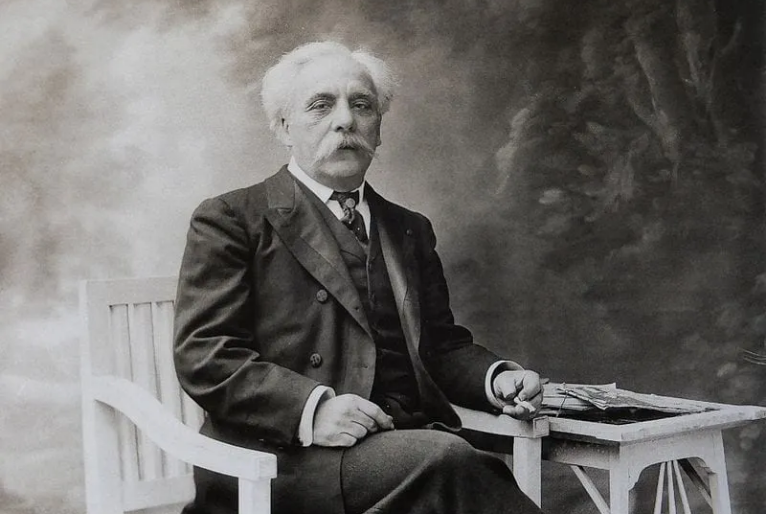
Gabriel Urbain Fauré was one of the most influential French composers of the late nineteenth and early twentieth centuries. Known for his refined harmonies, lyrical melodies, and elegant musical style, Fauré helped bridge the gap between Romanticism and modernism in classical music. His compositions display a unique blend of emotional depth, sophistication, and restraint, qualities that distinguished him from many of his contemporaries.
Throughout his career, Fauré composed chamber music, piano works, songs, choral music, and orchestral pieces that continue to be performed worldwide. As a teacher and administrator, he also played a vital role in shaping the future of French music, influencing composers such as Maurice Ravel and Nadia Boulanger. His legacy remains firmly established as one of France’s greatest musical achievements.
Childhood
Gabriel Fauré was born on May 12, 1845, in Pamiers, a small town in the Ariège region of southern France. He was the youngest of six children born to Toussaint-Honoré Fauré, a school administrator, and Marie-Antoinette-Hélène Lalène-Laprade. His family was not wealthy, but they valued education and culture.
From an early age, Fauré displayed an exceptional sensitivity to music. Family members noticed his fascination with the harmonium located in a chapel near his home. He spent countless hours experimenting with the instrument, revealing a natural musical talent.
Recognizing his potential, a local benefactor helped secure his admission to the École Niedermeyer in Paris at the age of nine. The school specialized in training church musicians and provided a rigorous musical education. Although the separation from his family was difficult, the move proved essential to his development as a composer and performer.
At the École Niedermeyer, Fauré studied piano, organ, harmony, counterpoint, and composition. One of the most significant influences during this period was the renowned composer Camille Saint-Saëns, who became a teacher, mentor, and lifelong friend. Saint-Saëns introduced the young musician to contemporary works by composers such as Robert Schumann, Franz Liszt, and Richard Wagner, greatly expanding his musical horizons.
Youth
Fauré graduated from the École Niedermeyer in 1865 with numerous honors. Soon afterward, he accepted a position as organist at the Church of Saint-Sauveur in Rennes. Although the role provided valuable experience, Fauré often found the provincial environment restrictive.
The outbreak of the Franco-Prussian War in 1870 interrupted his professional life. Fauré served in the French military and experienced the hardships of war firsthand. Following France’s defeat, he temporarily relocated to Switzerland, where he taught music before returning to Paris.
Back in the French capital, Fauré resumed his musical career and became increasingly involved in artistic circles. He developed friendships with many prominent musicians, writers, and intellectuals. During this period, he began composing songs that revealed his remarkable gift for melody and text setting.
His personal life also experienced challenges. He became engaged to Marianne Viardot, the daughter of the famous singer Pauline Viardot, but the engagement ended unexpectedly. The emotional disappointment influenced several works from this period, adding a deeper expressive quality to his music.
Despite these setbacks, Fauré’s reputation steadily grew. He secured positions as assistant organist and choirmaster at important Parisian churches while continuing to compose and perform.
Adulthood
The 1880s and 1890s marked a period of increasing recognition for Fauré. He became one of France’s most respected composers, although financial success remained elusive for many years. To support himself, he continued working as an organist, teacher, and music critic.
In 1883, he married Marie Fremiet, the daughter of noted sculptor Emmanuel Fremiet. The couple had two sons. Although their marriage was stable, Fauré’s demanding professional life often kept him away from home.
As his compositional voice matured, Fauré developed a highly individual style characterized by subtle harmonic innovation and expressive lyricism. Unlike many Romantic composers who favored dramatic gestures, Fauré preferred elegance, clarity, and emotional nuance.
In 1896, he was appointed chief organist at the prestigious Church of the Madeleine in Paris. The same year, he became professor of composition at the Paris Conservatoire. His influence as a teacher grew significantly, and many future musical leaders studied under him.
In 1905, Fauré was appointed director of the Paris Conservatoire. He introduced important reforms that modernized the institution and improved educational standards. Although some traditionalists resisted these changes, his leadership helped shape a new generation of French musicians.
During his later years, Fauré suffered from a severe hearing disorder that distorted his perception of sound. This condition made composing increasingly difficult. Nevertheless, he continued to create some of his most innovative and profound works despite his physical challenges.
Major Compositions
Gabriel Fauré produced a substantial body of work that remains central to the classical repertoire.
Requiem, Op. 48
Perhaps his most famous composition, the Requiem was written between 1887 and 1890. Unlike many traditional requiems that emphasize judgment and terror, Fauré’s version focuses on peace, consolation, and spiritual serenity. The work’s gentle beauty has made it one of the most beloved choral compositions ever written.
Pavane, Op. 50
Composed in 1887, the Pavane is one of Fauré’s most popular orchestral works. Elegant and graceful, it reflects the composer’s gift for creating memorable melodies and refined musical textures.
Dolly Suite, Op. 56
Written for piano four hands and later orchestrated, the Dolly Suite consists of charming miniature pieces inspired by the daughter of one of Fauré’s close friends. The suite remains a favorite among performers and audiences.
Pelléas et Mélisande, Op. 80
This incidental music was composed for a theatrical production of Maurice Maeterlinck’s play. The work contains some of Fauré’s most atmospheric and evocative music, including the famous Sicilienne.
Nocturnes and Barcarolles
Fauré composed thirteen nocturnes and thirteen barcarolles for solo piano. These works trace the evolution of his musical language across several decades and are regarded as masterpieces of the piano repertoire.
Violin Sonata No. 1 in A Major, Op. 13
This youthful composition became one of Fauré’s earliest major successes. The sonata combines Romantic passion with remarkable structural elegance.
Piano Quartets and Piano Quintets
Fauré’s chamber music is considered among the finest ever written. His piano quartets and quintets demonstrate extraordinary craftsmanship, emotional depth, and sophistication.
Songs (Mélodies)
Fauré composed more than one hundred songs throughout his career. Collections such as La Bonne Chanson and Cinq mélodies de Venise are celebrated for their sensitivity to poetry and musical expression.
Death
In his final years, Fauré continued to compose despite worsening health. His hearing disorder became increasingly severe, making it difficult for him to participate in public musical life. Nevertheless, his creative output remained impressive, producing late masterpieces that revealed an increasingly modern harmonic language.
Gabriel Fauré died in Paris on November 4, 1924, at the age of seventy-nine. His death marked the end of an era in French music. He received a state funeral, a rare honor that reflected the immense respect he had earned throughout his lifetime.
Many leading musicians, government officials, and admirers attended the ceremony. His passing was mourned across France and throughout the international musical community.
Conclusion
Gabriel Fauré occupies a unique place in the history of classical music. His works combine emotional richness with remarkable refinement, creating a musical language that remains distinctive and timeless. As a composer, teacher, and administrator, he profoundly influenced the direction of French music during a period of significant cultural change.
His compositions continue to inspire performers and audiences through their beauty, subtlety, and humanity. From the peaceful serenity of the Requiem to the intimate poetry of his songs and chamber works, Fauré’s music reflects a lifelong pursuit of artistic excellence.
More than a century after many of his greatest works were written, Gabriel Fauré remains recognized as one of the most important composers in French history and one of the defining musical voices of his generation.
Comments are closed