Introduction
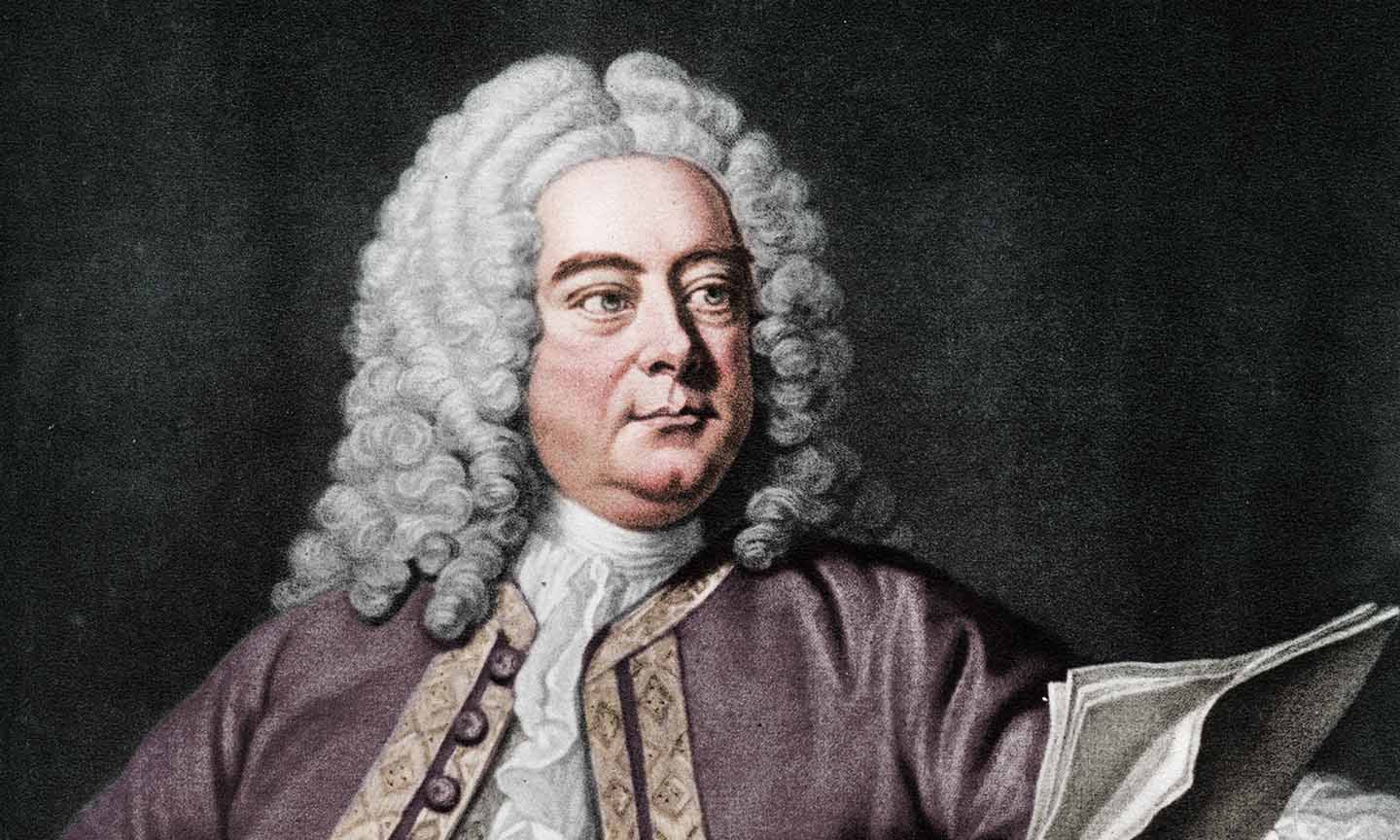
Georg Friedrich Handel was one of the most influential composers of the Baroque era and a central figure in the history of Western classical music. Born in Germany and later becoming a naturalized British citizen, Handel achieved international fame through his operas, oratorios, concertos, and sacred music. His remarkable ability to combine German craftsmanship, Italian lyricism, and English grandeur allowed him to create works that have remained popular for centuries. Among his many masterpieces, Messiah stands as one of the most celebrated choral works ever composed. Handel’s music helped shape the development of classical music and continues to inspire performers and audiences around the world.

Childhood
Georg Friedrich Handel was born on February 23, 1685, in Halle, a city in the Duchy of Magdeburg, within the Holy Roman Empire. He was the son of Georg Händel, a respected barber-surgeon, and Dorothea Taust. His father was already advanced in age when Handel was born and hoped that his son would pursue a career in law rather than music.
Despite his father’s wishes, Handel displayed an extraordinary interest in music from an early age. According to popular accounts, he secretly practiced on a small clavichord that had been placed in the attic of the family home. His musical talent soon became impossible to ignore. During a visit to the court of the Duke of Saxe-Weissenfels, Handel impressed the duke with his playing. The duke encouraged Handel’s father to allow the boy to receive formal musical training.
Handel subsequently studied under Friedrich Wilhelm Zachow, the organist of Halle’s principal church. Zachow provided the young musician with a comprehensive education in composition, keyboard performance, counterpoint, and orchestration. Under his guidance, Handel mastered various musical styles and became proficient on several instruments.
Youth
After completing his early studies, Handel enrolled at the University of Halle in 1702, intending to study law in accordance with his father’s wishes. However, his passion for music quickly overshadowed any interest in a legal career. During this period, he served briefly as an organist at the Calvinist Cathedral in Halle.
In 1703, Handel moved to Hamburg, one of Germany’s most important cultural centers and home to a thriving opera scene. There he joined the orchestra of the Hamburg Opera House, first as a violinist and later as a harpsichordist. Hamburg provided the young composer with invaluable experience in theatrical music and exposed him to leading musicians of the time.
Handel soon began composing operas. His first opera, Almira, premiered in 1705 and achieved considerable success. A second opera, Nero, followed shortly thereafter. These early achievements established his reputation as a promising composer and encouraged him to seek further opportunities abroad.
Recognizing the importance of Italian music, Handel traveled to Italy in 1706. During his years there, he visited Florence, Rome, Naples, and Venice. Italy was then the center of European musical innovation, and Handel immersed himself in its rich artistic culture. He studied the works of leading composers, developed his mastery of Italian opera, and composed numerous cantatas, sacred works, and instrumental pieces.
His Italian years significantly enhanced his reputation. Audiences and patrons admired his extraordinary talent, and he earned the nickname “Il Sassone,” meaning “The Saxon,” in recognition of his German origins.
Adulthood
In 1710, Handel accepted the position of Kapellmeister to the Elector of Hanover. However, he soon traveled to London, a city that would become his permanent home and the center of his professional life.
Handel’s arrival in London marked a turning point in his career. His opera Rinaldo, premiered in 1711, was an immediate success and introduced English audiences to the splendor of Italian opera. The production featured dramatic effects, memorable melodies, and virtuosic singing, helping establish Handel as one of London’s leading composers.
Over the following decades, Handel became a dominant figure in the city’s musical life. He composed numerous Italian operas, including Giulio Cesare, Tamerlano, and Rodelinda. These works showcased his exceptional gift for characterization and dramatic expression.
In 1727, Handel became a naturalized British citizen. His connection with the British royal family strengthened his position within English society. He composed ceremonial music for important state occasions, including coronations and royal celebrations.
Despite his success, the popularity of Italian opera eventually declined in England. Faced with changing public tastes and financial difficulties, Handel adapted by turning increasingly toward the English-language oratorio. Unlike operas, oratorios were performed without elaborate staging or costumes and often explored religious themes.
This transition proved remarkably successful. Handel’s oratorios appealed to a broad audience and allowed him to continue composing large-scale dramatic works. His ability to combine emotional depth, powerful choruses, and accessible storytelling made these compositions immensely popular.
Throughout his life, Handel demonstrated remarkable resilience. He overcame financial setbacks, artistic rivalries, and periods of ill health. His determination and creativity enabled him to remain one of Europe’s most respected composers for decades.
Major Compositions
Handel’s vast catalog includes operas, oratorios, orchestral works, chamber music, and sacred compositions. Several of his works remain cornerstones of the classical repertoire.
Messiah (1741)
Perhaps Handel’s most famous composition, Messiah is an English-language oratorio that tells the story of Christ’s life, death, and resurrection. First performed in Dublin in 1742, it became one of the most beloved works in Western music history. The “Hallelujah” Chorus is especially renowned and continues to be performed worldwide.
Water Music (1717)
Composed for a royal excursion on the River Thames, Water Music consists of a collection of orchestral suites designed for outdoor performance. Its lively character and elegant melodies made it an immediate success.
Music for the Royal Fireworks (1749)
Written to celebrate the Treaty of Aix-la-Chapelle, this festive orchestral work features brilliant fanfares and majestic themes. It remains one of Handel’s most frequently performed compositions.
Giulio Cesare (1724)
Considered one of Handel’s greatest operas, Giulio Cesare combines political intrigue, romance, and powerful character development. It is widely regarded as a masterpiece of Baroque opera.
Rinaldo (1711)
Handel’s first major success in London, Rinaldo helped popularize Italian opera in England and established his reputation as a leading composer.
Rodelinda (1725)
This opera is celebrated for its emotional depth and richly developed characters. It remains one of the finest examples of Handel’s dramatic skill.
Solomon (1748)
An oratorio based on the biblical king, Solomon contains some of Handel’s most beautiful choral and orchestral writing, including the famous “Arrival of the Queen of Sheba.”
Israel in Egypt (1739)
This dramatic oratorio is notable for its extensive use of choruses and vivid musical depictions of biblical events.
Death
In his later years, Handel suffered from declining health, particularly problems with his eyesight. Despite undergoing medical treatments and surgeries, he gradually lost much of his vision. Nevertheless, he continued to compose and supervise performances of his works for as long as possible.
Handel died on April 14, 1759, in London at the age of seventy-four. His death was widely mourned throughout Britain and across Europe. In recognition of his immense contributions to music and British cultural life, he was honored with burial in Westminster Abbey, a distinction reserved for the nation’s most celebrated figures.
Thousands attended his funeral, reflecting the extraordinary admiration he had earned during his lifetime. His grave remains an important site for musicians and admirers of classical music.
Conclusion
Georg Friedrich Handel was one of the greatest composers of the Baroque era and a pivotal figure in the development of Western music. His extraordinary career spanned multiple countries, musical traditions, and genres. By blending German discipline, Italian elegance, and English grandeur, he created a unique musical language that resonated with audiences across Europe.
From the brilliance of his operas to the spiritual power of his oratorios, Handel produced works of enduring beauty and emotional depth. His masterpiece Messiah remains one of the most frequently performed choral works in history, while compositions such as Water Music and Music for the Royal Fireworks continue to captivate listeners centuries after their creation.
Handel’s legacy extends far beyond his own era. His music influenced generations of composers and remains a vital part of concert life worldwide. Through his genius, perseverance, and artistic vision, Georg Friedrich Handel secured a permanent place among the greatest composers in human history.
Comments are closed