Introduction
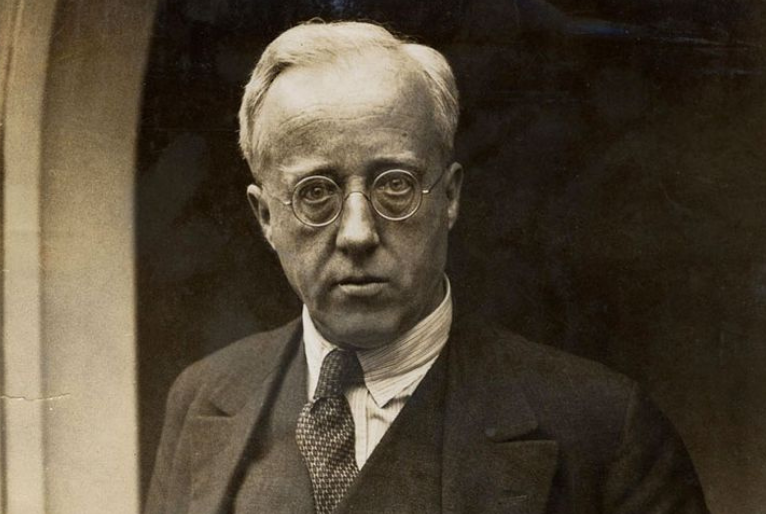
Gustav Holst was one of the most influential British composers of the early twentieth century. Best known for his orchestral suite The Planets, Holst developed a distinctive musical voice that blended English folk traditions, innovative orchestration, and influences from literature, mythology, and Eastern philosophy. Although The Planets remains his most celebrated work, Holst composed a wide variety of music, including operas, choral works, chamber music, and compositions for military bands.
His lifelong dedication to music education and his constant search for artistic originality helped establish him as a central figure in the development of modern British music. Holst’s works continue to be performed throughout the world, admired for their imaginative character, emotional depth, and technical craftsmanship.

Childhood
Gustav Theodore Holst was born on September 21, 1874, in Cheltenham, Gloucestershire, England. He came from a musical family with roots that extended beyond Britain. His father, Adolph von Holst, was a respected pianist, organist, and music teacher. His mother, Clara Cox Holst, was also musically gifted and possessed a fine singing voice.
From an early age, Holst was surrounded by music. His parents encouraged his musical development, and he began learning the piano as a child. However, he suffered from neuritis in his right arm, a condition that caused pain and limited his ability to pursue a career as a concert pianist. This physical challenge would eventually influence his decision to focus on composition rather than performance.
The death of his mother when he was only eight years old deeply affected him. Despite this tragedy, music remained a constant presence in his life. During his school years, he developed an interest in composition and began writing small musical pieces. He also learned to play the trombone, an instrument that would later provide him with valuable orchestral experience.
Youth
As a young man, Holst studied at the Royal College of Music in London, one of Britain’s leading musical institutions. There he received instruction in composition and encountered many talented musicians who would shape his future career.
One of the most significant friendships he formed during this period was with fellow composer Ralph Vaughan Williams. The two composers became close friends and remained so throughout their lives. They regularly exchanged ideas, critiqued each other’s works, and encouraged one another’s artistic development.
Financial difficulties often challenged Holst during his student years. To support himself, he worked as a professional trombonist in orchestras and theater ensembles. These experiences provided practical knowledge of orchestral instruments and performance techniques, which later enriched his compositions.
During this period, Holst became increasingly interested in English folk music and in the works of composers such as Richard Wagner. He also developed a fascination with literature, mythology, and ancient cultures. These interests would become recurring themes in his musical output.
Adulthood
After completing his studies, Holst embarked on a career that combined composing, teaching, and conducting. In 1905, he accepted a position as Director of Music at St. Paul’s Girls’ School in London. He remained associated with the institution for the rest of his life and became highly respected as an educator.
Holst also taught at Morley College, where he worked with adult students and promoted broader access to musical education. His teaching style emphasized creativity, discipline, and a deep appreciation for artistic expression.
During the early twentieth century, Holst sought new sources of inspiration beyond the traditional European musical canon. He became fascinated by Sanskrit literature and Indian philosophy. He taught himself enough Sanskrit to read ancient texts in their original language and composed several works inspired by these writings, including Savitri and Choral Hymns from the Rig Veda.
His reputation grew steadily, but true international recognition arrived after the composition of The Planets between 1914 and 1917. The suite’s originality, vivid orchestration, and emotional power established Holst as one of Britain’s leading composers.
Despite his success, Holst remained modest and somewhat reserved. He preferred a quiet life focused on music, teaching, and intellectual pursuits rather than public fame.
Throughout the 1920s and early 1930s, he continued composing and conducting. Although he never fully escaped being identified with The Planets, he continued to experiment with new musical ideas and forms. His later works demonstrated increasing sophistication and originality, even if they never achieved the same popular success.
Major Compositions
The Planets (1914–1917)
Undoubtedly Holst’s masterpiece, The Planets is a seven-movement orchestral suite inspired by the astrological characteristics associated with each planet known at the time. The movements are:
- Mars, the Bringer of War
- Venus, the Bringer of Peace
- Mercury, the Winged Messenger
- Jupiter, the Bringer of Jollity
- Saturn, the Bringer of Old Age
- Uranus, the Magician
- Neptune, the Mystic
The work revolutionized orchestral writing and remains one of the most frequently performed compositions of the twentieth century.
St. Paul’s Suite (1912–1913)
Written for students at St. Paul’s Girls’ School, this charming orchestral work incorporates English folk melodies and showcases Holst’s gift for colorful orchestration.
First Suite in E-flat for Military Band (1909)
This groundbreaking composition elevated the artistic status of wind band music. It remains a cornerstone of the modern concert band repertoire.
Second Suite in F for Military Band (1911)
Another landmark work for wind ensemble, this suite draws heavily from English folk songs and demonstrates Holst’s mastery of thematic development.
Savitri (1908)
A chamber opera inspired by Indian mythology, Savitri reflects Holst’s interest in Eastern philosophy and spirituality.
Choral Hymns from the Rig Veda (1908–1912)
These choral works are based on ancient Sanskrit texts translated by Holst himself. They reveal his deep engagement with Indian culture and religion.
Egdon Heath (1927)
Often considered one of Holst’s most personal compositions, this orchestral work was inspired by the writings of novelist Thomas Hardy. Holst himself regarded it as one of his finest achievements.
Hammersmith (1930)
Written for military band and later orchestrated, Hammersmith depicts life along the Thames River in London and is admired for its complexity and atmospheric character.
Death
Throughout his later years, Holst struggled with recurring health problems. The intense workload created by composing, conducting, and teaching often left him exhausted. He also suffered from digestive disorders and other chronic ailments.
In 1933, he underwent surgery related to stomach problems. Although the operation initially appeared successful, complications developed. His health continued to decline during the following months.
Gustav Holst died on May 25, 1934, in London at the age of fifty-nine. His death represented a significant loss for British music. He was buried at Chichester Cathedral, a location closely associated with his musical career and spiritual outlook.
Musicians, students, and colleagues mourned the passing of a composer whose influence extended far beyond his own works.
Conclusion
Gustav Holst occupies a unique place in music history as a composer who combined tradition with innovation. His fascination with folk music, mythology, literature, and Eastern philosophy enabled him to create a distinctive musical language that differed from that of his contemporaries.
While The Planets remains his most famous achievement, Holst’s broader legacy includes pioneering works for wind band, significant choral compositions, chamber operas, and an enduring contribution to music education. His influence can be heard in later generations of composers, film music, and orchestral writing throughout the world.
More than ninety years after his death, Holst’s music continues to captivate audiences with its imagination, emotional power, and originality. His dedication to artistic exploration and his commitment to education ensure that he remains one of the most respected and celebrated composers in British musical history.
Comments are closed