Introduction
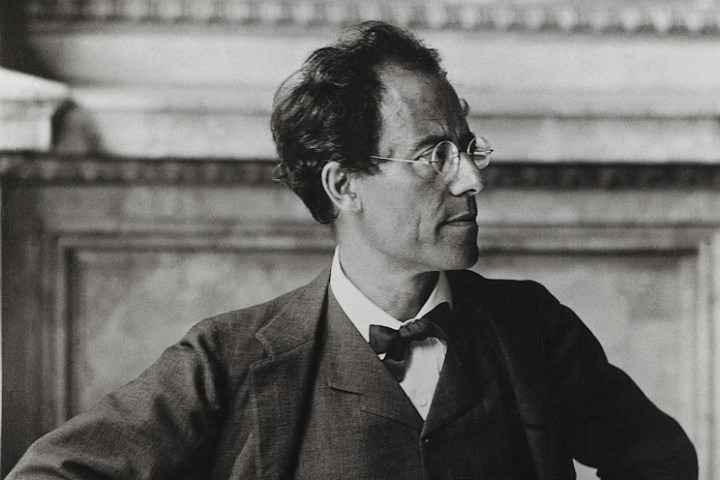
Gustav Mahler stands among the most influential composers and conductors in the history of Western classical music. Born during the final decades of the Austrian Empire, Mahler bridged the Romantic era and the emerging modern age. His music expanded the boundaries of the symphony, incorporating vast orchestral forces, profound philosophical themes, folk influences, and deeply personal emotions. Although his works were not fully appreciated during his lifetime, Mahler’s compositions eventually became central to the orchestral repertoire and inspired generations of composers.
In addition to his achievements as a composer, Mahler was one of the most respected conductors of his era. His relentless pursuit of artistic perfection transformed the standards of opera and symphonic performance. Today, he is celebrated as a visionary whose music continues to captivate audiences around the world.
Childhood
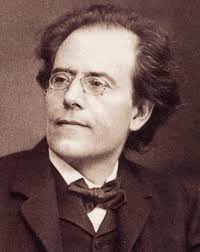
Gustav Mahler was born on July 7, 1860, in the village of Kaliště, located in what is now the Czech Republic. At the time, the region was part of the Austrian Empire. He was the second of fourteen children born to Bernhard Mahler and Marie Mahler. His family was of Jewish descent and belonged to the German-speaking community of the region.
Shortly after Gustav’s birth, the family moved to the town of Jihlava, where his father established a successful distillery and tavern business. Jihlava was an important cultural center, and the young Mahler was exposed to a variety of musical influences. Military bands frequently performed in the town, and folk songs from different ethnic traditions filled the streets. These sounds would later become a defining feature of his compositions.
Mahler demonstrated remarkable musical talent at an early age. He began piano lessons as a child and quickly gained recognition for his abilities. By the age of ten, he was already performing publicly. Despite his musical gifts, his childhood was marked by tragedy. Several of his siblings died young, and the family environment was often troubled by conflict between his parents. These experiences of loss and emotional turmoil profoundly shaped his artistic outlook and later found expression in his music.
Youth
Recognizing his exceptional talent, Mahler’s parents sent him to Vienna in 1875 to study at the prestigious Vienna Conservatory. There, he received formal training in piano, composition, and music theory. His years at the conservatory exposed him to the rich cultural life of Vienna, one of Europe’s most important musical centers.
While studying, Mahler became deeply interested in the works of Ludwig van Beethoven, Richard Wagner, and Anton Bruckner. Bruckner, in particular, had a significant influence on Mahler’s developing style. Mahler admired the grandeur and spiritual depth of Bruckner’s symphonies, though he would eventually forge a unique musical voice of his own.
During his student years, Mahler began composing seriously. One of his earliest major works was a cantata entitled Das klagende Lied (“The Song of Lamentation”), which demonstrated his ambition and originality. Although the piece did not initially bring him widespread recognition, it revealed many characteristics that would define his mature compositions, including dramatic storytelling and large-scale orchestration.
After completing his studies, Mahler embarked on a career as a conductor. He accepted a series of positions at regional theaters and opera houses throughout the Austrian Empire and Germany. These early appointments provided valuable experience and helped establish his reputation as a rising musical talent.
Adulthood
Mahler’s conducting career advanced rapidly during the 1880s and 1890s. He held increasingly prestigious positions in cities such as Kassel, Prague, Leipzig, Budapest, and Hamburg. Everywhere he worked, he gained a reputation for discipline, precision, and demanding artistic standards.
In 1897, Mahler achieved one of the most significant milestones of his career when he was appointed director of the Vienna Court Opera. To secure the position, he converted from Judaism to Roman Catholicism, a decision influenced by the social and political realities of the time. Under his leadership, the Vienna Court Opera became one of the finest opera institutions in Europe.
Mahler revolutionized opera production by insisting on rigorous rehearsals, dramatic coherence, and high artistic standards. His reforms transformed the quality of performances and elevated the prestige of the institution.
While maintaining an exhausting conducting schedule, Mahler continued to compose during the summer months. He often retreated to secluded lakeside cottages where he could work in relative isolation. During these periods, he produced many of his greatest symphonies.
In 1902, Mahler married Alma Schindler, a talented musician and composer nearly twenty years younger than himself. The couple had two daughters. Their marriage was passionate but often turbulent, complicated by Mahler’s intense personality and demanding professional commitments.
The year 1907 brought a series of devastating events. Mahler’s older daughter, Maria, died from illness at the age of four. Shortly afterward, he was diagnosed with a serious heart condition. The same year, he resigned from the Vienna Court Opera amid growing political tensions and anti-Semitic criticism.
Seeking new opportunities, Mahler traveled to the United States, where he conducted at the Metropolitan Opera in New York and later became music director of the New York Philharmonic. His performances were widely admired and further enhanced his international reputation.
Major Compositions
Mahler’s compositional legacy is dominated by his symphonies and orchestral song cycles. His works expanded the expressive possibilities of the orchestra and explored profound themes including love, nature, death, spirituality, and the meaning of existence.
Symphony No. 1 in D Major (“Titan”)
Completed in the late 1880s, Mahler’s First Symphony introduced many elements that would characterize his later works. It combines folk melodies, dramatic contrasts, and vivid orchestral colors.
Symphony No. 2 in C Minor (“Resurrection”)
One of Mahler’s most celebrated works, the Second Symphony explores themes of death and spiritual renewal. The monumental final movement includes chorus and vocal soloists, culminating in a powerful vision of resurrection.
Symphony No. 3 in D Minor
The Third Symphony is among the longest symphonies ever written. It presents a vast musical journey encompassing nature, humanity, and divine love.
Symphony No. 4 in G Major
More restrained than some of his other symphonies, the Fourth concludes with a soprano solo depicting a child’s vision of heaven.
Symphony No. 5 in C-sharp Minor
This symphony includes the famous Adagietto movement, one of the most beloved pieces in the orchestral repertoire. The work marks a transition toward a more complex and mature compositional style.
Symphony No. 6 in A Minor (“Tragic”)
Known for its intense emotional power, the Sixth Symphony portrays a struggle against fate and has often been interpreted as reflecting Mahler’s personal anxieties.
Symphony No. 7 in E Minor
This symphony demonstrates Mahler’s fascination with unusual orchestral colors and innovative structures.
Symphony No. 8 in E-flat Major (“Symphony of a Thousand”)
One of the largest-scale works in classical music, the Eighth Symphony requires enormous performing forces. Its premiere in 1910 was a major success and one of the few unequivocal triumphs Mahler experienced during his lifetime.
Das Lied von der Erde (“The Song of the Earth”)
Combining elements of symphony and song cycle, this masterpiece reflects on mortality, beauty, and the transience of life. It is considered one of Mahler’s greatest achievements.
Symphony No. 9 in D Major
The Ninth Symphony is often viewed as Mahler’s farewell to life. Filled with emotional depth and introspection, it remains one of the most profound works in the symphonic literature.
Symphony No. 10
Mahler was unable to complete his Tenth Symphony before his death. Nevertheless, the surviving manuscript reveals a composer continuing to explore new musical directions.
Song Cycles
Mahler also composed several important song cycles, including Lieder eines fahrenden Gesellen (“Songs of a Wayfarer”), Kindertotenlieder (“Songs on the Death of Children”), and the collections known as Des Knaben Wunderhorn. These works played a crucial role in shaping his symphonic style.
Death
By 1910, Mahler’s health had deteriorated significantly. Despite his illness, he continued to conduct and compose. During this period, he completed the Ninth Symphony and worked extensively on the unfinished Tenth Symphony.
In early 1911, Mahler’s condition worsened due to a bacterial infection affecting his heart. He returned from the United States to Europe seeking treatment. Despite the efforts of physicians, his health continued to decline.
Gustav Mahler died in Vienna on May 18, 1911, at the age of fifty. His funeral was attended by family members, friends, musicians, and admirers who recognized the importance of his contributions to music. He was buried at the Grinzing Cemetery in Vienna, near the grave of his daughter Maria.
At the time of his death, Mahler was respected primarily as a conductor. The full significance of his compositions would only become widely recognized in the decades that followed.
Conclusion
Gustav Mahler occupies a unique position in music history. His works brought the Romantic symphonic tradition to its highest level while simultaneously pointing toward the innovations of the twentieth century. Through his expansive orchestration, emotional honesty, and philosophical depth, Mahler transformed the symphony into a powerful vehicle for exploring the human experience.
Although he faced personal tragedies, professional challenges, and limited recognition as a composer during his lifetime, his music ultimately achieved enduring success. Today, Mahler’s symphonies and songs are performed by leading orchestras throughout the world and continue to inspire musicians, scholars, and audiences alike.
His legacy endures not only through the beauty and power of his compositions but also through his unwavering commitment to artistic excellence. Gustav Mahler remains one of the greatest and most influential figures in the history of classical music.
Comments are closed