Introduction
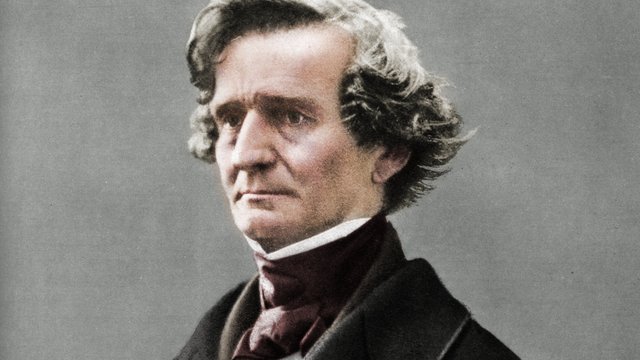
Hector Berlioz was born on December 11, 1803, in La Côte-Saint-André, France, and died on March 8, 1869, in Paris. He was a composer, conductor, music critic, and writer whose works expanded the possibilities of orchestral music. Berlioz is best known for his innovative orchestral techniques and programmatic compositions that sought to tell stories or depict emotions through music.
Living during a period of political and cultural transformation in France, Berlioz embraced the ideals of Romanticism, emphasizing emotional expression, imagination, and individualism. His compositions often drew inspiration from literature, history, religion, and personal experiences. Today, he is recognized as one of the most original voices of nineteenth-century music.
Childhood
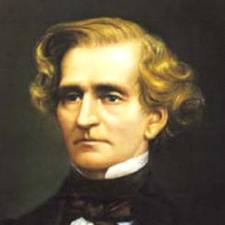
Hector Berlioz was born into a prosperous family in the small town of La Côte-Saint-André, located in southeastern France. His father, Louis Berlioz, was a respected physician and an educated man who encouraged intellectual curiosity. His mother, Marie-Antoinette Josephine Marmion, was a devout Catholic whose strict religious beliefs influenced the household.
Unlike many great composers, Berlioz did not receive extensive formal musical training during childhood. His father taught him literature, science, geography, and languages, providing a broad education. Although the family owned musical instruments, young Hector was never trained as a keyboard player, a rarity among major composers.
Instead, he learned to play the flute and guitar and developed a fascination with music through reading scores and musical treatises. He became particularly interested in the emotional power of music and began composing small pieces during his teenage years. His early exposure to literature, especially the works of Virgil and other classical authors, would later shape many of his musical creations.
Youth
In 1821, following his father’s wishes, Berlioz moved to Paris to study medicine. He enrolled in medical school but quickly discovered that he had little interest in the profession. The experience of witnessing dissections and medical procedures deeply disturbed him.
While living in Paris, Berlioz became increasingly immersed in the city’s vibrant artistic life. He attended concerts, studied scores, and spent countless hours in libraries exploring the works of great composers. He was particularly inspired by the music of Ludwig van Beethoven and Christoph Willibald Gluck.
Eventually, Berlioz abandoned medicine and decided to pursue music despite strong opposition from his family. He entered the prestigious Paris Conservatoire in 1826, where he studied composition under Jean-François Le Sueur and Anton Reicha.
During this period, Berlioz struggled financially and professionally. His unconventional style often clashed with academic expectations. Nevertheless, his determination remained strong. After several unsuccessful attempts, he won the prestigious Prix de Rome in 1830, a scholarship that allowed him to continue his studies and spend time in Italy.
Another significant event during his youth was his passionate obsession with the Irish actress Harriet Smithson. After seeing her perform Shakespearean roles in Paris, Berlioz became infatuated with her. This intense emotional experience inspired one of his greatest masterpieces, the Symphonie fantastique.
Adulthood
The 1830s marked the beginning of Berlioz’s mature career. His victory in the Prix de Rome competition provided recognition, but widespread success remained elusive. During his stay in Italy, Berlioz found inspiration in the landscapes, culture, and people he encountered.
Upon returning to France, he married Harriet Smithson in 1833. The marriage was initially passionate but eventually deteriorated due to financial difficulties, personal differences, and declining health. The couple later separated.
Throughout his adult life, Berlioz struggled to gain acceptance among conservative musical circles. Many critics considered his music eccentric and excessively ambitious. However, he continued to compose large-scale works that demonstrated remarkable originality.
To support himself financially, Berlioz became a music critic and journalist. His writings were widely respected for their intelligence, wit, and insight. He contributed to several newspapers and became one of the most influential music critics of his era.
As a conductor, Berlioz achieved considerable success. His reputation was often stronger abroad than in France. He conducted extensively throughout Europe, including tours in Germany, Russia, Austria, and England. Foreign audiences frequently showed greater appreciation for his music than his compatriots.
Personal tragedy marked much of his later life. He endured the deaths of family members, the collapse of his marriage, chronic illness, and persistent financial worries. Despite these hardships, he continued composing and conducting, producing some of his finest works during his later years.
Major Compositions
Berlioz’s music transformed orchestral writing and expanded the expressive possibilities of the symphony. His most important works include:
Symphonie fantastique (1830)
Perhaps his most famous composition, Symphonie fantastique tells the story of an artist consumed by obsessive love. The work is notable for its innovative orchestration, recurring musical themes, and vivid narrative structure. It remains a cornerstone of the orchestral repertoire.
Harold en Italie (1834)
Inspired by Lord Byron’s poetry and featuring a prominent viola solo, this symphony combines lyrical beauty with vivid depictions of Italian landscapes and adventures.
Roméo et Juliette (1839)
This dramatic symphony based on Shakespeare’s tragedy blends orchestral, vocal, and choral elements. It represents one of Berlioz’s most ambitious artistic achievements.
La Damnation de Faust (1846)
Drawing inspiration from Goethe’s Faust, this work combines opera, oratorio, and symphonic elements into a unique musical drama.
Te Deum (1849)
A monumental sacred composition, the Te Deum showcases Berlioz’s mastery of large-scale choral and orchestral writing.
L’Enfance du Christ (1854)
This religious trilogy portrays the early life of Christ with warmth, elegance, and emotional depth. It became one of Berlioz’s most successful works during his lifetime.
Les Troyens (1858)
Considered by many scholars to be Berlioz’s masterpiece, this epic opera is based on Virgil’s Aeneid. The work combines grand drama, powerful orchestration, and profound emotional expression. Although not fully staged during his lifetime, it is now regarded as one of the greatest French operas ever written.
Treatise on Instrumentation
Although not a composition, Berlioz’s influential book on orchestration became one of the most important educational texts in music history. It profoundly influenced later composers, including Richard Strauss, Nikolai Rimsky-Korsakov, and Gustav Mahler.
Death
By the 1860s, Berlioz’s health had deteriorated significantly. Years of physical illness, emotional hardship, and professional struggles had taken a heavy toll. He suffered from various ailments that limited his ability to conduct and compose.
The death of his only son, Louis Berlioz, in 1867 was a devastating blow from which he never fully recovered. Already weakened by illness and grief, Berlioz became increasingly isolated during his final years.
He died in Paris on March 8, 1869, at the age of sixty-five. He was buried in the Montmartre Cemetery, alongside his wives Harriet Smithson and Marie Recio.
Although his music was not universally appreciated during his lifetime, the decades following his death witnessed a growing recognition of his genius.
Conclusion
Hector Berlioz was one of the most daring and visionary composers of the Romantic period. His revolutionary orchestration, innovative musical forms, and commitment to artistic expression challenged conventional boundaries and expanded the possibilities of classical music. Though he often faced misunderstanding and resistance, his determination never wavered.
Today, Berlioz is celebrated as a pioneer whose influence extends far beyond his own era. His masterpieces continue to captivate audiences with their emotional intensity, dramatic imagination, and orchestral brilliance. Through works such as Symphonie fantastique, Roméo et Juliette, and Les Troyens, Hector Berlioz secured an enduring legacy as one of the most important figures in the history of Western music.
Comments are closed