Introduction
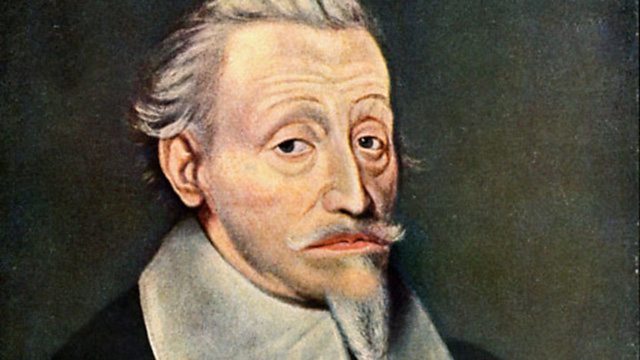
Heinrich Schütz (1585–1672) stands as one of the most influential figures in the history of Western music. Often regarded as the greatest German composer before Johann Sebastian Bach, Schütz played a crucial role in shaping the transition from Renaissance musical traditions to the emerging Baroque style. His works combined the expressive innovations of Italian music with the spiritual depth of German Protestant traditions, creating a unique musical language that profoundly influenced generations of composers.
Living through one of the most turbulent periods in European history, including the devastating Thirty Years’ War, Schütz managed to produce a remarkable body of sacred and secular music. His compositions established many of the foundations upon which later German masters would build, making him one of the most important composers of the seventeenth century.

Childhood
Heinrich Schütz was born on October 8, 1585, in Köstritz, a small town in what is now Germany. He was the eldest son of Christoph Schütz and Euphrosyne Bieger. His father was an innkeeper and later became a respected civic leader. When Heinrich was still a young child, the family moved to Weißenfels, where his father operated a successful inn.
From an early age, Schütz displayed remarkable musical talent. According to historical accounts, his abilities were discovered around 1598 when Landgrave Moritz of Hesse-Kassel stayed at the family inn and heard the young boy singing. Impressed by his voice and musical aptitude, the nobleman offered to support Heinrich’s education at his court in Kassel.
Although his parents were initially reluctant to send their son away, they eventually agreed. In 1599, Schütz entered the court school at Kassel, where he received a broad education that included languages, literature, theology, and music. This environment provided the intellectual and artistic foundation that would shape his future career.
Youth
During his years in Kassel, Schütz excelled academically and musically. He became a choirboy at the court chapel and received extensive training in vocal performance and composition. His patron, Landgrave Moritz, recognized his extraordinary potential and continued to support his development.
In 1608, Schütz enrolled at the University of Marburg to study law, following the wishes of his patron and the expectations of a respectable professional career. However, music remained his true passion. Recognizing this, Moritz financed a study trip to Venice in 1609, allowing Schütz to study with the renowned composer Giovanni Gabrieli.
The years in Venice proved transformative. Gabrieli was one of the leading composers of the Venetian School, famous for his innovative use of multiple choirs and instrumental ensembles. Under Gabrieli’s guidance, Schütz absorbed the latest developments in Italian music, including dramatic expression, rich textures, and the concertato style. In 1611, while still in Venice, he published his first major work, a collection of Italian madrigals, demonstrating his mastery of contemporary musical techniques.
After Gabrieli’s death in 1612, Schütz returned to Germany, bringing with him the musical innovations that would later revolutionize German composition.
Adulthood
Upon returning to Germany, Schütz briefly resumed legal studies but soon devoted himself entirely to music. He served as an organist in Kassel before accepting a position at the court of Dresden, one of the most prestigious musical centers in Germany. In 1617, he became Kapellmeister, or chief court composer and music director, a position he would hold for most of his life.
His career flourished during the early decades of the seventeenth century. Dresden provided resources, talented musicians, and opportunities to compose for religious services, court ceremonies, weddings, and state occasions. Schütz’s reputation spread throughout Europe as he produced increasingly sophisticated works.
In 1628, he returned to Italy for a second period of study, where he encountered the music of Claudio Monteverdi. Monteverdi’s dramatic style further influenced Schütz’s compositions and strengthened his commitment to combining expressive text setting with innovative musical structures.
The outbreak of the Thirty Years’ War brought immense challenges. Economic hardship and social disruption severely affected musical life across Germany. Court budgets were reduced, musicians were dismissed, and opportunities for large-scale performances became scarce. Schütz adapted by composing works for smaller ensembles, often creating deeply expressive sacred music that reflected the suffering and uncertainty of the era.
Despite these difficulties, he remained active and respected. He also worked in Denmark and other German cities when conditions in Dresden became unfavorable. Even in his later years, he continued composing and advising younger musicians. His influence extended far beyond his own works through his students and the traditions he helped establish.
Major Compositions
Heinrich Schütz produced more than five hundred surviving works, most of them sacred compositions. His music demonstrates an extraordinary ability to unite German textual clarity with Italian musical expressiveness.
Psalmen Davids (1619)
This collection of psalm settings showcases the influence of the Venetian polychoral style. Written for multiple choirs and instrumental groups, the work established Schütz as a major composer and introduced Italian grandeur to German sacred music.
Cantiones Sacrae (1625)
A collection of sacred motets in Latin, these compositions reveal Schütz’s mastery of counterpoint and his ability to convey profound spiritual emotion through music.
Symphoniae Sacrae (1629, 1647, 1650)
Published in three volumes, these works represent some of Schütz’s finest achievements. They combine solo voices, choirs, instruments, and continuo accompaniment in highly expressive settings of biblical texts.
Musicalische Exequien (1636)
Widely considered one of the greatest funeral compositions of the Baroque era, this work was written for the funeral of Prince Heinrich Posthumus Reuss. It combines theological depth with extraordinary musical beauty and emotional power.
Geistliche Chor-Music (1648)
This collection reflects Schütz’s mastery of traditional German choral writing while incorporating Baroque innovations. It served as a model for future generations of church composers.
Passion Settings
Late in life, Schütz composed settings of the Passions according to Matthew, Luke, and John. These works are remarkable for their simplicity, spiritual intensity, and dramatic treatment of the biblical narrative.
Dafne
Schütz also composed what is generally considered the first German opera, Dafne, performed in 1627. Unfortunately, the music has been lost, though its historical significance remains immense.
Death
After decades of service and achievement, Schütz gradually withdrew from active professional life. He retired from many of his official duties while continuing to compose and advise younger musicians. Much of his later life was spent between Dresden and Weißenfels.
On November 6, 1672, Heinrich Schütz died in Dresden at the age of eighty-seven, an exceptionally long life for the seventeenth century. His death marked the end of an era in German music. He was buried in the old Frauenkirche in Dresden, though his tomb was later lost when the church was rebuilt.
By the time of his death, Schütz had witnessed and shaped the emergence of the Baroque style in Germany. His career had spanned nearly the entire seventeenth century, leaving an enduring legacy that would influence composers for generations.
Conclusion
Heinrich Schütz occupies a unique position in music history. He served as the bridge between the Renaissance and the Baroque, between German musical traditions and Italian innovation, and between the sacred ideals of the Reformation and the expressive possibilities of modern composition.
His ability to combine emotional depth, textual clarity, and technical mastery transformed German music and paved the way for later composers such as Johann Sebastian Bach and George Frideric Handel. Despite the loss of many of his works, the surviving compositions reveal a musician of extraordinary imagination, intellect, and spiritual conviction.
Today, Schütz is recognized not only as the greatest German composer before Bach but also as one of the defining musical figures of the seventeenth century. His contributions helped establish the foundations of German Baroque music, ensuring his place among the most important composers in the history of Western civilization.
Comments are closed