Introduction
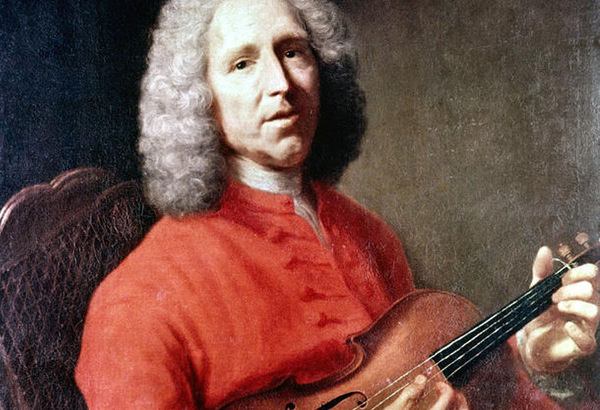
Jean-Philippe Rameau was one of the most influential composers and music theorists of the Baroque era. Born in France during the reign of Louis XIV, he became a central figure in French musical culture and helped shape the development of opera and harmonic theory. While many composers are remembered solely for their musical works, Rameau earned lasting fame both as a creator of extraordinary compositions and as an intellectual who transformed the understanding of music through his theoretical writings.
His operas, ballets, and sacred works showcased remarkable imagination, dramatic power, and orchestral brilliance. At the same time, his groundbreaking studies of harmony established principles that continue to influence music education today. By combining artistic creativity with scholarly insight, Rameau secured a place among the greatest composers in Western music history.
Childhood
Jean-Philippe Rameau was born on September 25, 1683, in Dijon, France. He was the seventh of eleven children born to Jean Rameau, a respected organist, and Claudine Demartinécourt. Music surrounded him from an early age, and his father played a crucial role in introducing him to the art.
As a child, Rameau showed exceptional musical talent. He learned to play the harpsichord and organ and quickly demonstrated abilities that surpassed those of many of his peers. His father hoped he would receive a traditional education and briefly enrolled him in a Jesuit school. However, young Jean-Philippe displayed far greater interest in music than in academic subjects.
His fascination with musical sounds, patterns, and structures became evident during childhood. Rather than pursuing conventional studies, he devoted countless hours to practicing instruments and studying compositions. These early experiences laid the foundation for his future achievements as both a performer and theorist.
Growing up in Dijon, a city with a rich cultural heritage, provided him access to church music and professional musicians. The influence of religious services and his father’s work as an organist shaped his understanding of sacred and instrumental music from an early age.
Youth
During his teenage years, Rameau continued to develop his musical skills. Around the age of eighteen, he traveled to Italy, although his stay there was relatively brief. The experience exposed him to different musical traditions and broadened his artistic perspective.
Upon returning to France, he began working as a musician in various cities. He held positions as an organist in Avignon, Clermont-Ferrand, Lyon, and other locations. These appointments allowed him to refine his abilities as a performer and composer while building a professional reputation.
Throughout his youth, Rameau became known for his exceptional keyboard technique and deep understanding of musical structure. Unlike some composers who achieved fame early in life, he spent many years developing his craft away from the major cultural centers of France.
During this period, he also became increasingly interested in the scientific aspects of music. He studied acoustics, mathematics, and the relationships between musical intervals. These investigations eventually led to his revolutionary theories of harmony.
His years as a provincial organist provided valuable practical experience. Working in churches required him to improvise, accompany services, and compose music regularly. These responsibilities strengthened his compositional technique and prepared him for the larger opportunities that would come later.
Adulthood
Rameau’s adulthood marked the beginning of his rise to national prominence. In 1722, he moved permanently to Paris, the cultural center of France. That same year, he published his most influential theoretical work, Treatise on Harmony Reduced to Its Natural Principles. The publication established him as one of Europe’s leading music theorists.
In this groundbreaking work, Rameau proposed that harmony formed the foundation of music. His theories regarding chords, bass movement, and tonal relationships fundamentally changed how musicians understood composition. Many concepts taught in music theory classrooms today trace their origins to his writings.
Despite his growing reputation as a theorist, Rameau did not achieve major success as an opera composer until later in life. In 1733, at the age of fifty, he premiered his first major opera, Hippolyte et Aricie. The work immediately attracted attention and controversy.
Some listeners admired its innovation, dramatic intensity, and rich orchestration. Others believed it departed too far from the traditions established by the earlier French composer Jean-Baptiste Lully. The resulting debate divided French musical circles but ultimately helped establish Rameau as a leading artistic figure.
Over the following decades, he composed a series of successful operas and ballets that earned widespread acclaim. His works became popular at the royal court and among Parisian audiences. He received support from influential patrons, including wealthy financiers and members of the French aristocracy.
Rameau’s music reflected the elegance and grandeur of eighteenth-century France while introducing unprecedented harmonic sophistication. His orchestration displayed remarkable color and imagination, and his dramatic instincts allowed him to create compelling musical narratives.
As his reputation grew, he became associated with intellectual movements of the Enlightenment. Philosophers and scholars admired his attempts to explain music through rational principles. Although some critics challenged aspects of his theories, his influence continued to expand throughout Europe.
By the middle of the eighteenth century, Rameau had become France’s most celebrated living composer. His works were regularly performed, and his theoretical writings were widely studied by musicians and scholars.
Major Compositions
Rameau produced an impressive body of work that includes operas, ballets, sacred music, chamber music, and keyboard compositions. Among his most important creations are:
Hippolyte et Aricie (1733)
This opera marked Rameau’s dramatic debut and established him as a major force in French musical theater. Based on classical mythology, it showcased his innovative harmonic language and expressive orchestration.
Les Indes Galantes (1735)
One of Rameau’s most famous operas-ballets, this work consists of several loosely connected stories set in exotic locations. It remains celebrated for its colorful music, energetic dances, and imaginative orchestral writing.
Castor et Pollux (1737)
Widely regarded as one of his masterpieces, this opera explores themes of brotherhood, sacrifice, and immortality. It demonstrates Rameau’s ability to combine emotional depth with musical sophistication.
Dardanus (1739)
This opera features some of Rameau’s most inventive orchestral passages and dramatic scenes. It underwent several revisions and became one of his most admired stage works.
Zoroastre (1749)
Inspired by the legendary Persian prophet Zoroaster, this opera reflects Enlightenment ideals and showcases Rameau’s mature compositional style.
Platée (1745)
A comic masterpiece, Platée stands out among Rameau’s works for its humor and satire. It remains one of the most frequently performed French Baroque operas.
Les Boréades (1763)
His final opera, completed near the end of his life, represents the culmination of his artistic achievements. Although not performed during his lifetime, it is now recognized as one of the greatest works of the French Baroque period.
Keyboard Works
Rameau also composed numerous harpsichord pieces that remain important elements of the keyboard repertoire. Collections such as Pièces de Clavecin display technical brilliance, expressive depth, and imaginative characterization.
Sacred Music
His sacred compositions, including motets and religious works, reveal another dimension of his artistry. These pieces demonstrate his mastery of vocal writing and contrapuntal technique.
Death
In his later years, Rameau continued composing and refining his theories despite advancing age. He remained an influential figure in French musical life and enjoyed widespread recognition for his achievements.
Jean-Philippe Rameau died in Paris on September 12, 1764, just thirteen days before his eighty-first birthday. His death marked the end of a remarkable career that had transformed French music.
He was buried in Paris, where he had spent many of his most productive years. At the time of his death, he was regarded as one of France’s greatest composers and intellectuals.
Although musical tastes began to change during the late eighteenth century, Rameau’s reputation endured. Later generations rediscovered his operas and recognized the lasting significance of his theoretical contributions.
Conclusion
Jean-Philippe Rameau occupies a unique place in music history as both a visionary composer and a pioneering theorist. His contributions extended far beyond the creation of beautiful music; he fundamentally reshaped the understanding of harmony and tonal organization.
Through operas such as Hippolyte et Aricie, Castor et Pollux, and Les Indes Galantes, he expanded the possibilities of musical drama and enriched the French Baroque tradition. Through his theoretical writings, he established principles that continue to influence musicians, composers, and educators centuries later.
Rameau’s career demonstrates the powerful connection between artistic creativity and intellectual inquiry. His ability to unite emotional expression with scientific analysis made him one of the most remarkable figures of the eighteenth century.
Today, his music is performed throughout the world, and his theoretical ideas remain central to the study of Western music. His legacy endures as a testament to innovation, brilliance, and the enduring power of artistic achievement.
Comments are closed