Introduction
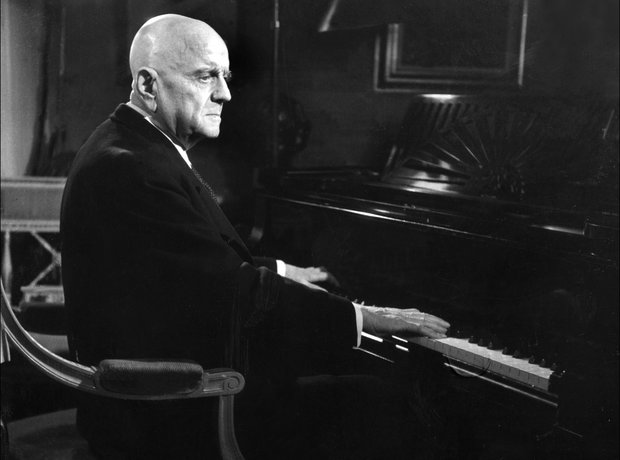
Jean Sibelius stands as one of the most important composers in the history of classical music and remains the most celebrated musical figure in Finland. Through his symphonies, tone poems, chamber music, and patriotic works, Sibelius helped shape Finland’s cultural identity during a period of national awakening and political struggle. His music combined elements of Romanticism with innovative orchestral techniques, creating a distinctive style that influenced generations of composers.
Known for masterpieces such as Finlandia, the Violin Concerto, and his seven symphonies, Sibelius became an international symbol of Finnish culture. His works are admired for their emotional depth, powerful evocations of nature, and unique approach to musical structure. Although he spent the last decades of his life in relative silence, his reputation continued to grow, securing his place among the greatest composers of the late nineteenth and early twentieth centuries.
Childhood
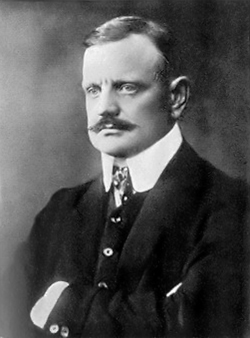
Johan Julius Christian Sibelius was born on December 8, 1865, in the town of Hämeenlinna, located in the Grand Duchy of Finland, which was then part of the Russian Empire. He was the second of three children born to Christian Gustaf Sibelius and Maria Charlotta Sibelius.
His father was a physician, but the family faced financial difficulties after his father’s death from typhoid fever when Jean was only two years old. The loss left the family heavily indebted, forcing them to move into the home of his maternal grandmother. Despite these challenges, Sibelius enjoyed a supportive upbringing surrounded by relatives who valued culture and education.
The family spoke Swedish, which was common among educated Finns of the period. As a child, Sibelius developed a fascination with nature, forests, lakes, and the changing seasons of Finland. These experiences would later become a major source of inspiration for his music.
Music entered his life at an early age. He began piano lessons as a child but soon showed greater interest in the violin. He dreamed of becoming a virtuoso violinist and spent countless hours practicing. His early compositions emerged during his teenage years, revealing a remarkable musical imagination.
Youth
During his school years, Sibelius demonstrated strong academic abilities but devoted much of his energy to music. He formed small ensembles with friends and family members, composing chamber works and experimenting with different musical forms.
In 1885, he enrolled at the Imperial Alexander University in Helsinki to study law. However, his passion for music quickly overshadowed his legal studies. He soon transferred to the Helsinki Music Institute, where he studied composition under Martin Wegelius. Wegelius recognized Sibelius’s exceptional talent and encouraged him to pursue a professional musical career.
Seeking broader artistic training, Sibelius continued his studies abroad. He spent time in Berlin and Vienna, two major centers of European musical culture. There he encountered the works of composers such as Richard Wagner, Anton Bruckner, and Johannes Brahms. These experiences expanded his musical horizons and helped him develop his own compositional voice.
During this period, Finland experienced growing nationalist sentiment. Sibelius became deeply interested in Finnish folklore, particularly the Kalevala, Finland’s national epic. The legends and myths contained in this collection would inspire many of his most significant works.
Adulthood
The 1890s marked the beginning of Sibelius’s rise to prominence. In 1892, he completed Kullervo, a large-scale symphonic work based on the Kalevala. Its successful premiere established him as a leading figure in Finnish music.
That same year, he married Aino Järnefelt, a member of a prominent Finnish family that strongly supported national culture and independence. The couple would have six daughters and remain devoted to one another throughout their lives.
As his reputation grew, Sibelius composed a series of works inspired by Finnish mythology and history. These compositions resonated deeply with audiences during a period when Finland sought to preserve its cultural identity under Russian rule.
International recognition soon followed. Conductors and orchestras across Europe began performing his music. Works such as En Saga, The Swan of Tuonela, and Finlandia brought him widespread acclaim.
In 1904, Sibelius and his family moved to Ainola, a country home near Lake Tuusula. The peaceful surroundings provided an ideal environment for composition. Many of his greatest masterpieces were written there.
Despite professional success, Sibelius faced personal struggles. He battled financial difficulties for much of his life and experienced periods of excessive alcohol consumption. In 1908, he underwent surgery for a throat tumor. Although the tumor proved benign, the experience profoundly affected him and led him to adopt a healthier lifestyle.
The years that followed produced some of his finest achievements, including several symphonies that demonstrated increasing originality and structural innovation. His music evolved away from the grand Romantic traditions toward a more concentrated and organic style.
By the 1920s, Sibelius was internationally recognized as one of the world’s leading composers. However, after completing Tapiola in 1926, he largely ceased publishing new major works. The long period that followed became known as the “Silence of Järvenpää,” a mystery that intrigued musicians and scholars for decades.
Major Compositions
Jean Sibelius produced a remarkable body of work that remains central to the orchestral repertoire.
Symphony No. 1 in E Minor (1899)
This powerful and dramatic work established Sibelius as a major symphonic composer. While influenced by late Romantic traditions, it already displayed many of the characteristics that would define his mature style.
Finlandia (1899)
Perhaps his most famous composition, Finlandia became a symbol of Finnish national identity and resistance. Its majestic hymn-like section remains one of the most recognizable passages in classical music.
Symphony No. 2 in D Major (1902)
Often associated with Finnish nationalism, the Second Symphony became one of Sibelius’s most beloved works. Its triumphant conclusion continues to inspire audiences worldwide.
Violin Concerto in D Minor (1904, revised 1905)
As a former aspiring violin virtuoso, Sibelius wrote one of the most challenging and rewarding concertos in the repertoire. The work combines technical brilliance with profound emotional expression.
Symphony No. 3 in C Major (1907)
This symphony marked a transition toward a more concise and disciplined musical language, departing from the expansive Romantic style of his earlier works.
Symphony No. 4 in A Minor (1911)
Considered one of his most introspective compositions, the Fourth Symphony explores darker emotional landscapes and innovative harmonic ideas.
Symphony No. 5 in E-flat Major (1915, revised 1919)
Inspired by the sight of swans flying over Finland, the Fifth Symphony culminates in one of the most magnificent finales in symphonic literature.
Symphony No. 6 in D Minor (1923)
This work displays remarkable purity and refinement, reflecting Sibelius’s mature compositional style.
Symphony No. 7 in C Major (1924)
His final completed symphony condensed the traditional four-movement structure into a single continuous movement, representing a revolutionary achievement in symphonic form.
Tapiola (1926)
Inspired by the Finnish forest god Tapio, Tapiola stands as Sibelius’s final major orchestral masterpiece. The work captures the mystery and grandeur of the northern wilderness.
Death
Jean Sibelius spent the final decades of his life at Ainola with Aino and their family. Although he remained a respected public figure, he largely withdrew from active composition. Visitors from around the world traveled to meet the legendary composer, whose influence continued to grow.
As the years passed, Sibelius witnessed dramatic changes in music, including the rise of modernist movements that differed greatly from his own artistic vision. Nevertheless, admiration for his work remained strong both in Finland and internationally.
On September 20, 1957, Jean Sibelius died at Ainola at the age of ninety-one. His death was mourned throughout Finland and across the musical world. National tributes honored the composer who had become a symbol of Finnish culture and artistic achievement.
He was buried in the garden of Ainola, where he had spent much of his life creating music inspired by the landscapes he loved.
Conclusion
Jean Sibelius occupies a unique place in the history of classical music. While many composers embraced increasingly complex modernist styles during the twentieth century, Sibelius forged an individual path rooted in nature, mythology, and organic musical development.
His seven symphonies transformed the possibilities of symphonic composition, while works such as Finlandia, the Violin Concerto, and Tapiola secured his international reputation. Beyond his musical achievements, Sibelius helped define Finland’s cultural identity during a critical period in the nation’s history.
Today, his music continues to be performed by leading orchestras and soloists around the world. More than a century after many of his greatest works were composed, Jean Sibelius remains a towering figure whose artistry, originality, and vision continue to inspire audiences and musicians alike.
Comments are closed