Introduction
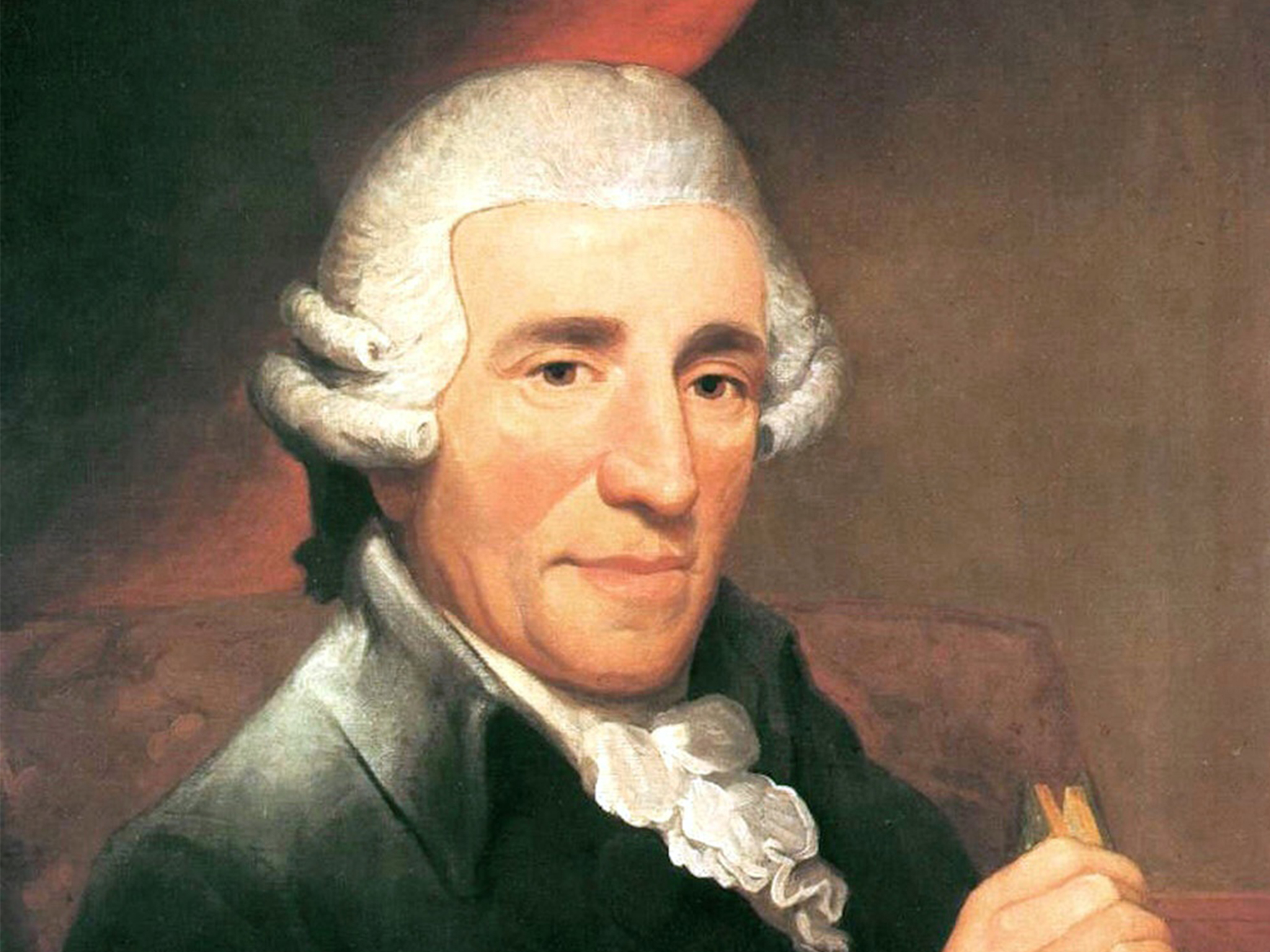
Joseph Haydn stands among the most influential composers in the history of Western classical music. Often referred to as the “Father of the Symphony” and the “Father of the String Quartet,” Haydn helped shape the foundations of the Classical period through his innovative compositions and extraordinary craftsmanship. His music influenced generations of composers, including Wolfgang Amadeus Mozart and Ludwig van Beethoven, and remains a cornerstone of the classical repertoire today.
Throughout a career that spanned more than five decades, Haydn composed hundreds of works, including symphonies, string quartets, concertos, operas, masses, and oratorios. His ability to combine structural clarity, melodic beauty, humor, and emotional depth established standards that would define classical composition for years to come.

Childhood
Franz Joseph Haydn was born on March 31, 1732, in the small Austrian village of Rohrau, located near the border of Hungary. He was the second of twelve children born to Mathias Haydn, a wheelwright and village official, and Maria Koller, who had previously worked as a cook in the household of a noble family.
Although neither of his parents possessed formal musical training, both loved music and encouraged musical activities within the family. His father often played the harp, and family gatherings frequently included singing and amateur performances. Young Joseph quickly demonstrated remarkable musical talent.
Recognizing their son’s abilities, Haydn’s parents arranged for him to live with a relative, Johann Matthias Frankh, a schoolmaster in the town of Hainburg, when he was about six years old. There, he received instruction in music, singing, and general education. Although life away from home was often difficult and marked by financial hardship, Haydn gained valuable musical experience.
His exceptional singing voice eventually attracted the attention of Georg von Reutter, the music director of St. Stephen’s Cathedral in Vienna. In 1740, Haydn was admitted as a choirboy at the cathedral, providing him with a much broader musical education and exposure to the cultural life of Austria’s capital.
Youth
Haydn spent nearly a decade as a choirboy at St. Stephen’s Cathedral. During this period, he learned singing, keyboard performance, violin playing, and the fundamentals of composition. Despite receiving little formal instruction in music theory, he absorbed a great deal through observation and practical experience.
As Haydn matured, his voice changed, and he could no longer fulfill his duties as a soprano singer. Around 1749, he was dismissed from the choir and suddenly found himself without financial support. The years that followed were among the most challenging of his life.
Living in poverty, Haydn worked as a freelance musician, teacher, accompanist, and performer throughout Vienna. He often struggled to find steady employment but remained determined to improve his musical knowledge. During this time, he studied important theoretical texts and carefully analyzed the works of leading composers.
A significant turning point came when he became associated with the Italian composer Nicola Porpora. Serving as an accompanist and assistant, Haydn gained valuable insights into composition and vocal writing. Later in life, he credited Porpora with helping him develop the foundations of his musical education.
By the late 1750s, Haydn’s reputation as a composer and performer had begun to grow. He received commissions and secured employment with noble patrons, laying the groundwork for his future success.
Adulthood
Haydn’s professional fortunes improved dramatically when he entered the service of wealthy aristocratic families. In 1761, he was appointed Vice-Kapellmeister to the powerful Esterházy family, one of the richest noble houses in the Austrian Empire. Shortly afterward, he became Kapellmeister, or music director, a position he would hold for nearly thirty years.
Working primarily at the Esterházy estates, Haydn was responsible for composing music, conducting performances, directing musicians, and overseeing the court’s musical activities. While the relative isolation of the Esterházy palaces limited his contact with other composers, it also gave him extraordinary freedom to experiment and develop his unique musical style.
During these decades, Haydn composed a vast number of symphonies, chamber works, keyboard pieces, operas, and sacred compositions. His music became increasingly sophisticated, balancing elegance with innovation. He developed new approaches to thematic development, orchestration, and musical structure that would profoundly influence the Classical style.
Haydn married Maria Anna Keller in 1760. The marriage was unhappy and produced no children. Despite personal difficulties, Haydn maintained a productive professional life and earned growing recognition throughout Europe.
In the 1780s, Haydn formed a friendship with Mozart. The two composers greatly admired each other’s work, and their mutual respect became one of the most celebrated relationships in music history. Mozart dedicated a set of six string quartets to Haydn, acknowledging his influence and mastery.
Following the death of Prince Nikolaus Esterházy in 1790, Haydn gained greater personal freedom. He traveled to London twice, in 1791–1792 and again in 1794–1795. These visits were enormously successful. English audiences welcomed him enthusiastically, and he composed some of his greatest symphonies during this period.
The London years brought Haydn international fame and financial security. Upon returning to Vienna, he was widely regarded as Europe’s leading living composer. During his later years, he also taught several students, including the young Beethoven.
Major Compositions
Haydn’s output was immense, comprising more than one thousand works across numerous genres. His contributions to the symphony and string quartet were especially significant.
Among his most famous symphonies are the “Paris Symphonies,” composed during the 1780s, and the celebrated “London Symphonies,” written for his visits to England. These works demonstrate his mastery of orchestral writing, thematic development, and dramatic expression.
His Symphony No. 94, known as the “Surprise Symphony,” remains one of his best-known works. The sudden loud chord in its slow movement exemplifies Haydn’s playful sense of humor and ability to engage listeners.
The “Farewell Symphony” (Symphony No. 45) is another celebrated work. In its final movement, musicians gradually leave the stage one by one, symbolically conveying a message from the orchestra to their employer.
Haydn’s string quartets revolutionized chamber music. Collections such as the Opus 20, Opus 33, and Opus 76 quartets established models that later composers would emulate. These works elevated the quartet from simple entertainment to a sophisticated artistic form.
His sacred music includes important masses and two monumental oratorios: The Creation and The Seasons. The Creation, composed between 1796 and 1798, is widely regarded as one of the greatest choral works of the Classical era. It portrays the biblical story of creation with remarkable imagination, grandeur, and emotional power.
Haydn also wrote numerous piano sonatas, concertos, operas, and religious works, all reflecting his extraordinary versatility and craftsmanship.
Death
By the early nineteenth century, Haydn’s health had begun to decline. Although he remained highly respected and celebrated throughout Europe, advancing age limited his ability to compose and perform.
During the Napoleonic Wars, Vienna experienced significant political and military turmoil. In 1809, French forces occupied the city. Haydn, already frail, spent his final days at home, receiving visits from admirers and former students.
Joseph Haydn died peacefully on May 31, 1809, in Vienna at the age of seventy-seven. His death marked the end of one of the most remarkable careers in music history.
He was mourned throughout Europe, and his legacy continued to grow after his passing. Numerous memorials, performances, and scholarly studies have honored his contributions to the development of classical music.
Conclusion
Joseph Haydn transformed the landscape of Western music through his creativity, discipline, and innovation. Rising from humble beginnings in rural Austria, he became one of the most respected composers of his era and helped establish many of the musical forms that define the Classical tradition.
His symphonies expanded the possibilities of orchestral music, his string quartets elevated chamber music to new artistic heights, and his sacred works demonstrated profound spiritual and emotional depth. Beyond his own achievements, Haydn influenced Mozart, Beethoven, and countless composers who followed.
Today, more than two centuries after his death, Haydn’s music continues to be performed, studied, and admired around the world. His enduring legacy secures his place among the greatest composers in the history of classical music.
Comments are closed