Introduction
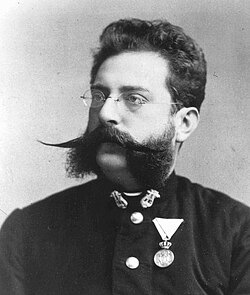
Josef Franz Wagner was one of the most celebrated Austrian composers of military marches during the late nineteenth century. Best known for his famous march Under the Double Eagle (Unter dem Doppeladler), Wagner played a significant role in shaping the musical traditions of the Austro-Hungarian Empire. His compositions combined military precision with memorable melodies, earning him widespread popularity both in Europe and abroad. Although he composed hundreds of works, his legacy remains closely associated with the march repertoire that made him one of the most respected bandmasters of his era.
Childhood
Josef Franz Wagner was born on March 20, 1856, in Vienna, the capital of the Austrian Empire. His father was a physician, and his family valued education and culture. From an early age, Wagner displayed remarkable musical talent. As a boy, he sang as a soprano in a church choir, where he received his first practical exposure to music.
His parents recognized his abilities and encouraged his musical development. He attended a singing school in Vienna and later pursued a formal education that included extensive musical training. During these formative years, Wagner became familiar with the rich musical traditions of Vienna, a city that had already produced many of Europe’s greatest composers.
Youth
During his teenage years, Wagner devoted himself to the study of music theory, harmony, composition, and instrumentation. He received specialized instruction that prepared him for a career in military music, an important profession in nineteenth-century Austria.
Even before reaching adulthood, Wagner began composing. One of his earliest known works was written in the early 1870s, demonstrating a maturity beyond his years. His talent quickly attracted attention, and he soon joined a military band connected to the Austro-Hungarian Army.
The military environment proved ideal for Wagner’s development. Military bands were highly respected institutions, providing opportunities for composers and conductors to refine their skills while performing for both soldiers and civilians. Through these experiences, Wagner learned how to write music that was both technically effective and immediately appealing to audiences.
Adulthood
Wagner’s professional career flourished as he rose through the ranks of military music. He served with several infantry regiments throughout the Austro-Hungarian Empire and eventually became a bandmaster. His assignments took him to various cities, exposing him to diverse musical influences and broadening his artistic outlook.
Throughout the 1880s and 1890s, Wagner established himself as one of Austria’s leading military composers. His bands performed regularly at public concerts, social events, and ceremonial occasions. These performances helped spread his reputation far beyond military circles.
Despite his artistic success, Wagner faced challenges. The financial structure of military bands often created intense competition among conductors, and long-term financial security was difficult to achieve. Seeking greater independence, Wagner eventually left military service and founded a private orchestra in Vienna. Although the venture showcased his entrepreneurial spirit, it did not bring the financial stability he had hoped for.
Nevertheless, Wagner continued composing prolifically. By the end of his life, he had produced hundreds of musical works, including marches, waltzes, overtures, and other orchestral pieces. His compositions reflected both the grandeur of imperial Austria and the popular tastes of the era.
Major Compositions
Josef Franz Wagner’s output was extensive, with estimates ranging from approximately 400 to 800 compositions. While many of these works have faded from public memory, several remain important within the wind band and military music repertoire.
Under the Double Eagle (Unter dem Doppeladler)
Composed in 1893, this march became Wagner’s most famous work and remains one of the most recognizable military marches ever written. The title refers to the double-headed eagle that served as a symbol of the Austro-Hungarian Empire. The piece gained international popularity and was later embraced by American bandleader John Philip Sousa, whose performances helped introduce it to audiences in the United States.
47er Regimentsmarsch
Written in honor of the 47th Infantry Regiment, this march exemplifies Wagner’s ability to combine ceremonial dignity with memorable melodies. It became closely associated with the regiment and remains admired by enthusiasts of military music.
Heimgang in der Dämmerung
This work demonstrates Wagner’s skill beyond traditional military marches. The composition displays a more lyrical and reflective character, revealing his versatility as a composer.
Die Sonne geht auf
Another notable composition, this work highlights Wagner’s gift for uplifting melodies and effective orchestration. It reflects the optimistic spirit often found in Austrian concert music of the period.
Other Works
In addition to his marches, Wagner composed waltzes, overtures, dance pieces, and light orchestral works. Although his march compositions overshadow the rest of his catalog, these pieces reveal a musician with broad creative interests and considerable technical skill.
Death
By the beginning of the twentieth century, Wagner’s health had begun to decline. He suffered from chronic illness, including bronchitis and heart problems. His condition worsened during his final years, limiting his ability to conduct and compose.
On June 5, 1908, Josef Franz Wagner died in Vienna at the age of fifty-two. Despite financial difficulties that had troubled him during his later years, his contributions to Austrian music were widely recognized. He was honored with burial in Vienna’s Central Cemetery, a distinction reserved for individuals who had made significant contributions to Austrian culture and society.
Conclusion
Josef Franz Wagner occupies a unique place in the history of European music. While he did not compose symphonies or operas on the scale of the great Romantic masters, he elevated military band music to an art form of remarkable sophistication and popularity. His marches captured the spirit of the Austro-Hungarian Empire and continue to be performed by military, concert, and community bands around the world.
More than a century after his death, Wagner’s music remains a symbol of Austrian musical tradition. His most famous composition, Under the Double Eagle, continues to delight audiences and serves as a lasting testament to his talent, craftsmanship, and enduring influence on the world of wind band music.
Comments are closed