Introduction
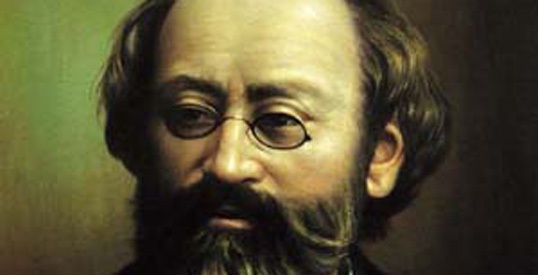
Max Bruch was one of the most respected German composers of the Romantic era. Born in the nineteenth century, he became renowned for his melodic gift, his mastery of orchestral writing, and his dedication to preserving traditional musical forms during a period of rapid artistic change. Although he composed in many genres, including symphonies, choral works, chamber music, and operas, he is remembered primarily for his violin compositions, particularly the famous Violin Concerto No. 1 in G Minor.
Throughout a career that spanned more than six decades, Bruch earned admiration as a composer, conductor, and teacher. While many of his contemporaries embraced increasingly modern musical styles, he remained faithful to the Romantic traditions established by earlier composers. His commitment to expressive melody and emotional depth helped secure his place among the most important musical figures of nineteenth-century Germany.

Childhood
Max Christian Friedrich Bruch was born on January 6, 1838, in Cologne, Germany. He grew up in a cultured and intellectually stimulating household. His father, August Carl Friedrich Bruch, worked as a government official and was also involved in literary pursuits. His mother, Wilhelmine Almenräder Bruch, was a talented singer and music teacher who played a crucial role in nurturing his musical abilities.
From an early age, Bruch displayed extraordinary musical talent. His mother introduced him to music and encouraged his interest in composition. By the age of nine, he was already writing original works, demonstrating a remarkable understanding of harmony and melody.
His early education included lessons in piano, music theory, and composition. The young composer quickly attracted attention from local musicians and patrons who recognized his exceptional potential. These early experiences provided him with a solid foundation for his future career.
Youth
As a teenager, Bruch continued to develop his compositional skills under the guidance of respected teachers. In 1853, at the age of fifteen, he won a scholarship from the Frankfurt Mozart Foundation, an achievement that significantly advanced his musical education.
The scholarship enabled him to study with prominent musicians, including Ferdinand Hiller and Carl Reinecke. Under their mentorship, Bruch refined his understanding of orchestration, counterpoint, and large-scale musical forms.
During his late teens and early twenties, Bruch composed numerous works that revealed his growing maturity. His early compositions included orchestral pieces, chamber music, and vocal works. These pieces earned favorable reviews and established him as one of Germany’s most promising young composers.
One of his first major successes came with the opera Scherz, List und Rache, based on a work by Johann Wolfgang von Goethe. Although the opera did not become a permanent part of the repertoire, it demonstrated Bruch’s growing confidence and ambition.
Adulthood
Bruch’s adult life was marked by a combination of creative achievement, conducting appointments, and educational work. Throughout his career, he held several important positions as a conductor in Germany and abroad.
In the 1860s, he served in various musical posts and continued composing prolifically. His reputation grew steadily, particularly through his choral works, which were highly valued in Germany and Britain. Large-scale compositions such as Odysseus and Arminius brought him considerable acclaim and established him as a leading composer of choral music.
The greatest turning point in his career occurred with the completion of his Violin Concerto No. 1 in G Minor. Bruch devoted significant effort to revising the concerto, seeking advice from renowned violinist Joseph Joachim. The final version premiered in 1868 and quickly became one of the most beloved violin concertos ever written.
Bruch later served as conductor in Koblenz, Sondershausen, Liverpool, and Breslau. His years in Liverpool from 1880 to 1883 strengthened his international reputation and increased his popularity in Britain.
In 1891, Bruch accepted a position as professor of composition at the Berlin Academy of Arts. He remained there for many years, teaching a new generation of musicians and composers. His students respected him for his rigorous standards and deep knowledge of musical craft.
Despite his professional success, Bruch often expressed frustration that audiences focused almost exclusively on his First Violin Concerto while overlooking many of his other works. Nevertheless, he continued composing well into old age, producing music characterized by lyricism, emotional sincerity, and technical refinement.
Major Compositions
Max Bruch composed more than two hundred works during his lifetime. Although many of these compositions have become less familiar to modern audiences, several remain important parts of the classical repertoire.
Violin Concerto No. 1 in G Minor, Op. 26
This concerto is undoubtedly Bruch’s masterpiece and one of the most frequently performed violin concertos in history. Its memorable melodies, dramatic structure, and virtuosic writing have made it a favorite among performers and audiences alike.
Scottish Fantasy, Op. 46
Inspired by traditional Scottish folk melodies, this work for violin and orchestra combines Romantic orchestration with nationalistic elements. It remains one of Bruch’s most popular compositions.
Kol Nidrei, Op. 47
Written for cello and orchestra, this moving work is based on Jewish liturgical themes. It showcases Bruch’s gift for expressive melody and emotional depth.
Violin Concerto No. 2 in D Minor, Op. 44
Although overshadowed by the First Violin Concerto, this composition demonstrates Bruch’s continued mastery of the violin concerto form.
Violin Concerto No. 3 in D Minor, Op. 58
This concerto is notable for its rich orchestration and lyrical character, reflecting the mature style of the composer.
Odysseus, Op. 41
One of Bruch’s most successful choral works, this composition was highly admired during his lifetime and contributed significantly to his reputation.
Arminius, Op. 43
Another large-scale choral composition, this work reflects Bruch’s interest in German history and national identity.
Symphony No. 1 in E-flat Major, Op. 28
This symphony demonstrates Bruch’s command of orchestral writing and his connection to the German Romantic tradition.
Symphony No. 2 in F Minor, Op. 36
A dramatic and powerful work that highlights his mature compositional voice.
Numerous Choral and Vocal Works
Bruch’s sacred and secular choral compositions formed a substantial part of his output and were among his most celebrated achievements during his lifetime.
Death
The final years of Bruch’s life were overshadowed by personal and political challenges. The outbreak of World War I brought economic difficulties and uncertainty to Germany. Although he remained respected within musical circles, changing artistic trends increasingly favored newer styles that differed from his conservative Romantic approach.
Bruch continued composing despite declining health. He spent his final years in Berlin, where he remained active as long as circumstances allowed.
On October 2, 1920, Max Bruch died at the age of eighty-two in Berlin. He was buried in the city’s Friedenau Cemetery. His death marked the passing of one of the last major representatives of the German Romantic tradition.
Conclusion
Max Bruch occupies a unique position in music history. While many of his contemporaries pursued innovation and experimentation, he remained devoted to melody, emotional expression, and classical forms. His music reflects the highest ideals of Romanticism and demonstrates exceptional craftsmanship.
Although much of his extensive catalog is performed less frequently today, his Violin Concerto No. 1, Scottish Fantasy, and Kol Nidrei continue to enjoy worldwide popularity. These works have ensured his enduring legacy and have introduced generations of listeners to his distinctive musical voice.
Today, Max Bruch is remembered as one of Germany’s finest Romantic composers, a musician whose commitment to beauty, lyricism, and emotional sincerity continues to resonate with audiences around the world.
Comments are closed