Introduction
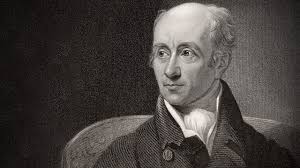
Muzio Clementi stands among the most influential figures in the history of Western classical music. An accomplished composer, virtuoso pianist, teacher, conductor, publisher, and piano manufacturer, he played a pivotal role in the development of piano technique and repertoire during the Classical era. Often referred to as the “Father of the Piano,” Clementi helped transform the instrument from a relatively new invention into the dominant keyboard instrument of the nineteenth century.
Although his fame was somewhat overshadowed by contemporaries such as Wolfgang Amadeus Mozart, Joseph Haydn, and later Ludwig van Beethoven, Clementi’s contributions to piano performance, composition, and education had a profound impact on generations of musicians. His sonatas, sonatinas, studies, and pedagogical works remain staples of piano education worldwide.
Childhood
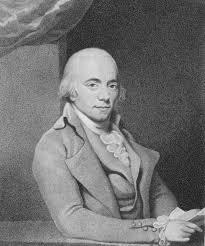
Muzio Filippo Vincenzo Francesco Saverio Clementi was born on January 23, 1752, in Rome, then part of the Papal States. He was the eldest of seven children born to Nicolò Clementi, a respected silversmith, and Magdalena Kaiser.
From an early age, Clementi displayed exceptional musical talent. Recognizing his son’s gifts, his father arranged for him to receive formal musical instruction. Young Muzio studied organ, singing, figured bass, and counterpoint under several respected Roman musicians. His progress was remarkable, and by the age of nine he had already earned a reputation as a musical prodigy.
At thirteen, he became organist at the Church of San Lorenzo in Damaso in Rome, a significant achievement for someone so young. Around this same period, he composed his first major works, including a mass and an oratorio. These accomplishments demonstrated not only technical skill but also a maturity that exceeded his years.
A crucial turning point came in 1766 when Sir Peter Beckford, a wealthy Englishman visiting Rome, heard the young musician perform. Impressed by his extraordinary abilities, Beckford arranged with Clementi’s father to bring the boy to England, where he would receive advanced musical training and broader opportunities.
Youth
At the age of fourteen, Clementi moved to England under the patronage of Sir Peter Beckford. He spent several years at Beckford’s estate in Dorset, living a disciplined life devoted almost entirely to musical study.
During this period, Clementi practiced for many hours each day and immersed himself in the works of composers such as Johann Sebastian Bach, George Frideric Handel, and Domenico Scarlatti. These studies profoundly shaped his musical language and keyboard technique.
By the early 1770s, he had developed into a formidable keyboard virtuoso. After completing his years of study under Beckford’s patronage, he moved to London, where he quickly established himself as one of the city’s leading performers.
London was becoming one of Europe’s most important musical centers, and the piano was gaining popularity among both professional musicians and amateur enthusiasts. Clementi recognized the expressive possibilities of the instrument and dedicated himself to exploring its full potential.
His reputation expanded rapidly through public performances, teaching, and published compositions. Audiences admired his technical brilliance, clarity, and innovative approach to keyboard playing.
Adulthood
The adult years of Clementi’s life were marked by extraordinary professional success and influence.
Between 1780 and 1782, he embarked on a European concert tour that took him to France, Germany, and Austria. During a visit to Vienna in 1781, he participated in a famous keyboard contest arranged by Emperor Joseph II. His opponent was none other than Mozart. The event ended diplomatically with no declared winner, though it remains one of the most famous musical encounters of the Classical period.
Returning to London, Clementi enjoyed a highly successful career as a performer, composer, and teacher. His students included several musicians who would become important figures in their own right, among them John Field, whose nocturnes later influenced Chopin.
As his career evolved, Clementi expanded beyond performance and teaching. He became a major music publisher and eventually entered the piano manufacturing business. His company published works by many leading composers and played an important role in preserving and distributing musical literature throughout Europe.
Clementi also developed a close professional relationship with Beethoven. He acquired publishing rights for many of Beethoven’s works in England and greatly admired the German master’s compositions. Beethoven, in turn, held Clementi’s piano sonatas in high regard and frequently recommended them to students.
During the later decades of his life, Clementi gradually reduced his concert appearances and focused on composition, publishing, business ventures, and the advancement of piano construction. His innovations contributed to improvements in piano design that helped shape the modern instrument.
In 1813, he helped establish the Philharmonic Society of London, an organization that would later become the prestigious Royal Philharmonic Society.
Major Compositions
Clementi’s compositional output is extensive and centers primarily on keyboard music. His works significantly expanded the technical and expressive possibilities of piano playing.
Piano Sonatas
His piano sonatas are considered among the finest examples of Classical keyboard literature. These works influenced both Beethoven and later Romantic composers. They feature brilliant passagework, sophisticated structures, and a deep understanding of the piano’s capabilities.
Sonatinas, Op. 36
Perhaps his most widely known compositions today, the six Sonatinas, Op. 36, remain standard repertoire for piano students around the world. These works combine elegance, clarity, and educational value, making them ideal introductions to Classical style.
Gradus ad Parnassum
Published between 1817 and 1826, Gradus ad Parnassum is a monumental collection of one hundred studies and exercises. It serves both as a technical manual and as a collection of concert-worthy compositions. The work became one of the most influential piano method books ever written.
Symphonies
Although less famous than his piano works, Clementi composed numerous symphonies. Several have been reconstructed from surviving manuscripts. These compositions reveal a gifted orchestral composer whose achievements have only recently received broader scholarly attention.
Chamber Music
Clementi also wrote chamber works, including duets, trios, and sonatas for various instruments. These pieces demonstrate his versatility and command of Classical forms.
Pedagogical Works
His instructional publications helped establish foundational principles of piano technique. Many of his exercises continue to be studied by pianists today.
Death
In his final years, Clementi retired from active professional life and settled in the English countryside.
He died on March 10, 1832, in Evesham, Worcestershire, England, at the age of eighty. His death marked the end of a remarkable career that had spanned more than six decades.
In recognition of his immense contributions to music, he was buried in the cloisters of Westminster Abbey, an honor reserved for individuals of exceptional national significance. His burial place reflects the esteem in which he was held throughout Britain and Europe.
Many leading musicians attended his funeral, including former students and admirers who recognized his lasting impact on the musical world.
Conclusion
Muzio Clementi occupies a unique place in music history. While many remember him primarily as a composer of piano studies and sonatinas, his influence extended far beyond educational repertoire. He was a visionary performer who helped establish the piano as the dominant keyboard instrument, a composer who expanded the possibilities of piano writing, a teacher who shaped future generations of musicians, a publisher who preserved important musical works, and a manufacturer who contributed to the evolution of the instrument itself.
His legacy can be heard not only in his own compositions but also in the works of Beethoven, Chopin, and countless pianists and composers who followed. Through his innovations and dedication, Clementi helped lay the foundation for the golden age of piano music that flourished throughout the nineteenth century.
Today, more than two centuries after his greatest achievements, Muzio Clementi remains one of the most important figures in the history of the piano and an enduring giant of the Classical era.
Sources consulted: Encyclopaedia Britannica, Oxford/Grove Music scholarship, historical biographical records on Clementi’s life and works, and documented research on his career as composer, pianist, publisher, and piano manufacturer.
Comments are closed