Introduction
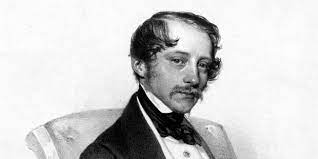
Otto Nicolai was one of the most important German composers and conductors of the early Romantic era. Although his life was tragically brief, his influence on European music was considerable. Best known for his comic opera The Merry Wives of Windsor (Die lustigen Weiber von Windsor), Nicolai successfully blended German musical traditions with the elegance and lyricism of Italian opera. He was also a distinguished conductor and played a crucial role in the establishment of what would become the Vienna Philharmonic Orchestra, one of the most prestigious musical institutions in the world.
Born during a period of significant cultural and artistic transformation in Europe, Nicolai developed into a musician whose works reflected both Classical discipline and Romantic expressiveness. His career took him from Prussia to Italy, Vienna, and Berlin, allowing him to absorb diverse musical influences that shaped his unique artistic voice.

Childhood
Carl Otto Ehrenfried Nicolai was born on June 9, 1810, in Königsberg, East Prussia (today Kaliningrad, Russia). He was the son of Carl Ernst Daniel Nicolai, a composer, conductor, and music teacher. From an early age, Otto demonstrated exceptional musical talent and received his first musical instruction from his father.
Despite his obvious gifts, Nicolai’s childhood was far from happy. His parents experienced serious marital difficulties and eventually separated. The family environment became increasingly difficult, and the young Otto often found himself subjected to strict and demanding treatment by his father. Nevertheless, these early years provided him with a solid musical foundation that would later support his professional achievements.
Music quickly became his refuge and primary means of expression. By his early teens, he was already displaying the skills of a prodigy, particularly as a pianist and composer. His natural aptitude suggested a promising future, but he needed opportunities beyond the troubled atmosphere of his home.
Youth
In 1826, at the age of sixteen, Nicolai made a life-changing decision. Unable to endure his family circumstances any longer, he left home and found support from August Adler, a government official who recognized his talent and treated him almost as an adopted son.
Adler arranged for Nicolai to continue his education in Berlin, where he studied under the renowned music educator Carl Friedrich Zelter. Zelter was one of Germany’s most respected musical figures and had also been a mentor to Felix Mendelssohn. Under his guidance, Nicolai received rigorous training in composition, theory, and performance.
Berlin exposed the young musician to a thriving cultural environment. He developed rapidly as a composer and conductor, earning recognition for his technical skill and artistic maturity. During this period, he composed some of his earliest significant works and began establishing professional connections that would later advance his career.
His education was further enriched by studies in Rome, where he became acquainted with Italian musical traditions. The experience proved transformative, introducing him to the world of Italian opera and the bel canto style that would heavily influence his future compositions.
Adulthood
Nicolai’s professional career flourished during the 1830s and 1840s. After achieving success in Germany with orchestral works and public performances, he accepted a position connected with the Prussian embassy in Rome. His years in Italy allowed him to immerse himself in the country’s operatic culture and establish a reputation as a composer of Italian opera.
Several of his operas were premiered in major Italian theaters and received favorable responses. At a time when Italian opera dominated European musical life, Nicolai demonstrated a remarkable ability to write in the style of the great Italian masters while maintaining his own artistic identity.
In 1841, he moved to Vienna, where his career entered a new phase. As a conductor, he became one of the city’s leading musical figures. Recognizing the need for high-quality orchestral concerts, he organized a series of Philharmonic performances that eventually evolved into the Vienna Philharmonic Orchestra. This achievement alone would have secured his place in music history.
During his Vienna years, Nicolai gained widespread respect as both a conductor and composer. His reputation extended across Europe, and he was regarded as one of the most promising musical talents of his generation.
Later in the decade, he returned to Berlin, where he accepted important conducting positions. His final years were among his most productive, culminating in the creation of the work that would become his enduring masterpiece.
Major Compositions
Otto Nicolai composed operas, sacred music, orchestral works, choral compositions, and songs. While much of his music was admired during his lifetime, several works have remained particularly significant.
The Merry Wives of Windsor (1849)
This opera is universally regarded as Nicolai’s masterpiece. Based on William Shakespeare’s comedy The Merry Wives of Windsor, it combines lively humor, memorable melodies, and masterful orchestration.
The opera’s overture remains especially popular in concert halls. Through its vibrant themes and brilliant orchestral writing, Nicolai demonstrated a remarkable ability to capture both comic situations and genuine human emotion. The work became one of the most successful German comic operas of the nineteenth century and continues to be performed today.
Il Templario (1840)
One of Nicolai’s most successful Italian operas, Il Templario was based on Sir Walter Scott’s novel Ivanhoe. The opera showcased his mastery of Italian vocal writing and established him as a serious competitor within the Italian operatic tradition.
Il Proscritto (1841)
This opera further strengthened Nicolai’s reputation in Italy. It demonstrated his ability to balance dramatic storytelling with lyrical beauty, characteristics that became hallmarks of his mature style.
Sacred and Choral Works
Nicolai also produced important religious compositions, including masses, psalm settings, and sacred choral works. Notable examples include his Mass in D Major, Te Deum, and several psalm settings composed during his later years. These works reveal a composer deeply interested in combining spiritual depth with sophisticated musical architecture.
Orchestral Music
Although less frequently performed today, Nicolai’s orchestral compositions were highly respected during his lifetime. His Symphony in D Major and various overtures display excellent craftsmanship and reveal his gift for orchestral color and structural balance.
Death
The final months of Nicolai’s life were filled with professional triumph. On March 9, 1849, The Merry Wives of Windsor premiered in Berlin and was enthusiastically received. The success represented the culmination of years of artistic development and seemed to herald an even greater future.
Only weeks later, Nicolai was appointed Hofkapellmeister of the Berlin State Opera, one of the most prestigious musical positions in Germany. His career had reached its highest point, and many expected him to become one of Europe’s dominant musical figures.
Tragically, fate intervened. On May 11, 1849, just two months after the premiere of his masterpiece and only days after receiving his prestigious appointment, Nicolai suffered a stroke and died in Berlin at the age of thirty-eight.
The loss shocked the musical world. Many contemporaries believed that he had only begun to realize his full artistic potential. On the very day of his death, he was elected a member of the Royal Prussian Academy of Arts, an honor he never had the opportunity to receive.
Conclusion
Otto Nicolai occupies a unique position in nineteenth-century music history. He successfully bridged German and Italian musical traditions, creating works that combined dramatic effectiveness, melodic beauty, and technical sophistication. His achievements as a conductor were equally significant, particularly his foundational role in the creation of the Vienna Philharmonic.
Although his life was cut short, Nicolai left behind a legacy that continues to influence musicians and audiences. The Merry Wives of Windsor remains a beloved opera, while his contributions to orchestral culture endure through the continued prominence of the Vienna Philharmonic.
His story is one of remarkable talent, perseverance, and artistic accomplishment. From a troubled childhood in Königsberg to the heights of European musical life, Otto Nicolai demonstrated how dedication and creativity can overcome adversity. Today, he is remembered not only as a gifted composer but also as one of the important musical innovators of the Romantic era.
Comments are closed