Introduction
Richard Storrs Willis was one of the most influential American composers of sacred music in the nineteenth century. Although his name is not widely recognized today outside musical and religious circles, millions of people have heard his work through the beloved Christmas carol It Came Upon the Midnight Clear. Beyond his achievements as a composer, Willis was also a music critic, editor, educator, translator, and advocate for the development of American musical culture.
Born during a period when the United States was still searching for its own artistic identity, Willis helped bridge the gap between European musical traditions and the emerging American musical scene. His education in Germany exposed him to some of the greatest musical minds of the Romantic era, and he brought those influences back to the United States, where he devoted much of his life to improving church music and musical education.
His contributions extended far beyond a single hymn tune. Through his writings, publications, and compositions, Willis played a significant role in shaping nineteenth-century American sacred music.
Childhood
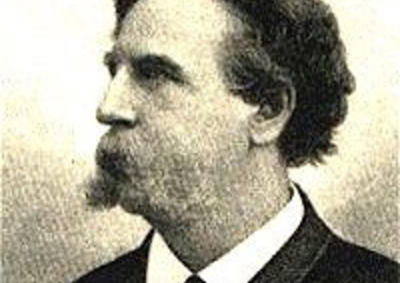
Richard Storrs Willis was born on February 10, 1819, in Boston, Massachusetts. He came from an exceptionally talented and intellectually active family. His father, Nathaniel Willis, was a respected newspaper publisher and religious journalist. Several of his siblings also achieved literary fame, including the celebrated writer Nathaniel Parker Willis and the novelist and columnist Fanny Fern.
Growing up in such an environment, Richard was exposed to literature, journalism, religion, and the arts from an early age. Boston during the early nineteenth century was one of the cultural centers of the young United States, offering educational and artistic opportunities unavailable in many other parts of the country.
As a child, Willis demonstrated strong intellectual abilities and an early interest in music. He attended Chauncey Hall School and later the Boston Latin School, one of the oldest educational institutions in America. These schools provided a rigorous classical education that prepared him for university studies and encouraged the disciplined habits that would characterize his later career.
Music occupied an increasingly important place in his life during these formative years. While American musical institutions were still developing, Willis became fascinated by the possibilities of composition and musical scholarship.
Youth
Willis entered Yale College, where he pursued a broad liberal arts education. During his years at Yale, he became deeply involved in musical activities and emerged as one of the institution’s most prominent student musicians. He served as president of Yale’s Beethoven Society, reflecting both his leadership abilities and his growing passion for serious music.
He graduated from Yale in 1841, but rather than immediately beginning a professional career in America, Willis made a bold decision that would profoundly influence his future. He traveled to Germany, which at the time represented the center of advanced musical education and scholarship.
For approximately six years, Willis studied music in Germany under distinguished teachers, including Xavier Schnyder von Wartensee and Moritz Hauptmann. During this period he immersed himself in the rich musical traditions of Europe and became acquainted with leading figures of the Romantic era.
One of the most significant experiences of his youth was his association with Felix Mendelssohn. Willis greatly admired the German composer and benefited from exposure to Mendelssohn’s artistic ideals. The emphasis on craftsmanship, clarity, and spiritual expression found in German Romantic music would later influence Willis’s own work.
His years abroad transformed him from a talented American student into a highly educated musician with an international perspective. When he eventually returned home, he possessed a level of musical training that was still relatively rare in the United States.
Adulthood
Upon returning to America, Willis embarked on a multifaceted career that combined composition, criticism, editing, teaching, and publishing.
One of his most influential roles was that of music critic. He wrote for prominent newspapers and journals, including the New York Tribune, The Albion, and The Musical Times. Through these publications, he helped shape public understanding of music during a period when American musical culture was rapidly evolving.
Willis believed strongly that the United States should develop its own serious musical tradition. He became associated with organizations dedicated to promoting American composers and improving musical standards throughout the country.
In addition to his critical work, Willis was an accomplished editor and publisher. He founded and edited Once a Month: A Paper of Society, Belles-Lettres and Art, a journal that reflected his broad intellectual interests. Through his editorial activities, he contributed to discussions about literature, art, culture, and music.
Church music remained one of the central focuses of his career. Willis was deeply concerned with raising the quality of sacred music in American worship. He published collections, instructional materials, and essays designed to improve church choirs and congregational singing.
His work as a translator also left a lasting mark. He helped introduce important German hymns and sacred musical traditions to American audiences. Among his most enduring contributions was his role in popularizing the hymn “Fairest Lord Jesus,” which became one of the best-loved hymns in American churches.
Throughout his adult life, Willis remained a respected authority on sacred music and musical education. His reputation rested not only on his compositions but also on his intellectual contributions to the musical life of the nation.
Major Compositions
Although Richard Storrs Willis composed a variety of works, his greatest fame rests on his contributions to sacred music.
Carol (1850)
Willis’s most famous composition is undoubtedly the melody known simply as Carol. Written in 1850, it became the standard American tune for Edmund Sears’s Christmas text It Came Upon the Midnight Clear.
The melody combines simplicity, warmth, and elegance, making it easily singable while retaining a distinctive musical character. Over the generations, it has become one of the most beloved Christmas melodies in the United States and remains a staple of church services and holiday celebrations.
Church Chorals and Choir Studies (1850)
This publication represented an important contribution to church music education. It offered guidance for choirs and congregations while presenting sacred music in a thoughtful and organized manner.
Our Church Music (1856)
In this influential work, Willis addressed questions of church music practice and sought to improve standards of sacred musical performance. The publication reflected his lifelong dedication to elevating worship music.
Waif of Song (1876)
This collection demonstrated Willis’s continued interest in composing and compiling music throughout his later years. It showcased his ability to combine artistic refinement with accessibility.
Pen and Lute (1883)
Part musical collection and part literary reflection, this publication illustrated the breadth of Willis’s intellectual and artistic interests. It highlighted his dual identity as both musician and writer.
Other Contributions
Beyond these major works, Willis produced numerous hymn tunes, arrangements, translations, and educational materials. His influence extended through the many church musicians, choir directors, and congregations who used his publications throughout the nineteenth century.
Death
Richard Storrs Willis spent his final years continuing to write and contribute to musical life. Even as musical styles changed toward the end of the nineteenth century, he remained respected as one of the pioneers of American sacred music.
He died in Detroit, Michigan, on May 7, 1900, at the age of eighty-one. His long life had spanned a remarkable period in American history, from the early republic to the dawn of the twentieth century.
Willis was buried at Woodlawn Cemetery in Detroit. Although his passing received less public attention than that of some major European composers, his contributions to American musical culture ensured that his legacy would endure.
Conclusion
Richard Storrs Willis occupies a unique place in the history of American music. Composer, critic, editor, educator, translator, and cultural advocate, he helped shape the musical development of the United States during a crucial period of growth.
His years of study in Germany brought European sophistication to American musical life, while his commitment to sacred music elevated standards of church worship across the nation. Through his writings and publications, he encouraged musical literacy and artistic excellence. Through his compositions, he created melodies that continue to inspire singers more than a century after his death.
Today, Willis is remembered above all for the enduring beauty of Carol, the melody associated with It Came Upon the Midnight Clear. Yet his broader legacy is equally significant. He helped lay the foundation for a mature American musical culture and demonstrated that sacred music could combine artistic quality with spiritual depth.
More than a hundred years after his death, Richard Storrs Willis remains an important figure in the history of American sacred music, remembered for his dedication to beauty, education, and musical excellence.
Comments are closed