
Introduction
Reinhold Glière was one of the most important composers to bridge the late Romantic tradition of Imperial Russia and the cultural landscape of the Soviet Union. Known for his lush orchestration, melodic richness, and commitment to traditional musical forms, Glière remained largely unaffected by the artistic controversies that challenged many of his contemporaries. Throughout a career spanning more than half a century, he composed symphonies, operas, ballets, concertos, chamber music, and vocal works that reflected both Russian nationalism and Romantic expressiveness.
His music combined grand orchestral colors with folk-inspired themes, making him a significant figure in Eastern European classical music. Although his reputation in the West has fluctuated over time, many of his compositions continue to be admired for their craftsmanship and emotional depth.
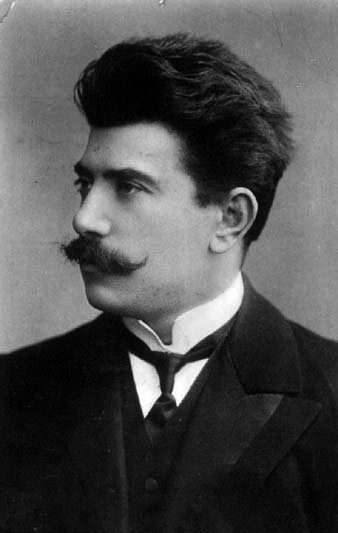
Childhood
Reinhold Moritzevich Glière was born on January 11, 1875, in Kiev, then part of the Russian Empire and today the capital of Ukraine. He was born Reinhold Ernest Glier into a family deeply connected to music and craftsmanship. His father, Ernst Moritz Glier, was a respected maker of wind instruments who had emigrated from Saxony, Germany, while his mother, Józefa Korczak, came from a Polish family.
Music was a natural part of daily life in the Glier household. His father was not only an instrument maker but also a skilled musician who played several instruments. This environment encouraged the young Reinhold to develop an interest in music from an early age. He showed particular talent for the violin and quickly demonstrated a remarkable aptitude for musical studies.
Growing up in Kiev exposed him to a rich cultural environment where Russian, Ukrainian, Polish, and German influences coexisted. These diverse traditions would later contribute to the broad musical language that characterized his mature compositions.
Youth
After completing his general education, Glière entered the Kiev School of Music in 1891. There he studied violin under the celebrated Czech violinist Otakar Ševčík, whose rigorous teaching methods helped shape the young musician’s technical abilities.
In 1894, Glière was admitted to the prestigious Moscow Conservatory. During his years there, he studied with some of the most distinguished musicians of the era, including Sergei Taneyev, Anton Arensky, and Mikhail Ippolitov-Ivanov.
His conservatory years proved enormously productive. Glière developed a mastery of harmony, counterpoint, and orchestration while composing increasingly ambitious works. In 1900, he graduated with a gold medal in composition, an honor that recognized his exceptional talent and promise.
Following graduation, he began teaching while continuing to compose. Among his students were future giants of Russian music, including Sergei Prokofiev and Nikolai Myaskovsky. This period established Glière not only as a composer but also as an influential educator.
Adulthood
Between 1905 and 1908, Glière studied conducting in Berlin under the noted conductor Oskar Fried. Exposure to the broader European musical world expanded his artistic horizons while reinforcing his commitment to Romantic traditions.
The years before the Russian Revolution marked the height of his early creative success. His large-scale orchestral works attracted considerable attention, and his reputation grew steadily throughout Russia and Europe.
In 1913, Glière returned to Kiev, where he became associated with the institution that would become the Kiev Conservatory. Soon afterward, he was appointed its director. During this period he trained several notable composers, including Boris Lyatoshynsky.
Unlike many Russian composers who emigrated after the 1917 Revolution, Glière chose to remain in the Soviet Union. His conservative musical language and willingness to engage with official cultural programs allowed him to maintain a successful career during the Soviet era. He participated in efforts to develop musical traditions in various Soviet republics, particularly in Uzbekistan and Azerbaijan, where he collaborated with local musicians and incorporated regional folk influences into his works.
Throughout the 1930s and 1940s, he held important positions in Soviet musical organizations and received numerous honors. He was awarded the title of People’s Artist of the USSR and became one of the most respected composers in the country. Unlike many of his contemporaries, he largely avoided accusations of formalism and remained in favor with Soviet authorities.
Major Compositions
Glière composed in nearly every major genre and left a substantial catalog of works.
Symphony No. 3 “Ilya Muromets” (1911)
Among his greatest achievements is the monumental Symphony No. 3 Ilya Muromets. Inspired by the legendary Russian folk hero Ilya Muromets, the symphony is one of the longest and most ambitious symphonic works of the twentieth century. Its vast orchestral forces, vivid storytelling, and richly colored harmonies exemplify Glière’s mature style.
The Red Poppy (1927)
The ballet The Red Poppy became one of the first great Soviet ballets. It achieved enormous popularity and introduced memorable orchestral music, including the famous “Russian Sailors’ Dance.”
Shah-Senem (1934)
His opera Shah-Senem demonstrated his interest in incorporating Azerbaijani folk elements into classical forms, helping establish a national operatic tradition in the region.
Harp Concerto in E-flat Major, Op. 74 (1938)
The Harp Concerto in E-flat Major, Op. 74 remains one of the most important works in the harp repertoire. Combining virtuosic writing with lyrical melodies, it continues to be performed worldwide.
Concerto for Coloratura Soprano and Orchestra (1943)
This unusual concerto showcases the human voice as a solo instrument without text, emphasizing vocal virtuosity and expressive beauty.
Horn Concerto in B-flat Major, Op. 91 (1951)
The Horn Concerto in B-flat Major, Op. 91 is widely regarded as one of the finest horn concertos ever written and remains a cornerstone of the instrument’s repertoire.
Beyond these celebrated works, Glière composed operas, chamber music, songs, piano works, and educational pieces that demonstrated his exceptional technical skill and melodic gift.
Death
In his later years, Glière continued composing and remained an honored figure within Soviet musical life. Despite advancing age, he maintained an active interest in teaching, conducting, and promoting musical culture.
On June 23, 1956, Reinhold Glière died in Moscow at the age of eighty-one. His passing marked the end of a remarkable career that had begun in the final decades of the Russian Empire and extended through the formative years of the Soviet Union.
He was buried at the renowned Novodevichy Cemetery, where many of Russia’s most distinguished cultural figures are interred.
Conclusion
Reinhold Glière occupies a unique position in music history. He was among the last major representatives of the Russian Romantic tradition while simultaneously serving as a leading composer of the Soviet era. His ability to combine rich orchestration, memorable melodies, and folk influences allowed him to create music that was both accessible and artistically sophisticated.
As a teacher, he influenced a generation of important composers. As a composer, he enriched the repertoire with symphonies, ballets, operas, and concertos that continue to be performed and recorded. Though often overshadowed by contemporaries such as Sergei Prokofiev and Dmitri Shostakovich, Glière’s music remains a significant contribution to the heritage of Russian, Ukrainian, and Soviet classical music.
His legacy endures through works that celebrate lyricism, orchestral brilliance, and the enduring power of Romantic musical expression.
Comments are closed