Introduction
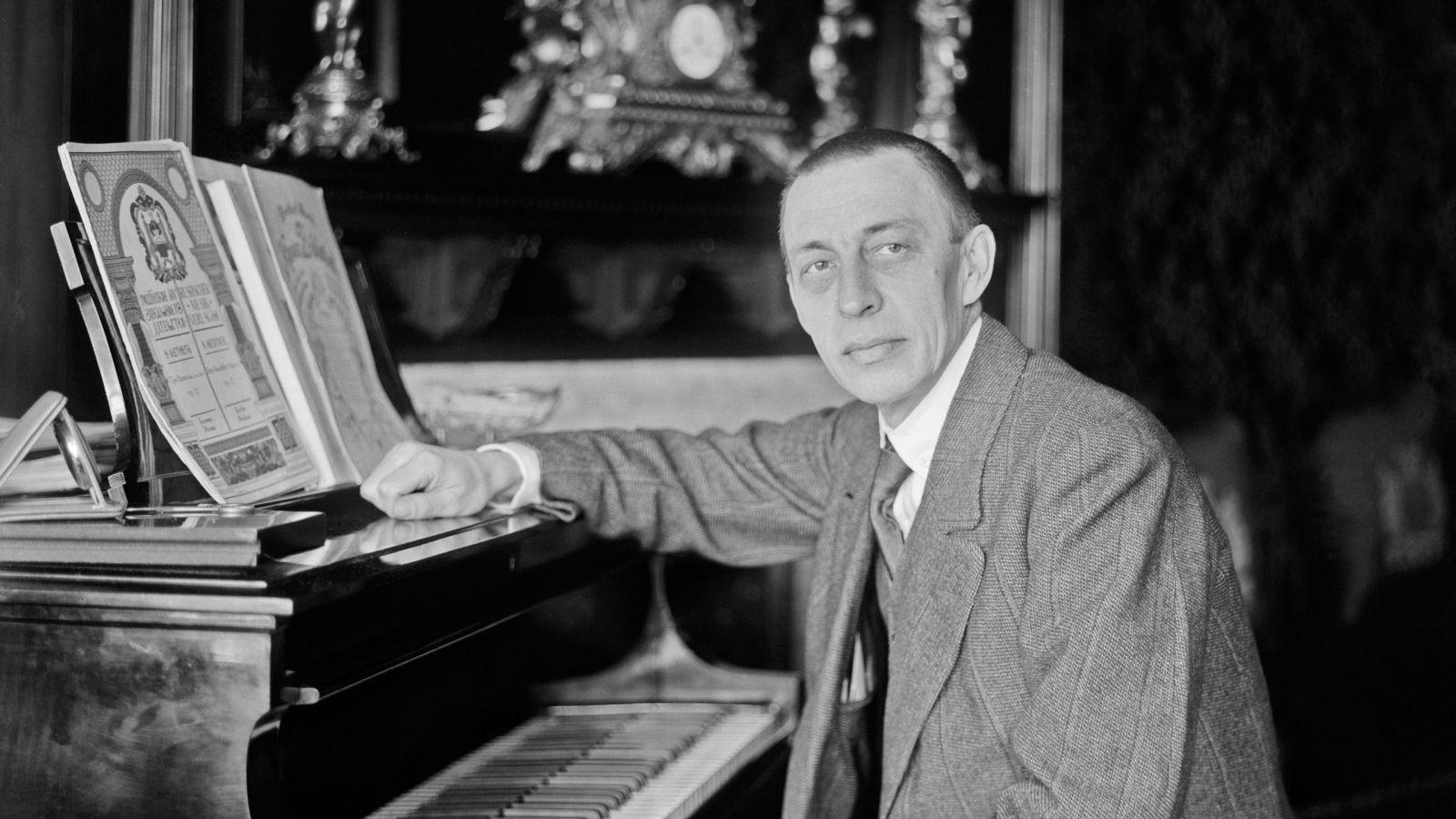
Sergei Rachmaninoff was one of the greatest composers, pianists, and conductors of the late Romantic era. Renowned for his lush harmonies, sweeping melodies, and extraordinary pianistic technique, he became one of the last major representatives of the Romantic tradition in a period increasingly dominated by modernism. His music combines emotional depth, technical brilliance, and a distinctly Russian character, making him one of the most beloved figures in classical music.
Born in Imperial Russia in 1873, Rachmaninoff witnessed dramatic social and political changes throughout his life, including the fall of the Russian Empire and the rise of the Soviet Union. Although he spent much of his later life in exile, he never lost his connection to Russian culture, which remained a powerful influence on his compositions. Today, works such as the Piano Concertos, the Rhapsody on a Theme of Paganini, and the Symphony No. 2 remain among the most frequently performed masterpieces in the classical repertoire.
Childhood
Sergei Vasilyevich Rachmaninoff was born on April 1, 1873, according to the modern calendar, in the Novgorod region of Russia. He came from an aristocratic family with a strong appreciation for music. His father, Vasily Rachmaninoff, was a former army officer, while his mother, Lyubov Butakova, was an accomplished amateur pianist who introduced young Sergei to music at an early age.
Rachmaninoff displayed remarkable musical talent as a child. He began piano lessons under his mother’s guidance and soon demonstrated exceptional musical memory and technical ability. However, his early years were marked by family difficulties. Poor financial decisions made by his father led to the loss of much of the family’s wealth and property. As a result, the family moved to Saint Petersburg, where Rachmaninoff continued his education.
In Saint Petersburg, he enrolled at the local conservatory. Although talented, he initially struggled with discipline and academic performance. The death of his older sister from diphtheria and the separation of his parents created emotional challenges during his childhood. Recognizing his extraordinary musical gifts, relatives arranged for him to study in Moscow under the strict piano teacher Nikolai Zverev.
Living in Zverev’s household exposed Rachmaninoff to a highly disciplined musical environment. He practiced extensively and met many influential musicians and artists. This rigorous training laid the foundation for his future success as both a composer and pianist.
Youth
Rachmaninoff’s years at the Moscow Conservatory proved transformative. He studied piano, composition, and music theory with some of Russia’s most distinguished teachers. Among them were Alexander Siloti, a celebrated pianist and cousin of Rachmaninoff, and Sergei Taneyev, one of Russia’s leading composers and theorists.
As a student, Rachmaninoff quickly gained recognition for his compositional abilities. His early works revealed a remarkable gift for melody and orchestration. In 1891, he graduated from the conservatory’s piano program with the highest honors. One year later, he completed his studies in composition.
His graduation project was the one-act opera Aleko, based on a poem by Alexander Pushkin. The opera achieved immediate success and earned widespread praise from both critics and fellow musicians. Around the same time, Rachmaninoff composed his famous Prelude in C-sharp Minor, a work that would become one of his most recognizable pieces.
Despite these early triumphs, Rachmaninoff faced significant challenges. In 1897, the premiere of his Symphony No. 1 was a disaster. Poor rehearsal conditions and an inadequate performance contributed to a negative reception. The failure devastated the young composer, leading to a severe depression and creative paralysis that lasted several years.
During this difficult period, Rachmaninoff sought treatment from Dr. Nikolai Dahl, a physician who specialized in hypnosis and psychotherapy. The treatment proved highly effective, restoring both his confidence and his ability to compose. The experience directly contributed to the creation of one of his greatest masterpieces, the Piano Concerto No. 2.
Adulthood
The successful premiere of Piano Concerto No. 2 in 1901 marked the beginning of a new and productive phase in Rachmaninoff’s career. The concerto was acclaimed by audiences and critics alike and established him as one of Russia’s leading composers.
In 1902, he married his cousin Natalia Satina. Their marriage was happy and enduring, producing two daughters. Family life provided stability and support throughout his career.
During the early twentieth century, Rachmaninoff balanced multiple roles as composer, pianist, and conductor. He served as conductor of the Bolshoi Theatre in Moscow and gained a reputation for his meticulous musicianship. His compositions from this period included the Symphony No. 2, the symphonic poem The Isle of the Dead, and numerous piano works.
The Russian Revolution of 1917 dramatically altered his life. Facing political uncertainty and the collapse of the social order he had known, Rachmaninoff and his family left Russia permanently. They initially settled in Scandinavia before moving to the United States.
Exile was emotionally painful for Rachmaninoff. He deeply missed his homeland and often expressed nostalgia for Russian culture and landscapes. Financial necessity compelled him to focus primarily on concert performances rather than composition. As a result, his output during the later years of his life was relatively small compared to earlier periods.
Nevertheless, he became one of the most celebrated pianists in the world. Audiences admired his powerful technique, remarkable accuracy, and expressive interpretations. His extensive concert tours throughout North America and Europe made him one of the highest-paid musicians of his era.
Despite his demanding performance schedule, Rachmaninoff continued to compose important works, including the Piano Concerto No. 4, the Variations on a Theme of Corelli, the Rhapsody on a Theme of Paganini, Symphony No. 3, and the Symphonic Dances. These works demonstrated a more concise and modern style while preserving the emotional richness that characterized his music.
Major Compositions
Rachmaninoff’s musical legacy includes some of the most beloved works in the classical repertoire.
Piano Concerto No. 2 in C Minor, Op. 18
Composed following his recovery from depression, this concerto is celebrated for its sweeping melodies, emotional depth, and virtuosic piano writing. It remains one of the most frequently performed piano concertos in history.
Piano Concerto No. 3 in D Minor, Op. 30
Widely regarded as one of the most technically demanding works ever written for piano, the Third Concerto combines extraordinary virtuosity with profound musical expression.
Symphony No. 2 in E Minor, Op. 27
This symphony is admired for its lyrical beauty, rich orchestration, and expansive structure. The third movement is particularly famous for its romantic themes.
Rhapsody on a Theme of Paganini, Op. 43
Written in 1934, this work for piano and orchestra consists of twenty-four variations on a theme by Niccolò Paganini. The eighteenth variation is among the most recognizable melodies in classical music.
The Bells, Op. 35
Based on a poem by Edgar Allan Poe, this choral symphony is considered one of Rachmaninoff’s finest achievements. It showcases his mastery of orchestral color and dramatic expression.
Symphonic Dances, Op. 45
Completed in 1940, this was Rachmaninoff’s final major composition. It combines rhythmic energy, orchestral brilliance, and reflections on themes that had occupied him throughout his career.
Prelude in C-sharp Minor, Op. 3 No. 2
Perhaps his most famous piano miniature, this work became immensely popular during his lifetime and helped establish his international reputation.
Vocalise, Op. 34 No. 14
This lyrical piece, originally written for voice without words, remains one of the most cherished works in the vocal repertoire and has been arranged for numerous instruments.
Death
In his later years, Rachmaninoff continued performing despite declining health. The demands of constant travel and concerts placed significant strain on him. In 1942, doctors diagnosed him with advanced melanoma.
Even while seriously ill, he continued to fulfill performance commitments whenever possible. His final concert appearances demonstrated the determination and professionalism that had characterized his entire career.
Sergei Rachmaninoff died on March 28, 1943, in Beverly Hills, California, only a few days before his seventieth birthday. His death marked the end of an era, as he was among the last great composers directly connected to the Romantic tradition of the nineteenth century.
He was buried at Kensico Cemetery in Valhalla, New York. Although he spent his final decades far from Russia, his music remained deeply rooted in the culture and traditions of his homeland.
Conclusion
Sergei Rachmaninoff occupies a unique place in music history. At a time when many composers embraced radical experimentation, he remained committed to melody, emotional expression, and the rich harmonic language of Romanticism. His works combine technical brilliance with profound humanity, allowing them to resonate with audiences across generations.
As a pianist, he was regarded as one of the finest performers of his age. As a conductor, he displayed exceptional discipline and insight. As a composer, he created masterpieces that continue to captivate listeners worldwide.
More than eighty years after his death, Rachmaninoff’s music remains a cornerstone of the classical repertoire. His ability to transform personal struggles, nostalgia, and deep emotion into timeless art ensures that his legacy will endure for generations to come.
Comments are closed