Introduction
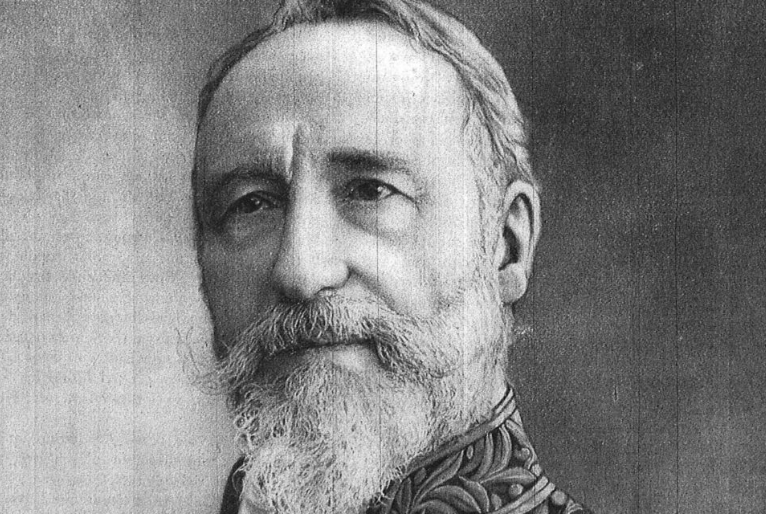
Théodore Dubois was one of the most respected figures in French musical life during the late nineteenth and early twentieth centuries. A composer, organist, teacher, and administrator, he played a significant role in shaping French musical education and sacred music during the Romantic era. Although his reputation was later overshadowed by more innovative contemporaries such as Claude Debussy and Maurice Ravel, Dubois enjoyed enormous prestige during his lifetime.
Known for his refined craftsmanship, elegant melodies, and mastery of traditional forms, Dubois composed operas, oratorios, symphonies, chamber music, organ works, and educational treatises. His influence extended beyond composition through his long service at the Paris Conservatoire, where he eventually became director. His career embodied the ideals of the French academic tradition, emphasizing clarity, balance, and technical excellence.
Childhood
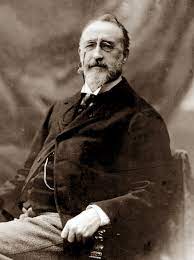
Théodore Dubois was born on August 24, 1837, in the small village of Rosnay, near Reims, France. His full name was Clément François Théodore Dubois. Unlike many celebrated composers, he did not come from a musical family. His father, Nicolas Dubois, worked as a basket maker, while his grandfather was a schoolteacher. The family’s modest background provided little direct connection to professional music, but young Théodore displayed remarkable musical talent from an early age.
His earliest musical training came through Louis Fanart, choirmaster of Reims Cathedral. Under Fanart’s guidance, Dubois quickly developed his abilities as a pianist and musician. His progress impressed local patrons, particularly Vicomte Eugène de Breuil, who helped support the young musician’s education and introduced him to influential figures in Parisian musical circles. These opportunities proved crucial in allowing Dubois to pursue a professional musical career.
Youth
In 1854, at the age of seventeen, Dubois entered the prestigious Paris Conservatoire. There he studied piano with Antoine François Marmontel, organ with François Benoist, harmony with François Bazin, and composition with Ambroise Thomas. His years at the Conservatoire were marked by exceptional academic success. He won several prizes in harmony, piano, organ, and composition, establishing himself as one of the institution’s most promising students.
While still a student, Dubois gained practical experience as an organist, serving at Saint-Louis-des-Invalides and later at Sainte-Clotilde, where he worked under the celebrated composer and organist César Franck. These positions exposed him to the rich traditions of French sacred music and strengthened his skills as both performer and composer.
His greatest early achievement came in 1861 when he won the prestigious Prix de Rome, France’s highest award for young composers. The prize enabled him to continue his studies in Rome and significantly enhanced his professional reputation. Winning the Prix de Rome marked the beginning of his rise within French musical society.
Adulthood
Upon returning to France, Dubois began building a distinguished career that combined composition, church music, teaching, and administration. In 1868 he became choirmaster at the Church of the Madeleine in Paris, one of the city’s most prestigious religious institutions. Later, in 1877, he succeeded Camille Saint-Saëns as organist of the Madeleine, a position that further elevated his standing in French musical life.
His academic career flourished simultaneously. In 1871 he joined the faculty of the Paris Conservatoire as professor of harmony. Among his students were future notable composers including Paul Dukas and George Enescu. His reputation as a rigorous and highly skilled teacher grew steadily over the following decades.
In 1891 he became professor of composition, and in 1896 he was appointed director of the Paris Conservatoire following the death of Ambroise Thomas. As director, Dubois maintained a strongly conservative educational philosophy rooted in traditional French musical values. While respected for his integrity and professionalism, his resistance to newer musical trends eventually generated controversy. His administration became associated with the academic establishment that opposed emerging modernist composers.
A major scandal involving the Prix de Rome competition and the repeated rejection of Maurice Ravel contributed to public criticism of the Conservatoire’s policies. In 1905 Dubois retired from his position, and he was succeeded by Gabriel Fauré, who introduced substantial reforms.
Despite his conservative public image, Dubois privately admired some modern developments in music and remained active in French cultural life after retirement. He continued composing and participating in musical organizations well into old age.
Major Compositions
Dubois was an exceptionally prolific composer whose output encompassed nearly every major genre of his time.
His most famous work is the oratorio Les Sept Paroles du Christ (The Seven Last Words of Christ), composed in 1867. This sacred work became widely admired and remains one of his most frequently performed compositions. Its expressive choral writing and devotional atmosphere made it a staple of French religious music.
Among his other important sacred works are:
- Le Paradis Perdu (Paradise Lost)
- Panis Angelicus
- Numerous masses, motets, and liturgical compositions
His orchestral output includes:
- Symphonie Française
- Three symphonies
- Piano concertos
- Orchestral suites
His operatic works include:
- Aben-Hamet
- Xavière
- Le Pain Bis
- La Guzla de l’Émir
Although these operas achieved varying degrees of success during his lifetime, none secured a permanent place in the standard repertoire.
Dubois also made lasting contributions to organ literature. His Toccata in G Major remains a favorite among organists and continues to be performed regularly.
Beyond composition, he authored influential theoretical textbooks, including:
- Traité d’Harmonie Théorique et Pratique
- Traité de Contrepoint et de Fugue
These works became standard educational texts and influenced generations of musicians throughout France and beyond.
Death
The final years of Dubois’s life were relatively peaceful. Although retired from official duties, he remained connected to the French musical community and continued to enjoy respect as one of the elder statesmen of French music.
A profound personal loss occurred in 1922 when his wife, Jeanne Duvinage, whom he had married in 1872, died. The couple had enjoyed a long and happy marriage. Friends noted that Dubois never fully recovered from her death.
After a brief illness, Théodore Dubois died in Paris on June 11, 1924, at the age of eighty-six. His passing marked the end of a career that had spanned more than six decades and witnessed dramatic changes in the musical world, from the height of Romanticism to the emergence of modernism.
Conclusion
Théodore Dubois occupies an important place in French musical history as a composer, educator, organist, and administrator. Although later generations often viewed him as a representative of musical conservatism, his achievements were substantial. He helped shape French musical education, trained many significant composers, and produced a large body of music distinguished by elegance, craftsmanship, and technical mastery.
His sacred compositions, particularly The Seven Last Words of Christ, continue to be performed and appreciated. His organ works remain part of the standard repertoire, while his theoretical writings influenced music education for decades. Today, scholars increasingly recognize Dubois not merely as a conservative academic figure but as a skilled and dedicated musician whose work reflects the richness and sophistication of French Romantic music.
Comments are closed