Introduction
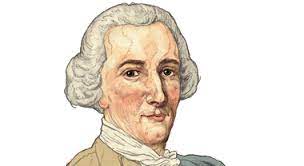
Among the great composers of the 18th century, Baldassare Galuppi (1706–1785) occupies a unique place in music history. A prolific Venetian composer, keyboard virtuoso, and respected teacher, Galuppi wrote more than one hundred operas, numerous sacred works, chamber music, and keyboard sonatas. Although his fame was eventually overshadowed by contemporaries such as Joseph Haydn, Wolfgang Amadeus Mozart, and Domenico Scarlatti, his influence on Classical music remains undeniable.
Known affectionately as Il Buranello—after the Venetian island of Burano where he was born—Galuppi played a decisive role in the development of opera buffa, helping transform comic opera into a sophisticated dramatic genre. His collaborations with librettist Carlo Goldoni established new standards for characterization, musical expression, and theatrical realism.
This article explores five of Baldassare Galuppi’s most significant compositions, highlighting their historical importance, musical innovations, and lasting legacy.
1. Il Filosofo di Campagna (1754)
A Masterpiece of Opera Buffa
Perhaps Galuppi’s best-known opera, Il Filosofo di Campagna (“The Country Philosopher”) represents the maturity of Venetian comic opera. With a libretto by Carlo Goldoni, the work blends humor, romance, and social satire into a remarkably balanced theatrical experience.
Unlike earlier comic operas that relied mainly on exaggerated stereotypes, this work presents psychologically convincing characters whose emotions evolve naturally throughout the story.
Musical Highlights
- Elegant and memorable melodies
- Rich orchestral accompaniment
- Well-developed ensemble scenes
- Sophisticated comic timing
- Strong integration between music and drama
The opera became one of the most frequently performed comic operas of the eighteenth century and helped define the conventions later perfected by Mozart.
2. L’Olimpiade (1747)
Galuppi’s Finest Opera Seria
Based on Pietro Metastasio’s famous libretto, L’Olimpiade demonstrates Galuppi’s mastery of serious opera.
Rather than focusing exclusively on vocal virtuosity, Galuppi sought emotional authenticity. His arias are expressive without becoming excessively ornamental, allowing the dramatic narrative to remain at the center of the work.
Why It Matters
The opera reveals Galuppi’s ability to combine:
- Noble classical themes
- Expressive orchestration
- Elegant vocal writing
- Dramatic continuity
- Emotional realism
Many scholars consider L’Olimpiade among the finest settings of Metastasio’s celebrated text.
3. Sonata in C Major
Keyboard Music Ahead of Its Time
Galuppi composed over one hundred keyboard sonatas, many intended for the harpsichord and later performed on the early piano.
Among them, the Sonata in C Major has become one of the most recorded and studied.
Unlike the highly virtuosic keyboard works of Domenico Scarlatti, Galuppi’s sonatas emphasize:
- Singing melodic lines
- Harmonic clarity
- Balanced Classical phrasing
- Elegant ornamentation
- Transparent textures
These characteristics anticipate many features that would later define the Classical piano style.
Influence
Galuppi’s keyboard writing directly influenced composers throughout Europe, especially in Russia and Central Europe.
4. Dixit Dominus
Sacred Grandeur
Galuppi spent many years writing sacred music for Venice’s most important churches, particularly St. Mark’s Basilica.
Among his religious works, Dixit Dominus stands out as one of his greatest achievements.
The composition combines:
- Majestic choral writing
- Brilliant orchestration
- Rich counterpoint
- Dramatic contrasts
- Beautiful solo passages
Rather than treating sacred music as purely ceremonial, Galuppi infused the psalm with expressive depth and musical elegance.
The work demonstrates that his genius extended far beyond opera.
5. Concerto a Quattro in D Major
Chamber Music with Classical Elegance
Galuppi’s Concerto a Quattro represents his contribution to instrumental chamber music.
Written for strings, the work reflects the transition between the late Baroque and the emerging Classical style.
Musical Characteristics
- Clear formal structure
- Conversational interplay among instruments
- Graceful melodies
- Balanced harmonic language
- Refined rhythmic vitality
Although less famous than his operas, this composition illustrates Galuppi’s versatility as an instrumental composer.
Baldassare Galuppi’s Lasting Influence
Galuppi’s importance extends far beyond his individual compositions.
He helped shape several musical developments that influenced later generations:
- The evolution of opera buffa
- The emergence of Classical keyboard style
- Greater dramatic realism in opera
- More integrated vocal ensembles
- A refined balance between melody and harmony
During his lifetime, Galuppi enjoyed international fame. He served at the court of Empress Elizabeth of Russia and held prestigious musical positions in Venice, where his reputation attracted students and musicians from across Europe.
Even composers such as Mozart inherited operatic traditions that Galuppi helped establish.
Why Galuppi Deserves Rediscovery
Modern audiences often associate eighteenth-century music with Bach, Handel, Haydn, and Mozart. Yet Baldassare Galuppi occupies a crucial place between the Baroque and Classical eras.
His music combines the expressive richness of the Baroque with the elegance, clarity, and emotional balance that would characterize the Classical period.
Today, historically informed performances have sparked renewed interest in his operas, keyboard works, and sacred music, allowing listeners to appreciate a composer who was once among Europe’s most celebrated musicians.
Conclusion
Baldassare Galuppi was far more than a prolific composer—he was an innovator whose works bridged two major musical eras.
His five most significant compositions demonstrate the remarkable breadth of his talent:
- Il Filosofo di Campagna – A landmark of opera buffa.
- L’Olimpiade – A refined and emotionally compelling opera seria.
- Sonata in C Major – A keyboard work anticipating the Classical style.
- Dixit Dominus – A majestic example of Venetian sacred music.
- Concerto a Quattro in D Major – An elegant chamber composition reflecting the transition from Baroque to Classical music.
For listeners interested in exploring the roots of Classical music, Galuppi offers a fascinating and rewarding journey. His works reveal a composer of remarkable imagination, dramatic insight, and melodic invention whose legacy deserves a far wider audience today.
Comments are closed