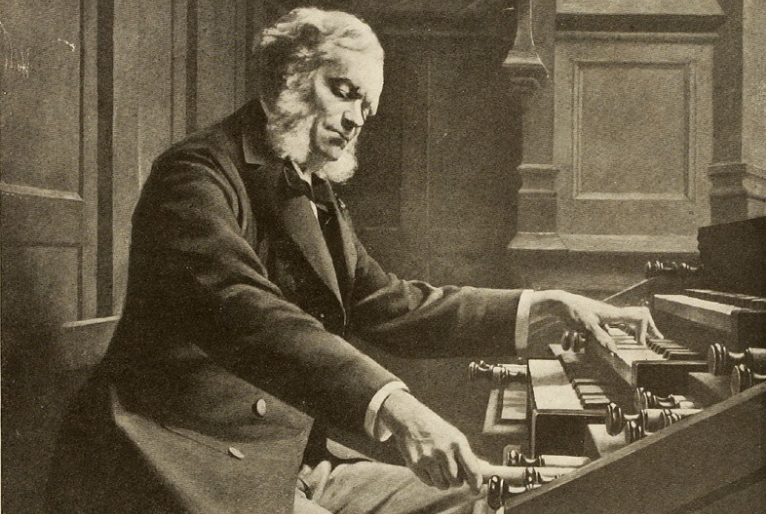
César Franck: A Master of French Romanticism
César Franck (1822–1890) was one of the most influential composers of the Romantic era and a central figure in French classical music. Born in Liège (present-day Belgium) and later naturalized as a French citizen, Franck excelled as a composer, organist, and teacher. His music is admired for its emotional depth, rich harmonic language, and innovative use of cyclic form, a compositional technique in which musical themes recur throughout a work to create unity and coherence.
Although widespread recognition came relatively late in his career, Franck left a lasting legacy that shaped the next generation of French composers, including Vincent d’Indy, Ernest Chausson, and Henri Duparc. Today, his works remain staples of the concert repertoire and are celebrated for their expressive power and structural brilliance.
Below are five of César Franck’s most important and enduring compositions.
1. Violin Sonata in A Major (1886)
The Violin Sonata in A Major is widely regarded as César Franck’s masterpiece of chamber music and one of the greatest violin sonatas ever written. Composed as a wedding gift for the renowned Belgian violinist Eugène Ysaÿe, it quickly became a cornerstone of the violin repertoire.
The sonata consists of four movements, each connected through Franck’s signature cyclic form. The work balances lyrical beauty with dramatic intensity, while the radiant final movement—written as a canon between the violin and piano—is especially admired for its elegance and emotional warmth.
Highlights
- One of the greatest violin sonatas of the Romantic period.
- Masterful use of cyclic form.
- A perfectly balanced partnership between violin and piano.
- Frequently performed and recorded by leading musicians worldwide.
2. Symphony in D Minor (1888)
Franck’s Symphony in D Minor is his only completed symphony and stands as one of the most significant orchestral works in French music. At a time when the symphonic tradition was dominated by German composers such as Beethoven and Brahms, Franck created a distinctly French symphony with a rich harmonic language and remarkable thematic unity.
Unlike the traditional four-movement symphony, Franck’s work is organized into three expansive movements. Themes introduced early in the piece return in transformed forms, giving the composition a strong sense of continuity and dramatic progression.
Highlights
- César Franck’s only completed symphony.
- A landmark of the French symphonic repertoire.
- Innovative structure built around recurring musical themes.
- Continues to be a favorite among major orchestras.
3. Prelude, Chorale and Fugue (1884)
The Prelude, Chorale and Fugue is one of the finest piano works of the nineteenth century. Inspired by the contrapuntal tradition of Johann Sebastian Bach while embracing the expressive language of Romanticism, the composition combines intellectual rigor with profound emotion.
The opening Prelude introduces a reflective atmosphere, followed by the solemn Chorale, which serves as the emotional heart of the work. The concluding Fugue gradually weaves together earlier themes into a magnificent and satisfying climax.
Highlights
- One of the greatest piano compositions of the Romantic era.
- Blends Baroque counterpoint with Romantic harmony.
- Highly demanding both technically and musically.
- A favorite among concert pianists and advanced students.
4. Symphonic Variations for Piano and Orchestra (1885)
The Symphonic Variations is one of Franck’s most original compositions, occupying a unique place between a piano concerto and a symphonic poem. Rather than emphasizing virtuosic display, the work presents an elegant dialogue between solo piano and orchestra.
Built around a principal theme that undergoes a series of imaginative transformations, the composition showcases Franck’s extraordinary gift for orchestration, thematic development, and harmonic color.
Highlights
- A masterpiece of the Romantic concertante repertoire.
- Exceptional integration of soloist and orchestra.
- Rich variety of moods, textures, and orchestral colors.
- Frequently performed by leading pianists and orchestras.
5. The Three Chorales for Organ (1890)
Composed during the final months of his life, the Three Chorales for Organ are widely considered the culmination of César Franck’s work as both composer and organist. These monumental pieces reflect decades of experience as organist at the Basilica of Sainte-Clotilde in Paris.
Each chorale combines spiritual depth, sophisticated counterpoint, and expansive Romantic harmony. Together, they represent one of the highest achievements in the organ repertoire and continue to inspire performers around the world.
Highlights
- Franck’s final major compositions.
- Cornerstones of the organ repertoire.
- A synthesis of spirituality, technical mastery, and expressive richness.
- Essential works for professional organists and scholars.
César Franck’s Lasting Legacy
Although César Franck’s catalog is relatively modest compared with some of his Romantic contemporaries, the artistic quality of his music is extraordinary. His pioneering use of cyclic form, bold harmonic language, and deeply expressive style helped shape the development of French music at the end of the nineteenth century.
His influence extended well beyond his own lifetime, inspiring composers such as Claude Debussy, Maurice Ravel, Vincent d’Indy, and Ernest Chausson. Today, Franck’s works are regularly performed in concert halls, churches, and conservatories around the world, where they continue to captivate audiences with their emotional intensity and architectural beauty.
Whether through the lyrical elegance of the Violin Sonata in A Major, the grandeur of the Symphony in D Minor, the intellectual brilliance of the Prelude, Chorale and Fugue, the orchestral refinement of the Symphonic Variations, or the profound spirituality of the Three Chorales for Organ, César Franck remains one of the defining voices of French Romanticism.
Conclusion
Exploring César Franck’s greatest compositions offers a deeper appreciation of a composer who successfully combined tradition with innovation. His music is characterized by expressive melodies, rich harmonic textures, and carefully crafted structures that continue to resonate with performers and audiences alike.
Comments are closed