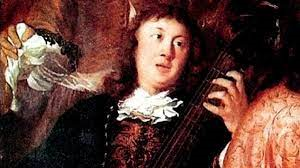
The Five Greatest Compositions by Dietrich Buxtehude
Discover the Music That Inspired Johann Sebastian Bach
Dietrich Buxtehude (c. 1637–1707) stands among the most influential composers of the Baroque era. Best known as the organist of St. Mary’s Church (Marienkirche) in Lübeck, Germany, he transformed the North German organ tradition with works of extraordinary imagination, technical brilliance, and spiritual depth.
His reputation was so remarkable that, in 1705, a young Johann Sebastian Bach famously walked more than 400 kilometers from Arnstadt to Lübeck just to hear him perform and learn from him. The experience profoundly shaped Bach’s musical development and helped establish the foundation of the German Baroque tradition.
Although Buxtehude composed vocal works, chamber music, and sacred cantatas, he is remembered primarily for his organ music. The following five masterpieces represent the finest examples of his creativity and remain essential listening for anyone interested in Baroque music.
1. Passacaglia in D Minor, BuxWV 161
A Monument of Variation Form
The Passacaglia in D Minor is widely regarded as Buxtehude’s greatest masterpiece. Built upon a repeating four-measure bass line (known as an ostinato), the composition unfolds through a series of increasingly elaborate variations.
Rather than simply decorating the melody, Buxtehude transforms the harmonic and rhythmic landscape with each variation, creating a work that feels both intellectually rigorous and emotionally compelling.
Many musicologists consider this piece one of the greatest passacaglias ever written, and it directly influenced Bach’s own monumental Passacaglia and Fugue in C Minor (BWV 582).
Why It Is Important
- Masterful use of variation technique
- Rich harmonic imagination
- Strong architectural design
- Major influence on later Baroque composers
2. Praeludium in G Minor, BuxWV 149
The North German Organ Style at Its Finest
The Praeludium in G Minor perfectly illustrates the stylus phantasticus, an improvisatory and highly expressive style that flourished in seventeenth-century northern Germany.
The work alternates between dramatic free passages and highly structured fugues, creating constant contrast and excitement. Virtuosic pedal writing, sudden harmonic changes, and bold textures make this one of Buxtehude’s most celebrated organ compositions.
Listeners can hear the origins of many techniques later perfected by J. S. Bach.
Musical Highlights
- Brilliant pedal solos
- Contrasting improvisatory and contrapuntal sections
- Dramatic harmonic language
- Outstanding virtuosity
3. Membra Jesu Nostri, BuxWV 75
A Masterpiece of Sacred Vocal Music
While Buxtehude is famous for his organ music, Membra Jesu Nostri demonstrates his extraordinary gift for vocal composition.
Written in 1680, this sacred cycle consists of seven cantatas that meditate on different parts of Christ’s crucified body. Each cantata combines biblical texts with medieval devotional poetry, producing an intensely spiritual and deeply expressive musical journey.
The work features soloists, choir, and instrumental ensemble, blending rich counterpoint with lyrical beauty.
Why It Endures
- One of the greatest Lutheran sacred works before Bach
- Profound emotional expression
- Elegant vocal writing
- Beautiful balance between text and music
4. Praeludium in E Major, BuxWV 141
Energy, Brilliance, and Innovation
The Praeludium in E Major showcases Buxtehude’s remarkable creativity as both composer and performer.
Its dazzling opening immediately captures the listener’s attention before giving way to intricate fugues and contrasting free sections. The composition demonstrates remarkable control over large-scale musical architecture while maintaining a sense of spontaneity.
Modern organists frequently perform this work because it combines technical brilliance with musical accessibility.
Key Characteristics
- Bright, joyful atmosphere
- Sophisticated counterpoint
- Brilliant manual passages
- Dynamic structural contrasts
5. Ciacona in E Minor, BuxWV 160
Simplicity Elevated to Great Art
The Ciacona in E Minor is one of the finest examples of the Baroque chaconne. Like the passacaglia, it is based on a repeating bass pattern, but Buxtehude transforms the recurring harmony into an expansive emotional narrative.
Each variation introduces new textures, rhythms, and expressive colors while preserving the unity of the entire composition.
The work demonstrates that extraordinary musical richness can emerge from remarkably simple material.
Why It Matters
- Elegant variation writing
- Emotional depth
- Perfect structural balance
- Lasting influence on Baroque keyboard literature
Buxtehude’s Lasting Legacy
Dietrich Buxtehude occupies a pivotal place in Western music history. His works bridge the gap between the early German Baroque and the mature masterpieces of Johann Sebastian Bach.
His innovative treatment of counterpoint, harmony, improvisation, and large-scale form established many of the musical principles that would define the High Baroque.
Today, organists, choirs, and early music ensembles continue to perform his compositions throughout the world, ensuring that his artistic legacy remains vibrant more than three centuries after his death.
Whether you are new to Baroque music or a lifelong enthusiast, exploring Buxtehude’s greatest compositions offers a fascinating glimpse into one of history’s most imaginative musical minds.
Recommended Listening Order
If you’re discovering Buxtehude for the first time, consider listening in this order:
- Passacaglia in D Minor (BuxWV 161)
- Praeludium in G Minor (BuxWV 149)
- Ciacona in E Minor (BuxWV 160)
- Praeludium in E Major (BuxWV 141)
- Membra Jesu Nostri (BuxWV 75)
This sequence introduces the listener to his most accessible and influential organ works before concluding with his greatest vocal masterpiece.
Conclusion
Dietrich Buxtehude’s music remains a cornerstone of the Baroque repertoire. His extraordinary imagination, technical mastery, and profound spirituality inspired generations of composers—most notably Johann Sebastian Bach—and continue to captivate audiences today.
Whether through the majestic architecture of the Passacaglia, the dazzling freedom of his Praeludia, or the devotional beauty of Membra Jesu Nostri, Buxtehude’s compositions reveal a composer of exceptional originality whose music deserves a central place in every classical music collection.
Comments are closed