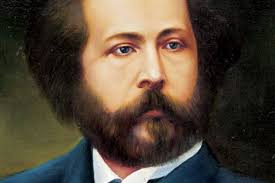
The 5 Main Compositions by Édouard Lalo: A Guide to His Most Important Works
Édouard Lalo (1823–1892) was a French composer whose music bridged the Romantic traditions of France and Germany. Although he never achieved the same level of fame as contemporaries like Camille Saint-Saëns or Georges Bizet, Lalo’s works are admired for their vivid orchestration, rhythmic vitality, and memorable melodies. His compositions played an important role in revitalizing French instrumental music during the nineteenth century.
Today, Lalo is best remembered for a handful of masterpieces that continue to be performed in concert halls around the world. Here are five of his most significant compositions.
1. Symphonie Espagnole, Op. 21 (1874)
Lalo’s Most Famous Masterpiece
Symphonie Espagnole is undoubtedly Édouard Lalo’s best-known work. Written for the celebrated Spanish violin virtuoso Pablo de Sarasate, it combines the brilliance of a violin concerto with the expansive character of a symphony.
Despite its title, it is not a true symphony. Instead, it is a five-movement concerto for violin and orchestra that showcases dazzling technical passages alongside expressive lyricism.
The work is filled with Spanish-inspired rhythms, colorful orchestration, and dance-like movements that reflect the Romantic fascination with Spanish culture.
Why it remains popular
- Brilliant solo violin writing
- Rich orchestral colors
- Memorable melodies
- Strong Spanish influences
- A favorite among leading violinists
Recommended recording: Itzhak Perlman with Daniel Barenboim.
2. Cello Concerto in D Minor (1876)
A Cornerstone of the Romantic Cello Repertoire
Lalo’s Cello Concerto in D Minor is one of the most frequently performed French cello concertos.
Composed shortly after Symphonie Espagnole, the concerto balances technical brilliance with emotional depth. Unlike many Romantic concertos that focus primarily on virtuosity, Lalo gives the orchestra an active and dramatic role throughout the piece.
The concerto unfolds in three connected movements, creating a seamless musical narrative.
Musical highlights
- Noble opening theme
- Passionate central episodes
- Brilliant finale
- Rich dialogue between soloist and orchestra
Many renowned cellists, including Yo-Yo Ma and Gautier Capuçon, have recorded this concerto.
3. Le Roi d’Ys (1888)
Lalo’s Greatest Operatic Success
Although Lalo struggled for many years to gain recognition as an opera composer, Le Roi d’Ys finally established his reputation on the operatic stage.
Based on a Breton legend about the mythical city of Ys, the opera tells a dramatic story of love, betrayal, sacrifice, and redemption.
Its success helped secure Lalo’s place in French musical history.
Famous excerpt
The opera is especially known for the tenor aria:
“Vainement, ma bien-aimée”
This lyrical aria has become one of the standard pieces in the French operatic repertoire.
Why audiences appreciate it
- Powerful orchestration
- Dramatic storytelling
- Beautiful vocal writing
- Strong Romantic atmosphere
4. Violin Concerto in F Minor, Op. 20 (1873)
A Virtuosic Romantic Concerto
Overshadowed by Symphonie Espagnole, Lalo’s Violin Concerto in F Minor deserves far more attention than it receives.
Written one year earlier, the concerto already demonstrates many of the qualities that would define Lalo’s mature style:
- Energetic rhythms
- Bold orchestration
- Expressive melodies
- Demanding solo passages
The concerto is technically challenging while remaining highly lyrical, making it a rewarding work for both performers and audiences.
5. Symphony in G Minor (1886)
Lalo’s Only Symphony
Completed relatively late in his career, Lalo’s Symphony in G Minor represents one of the finest French symphonies before César Franck’s Symphony in D Minor became widely known.
The work blends German structural discipline with French elegance and orchestral color.
Characteristics
- Four traditional movements
- Strong thematic development
- Powerful brass writing
- Rich harmonic language
- Excellent orchestral balance
Although it is performed less frequently than his concertos, many musicologists consider it one of Lalo’s finest achievements.
Édouard Lalo’s Musical Style
Lalo developed a distinctive musical voice that combines several defining characteristics:
- Rich Romantic harmonies
- Colorful orchestration
- Strong rhythmic drive
- National influences, especially Spanish and Breton
- Virtuosic writing for solo instruments
- Clear formal structure
Unlike many French composers of his era, Lalo was heavily influenced by German composers such as Beethoven, Schumann, and Wagner, yet he retained a uniquely French sense of elegance and clarity.
Why Édouard Lalo Still Matters
Although Édouard Lalo composed relatively few works compared to some of his contemporaries, his finest compositions remain central to the Romantic repertoire. Symphonie Espagnole continues to be one of the world’s most beloved violin works, while his cello concerto, symphony, and opera demonstrate his remarkable versatility as a composer.
His music represents a turning point in French instrumental composition, helping pave the way for later composers such as Claude Debussy, Maurice Ravel, and Gabriel Fauré. For listeners seeking Romantic music filled with expressive melodies, vibrant orchestration, and dramatic energy, Lalo’s works remain rewarding discoveries.
Comments are closed