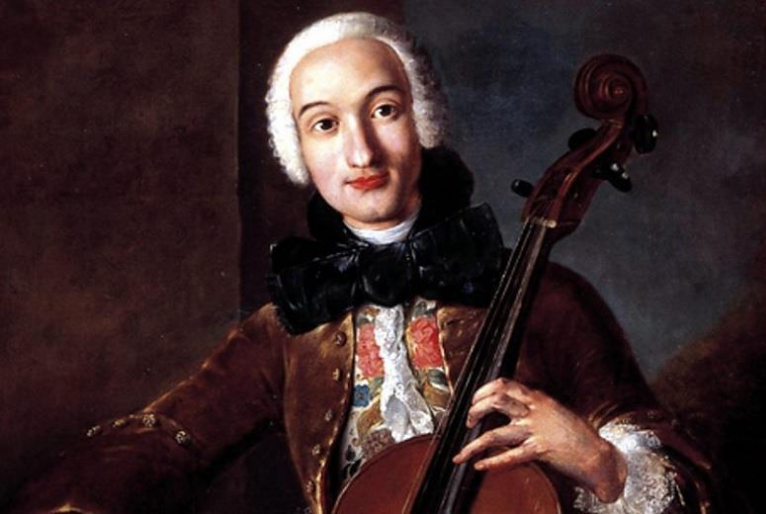
Luigi Boccherini – A Complete Biography
Introduction
Ridolfo Luigi Boccherini (February 19, 1743 – May 28, 1805) was an Italian composer and cellist whose graceful, melodically rich music epitomizes the lighter, courtly side of the Classical era. Best known today for his chamber music—especially his many string quintets and cello concertos—Boccherini combined Italian melodic sensibility with influences he absorbed while living for decades in Spain, producing a distinct, elegant voice admired for its charm and finesse.

Childhood
Boccherini was born into a musical family in Lucca in Tuscany. His father, Leopoldo Boccherini, was a player of cello and double bass who taught Luigi the cello from a very early age. By five Luigi was receiving formal instruction and, according to contemporary accounts, showed precocious skill on the instrument. At about nine he studied under the cathedral music director Abbé Vanucci in Lucca, and at thirteen was sent to Rome to study with the cellist Giovanni Battista Costanzi, a leading teacher of the day—an education that prepared him technically and stylistically for a professional career as both player and composer.
Youth
As a teenager Boccherini and his father traveled to Vienna in 1757, where both found positions in the Burgtheater orchestra; the experience exposed the young cellist-composer to the musical life of one of Europe’s major centers. In Vienna he performed, absorbed the Austro-German musical milieu, and began composing in earnest. By his early twenties he had already established himself as a virtuoso cellist and composer of chamber works, gaining a reputation that helped him secure future appointments and patrons elsewhere in Europe.
Adulthood
In 1768 Boccherini moved to Madrid, and soon entered the service of Infante Luis Antonio of Spain, a brother of King Charles III. The Infante became Boccherini’s most important early Spanish patron, and for many years the composer flourished under royal and aristocratic patronage. He composed prolifically in Spain—symphonies, concertos, chamber works (especially quintets and quartets), and sacred pieces—often writing for the musicians available at court and for the tastes of Spanish audiences. Boccherini pioneered a string-quintet scoring that used two cellos (two violins, viola, and two cellos), a texture that allowed him to exploit his own instrument’s expressive range and helped define much of his chamber output.
Despite his success, Boccherini’s life was not free of hardship. He experienced friction with some patrons—there are anecdotes describing disagreements over musical judgments—and later in life he suffered personal losses and financial difficulties after the death of key patrons. He also maintained relationships with other important musical figures and patrons of the era, including members of the Bonaparte circle and the Prussian court; these connections aided publication and dissemination of his works across Europe.
Major compositions
Boccherini was an extraordinarily prolific composer—his output runs to roughly 500 works—and he is chiefly celebrated for his chamber music. He wrote more than a hundred string quintets (many scored for two cellos), nearly a hundred string quartets, a sizable number of trios and sonatas, and around a dozen guitar quintets that reflect Spanish musical flavors. His cello concertos (about a dozen), written for his own virtuosic use, and approximately thirty symphonies round out a catalogue that also includes sacred music and stage works.
Two works have particular public recognition today: the minuet from his String Quintet in E major, Op. 11, No. 5 (often referred to simply as Boccherini’s Minuet) and his Cello Concerto in B-flat major—pieces that repeatedly reappear on recordings and in concert repertoire. His quintets are especially admired for their graceful melodies, transparent textures, and the way he balances elegance with expressive warmth. Musicologists have cataloged his works extensively (the Gérard catalog assigns “G” numbers), facilitating modern study and performance of his oeuvre.
Boccherini’s style is often described as galante or Rococo in its charm—light, evenly proportioned, and frequently intimate rather than grandly dramatic. At the same time, his music shows originality in melodic invention, rhythmic wit, and an incorporation of Iberian elements—especially in works composed while in Spain—which give certain pieces a distinctive local color.
Death
Boccherini’s later years brought misfortune: the deaths of patrons and family members, together with political and economic instability in late-18th-century Spain, weakened his financial and social support. He died in Madrid on May 28, 1805. Initially buried in Madrid, his remains were repatriated to his native Lucca in the 20th century. Though he never enjoyed the same lasting fame as some contemporaries in every generation, the revival of interest in chamber music and historical performance practice during the 19th and 20th centuries restored Boccherini’s reputation; today his music is widely recorded, studied, and performed.
Conclusion
Luigi Boccherini stands as one of the great idiomatic composers for the cello and as a master of chamber music whose works bridge Italian lyricism and the refined courtly tastes of the late eighteenth century. His pioneering use of a second cello in the string quintet, his elegant melodic voice, and his sizable catalog make him an essential figure for anyone interested in the Classical era’s more intimate, chamber-centered repertoire. Rediscovered and championed in successive generations, Boccherini’s music continues to delight listeners with its warmth, technical sparkle, and characteristic charm.
Comments are closed