Mikhail Glinka – A Complete Biography
Introduction
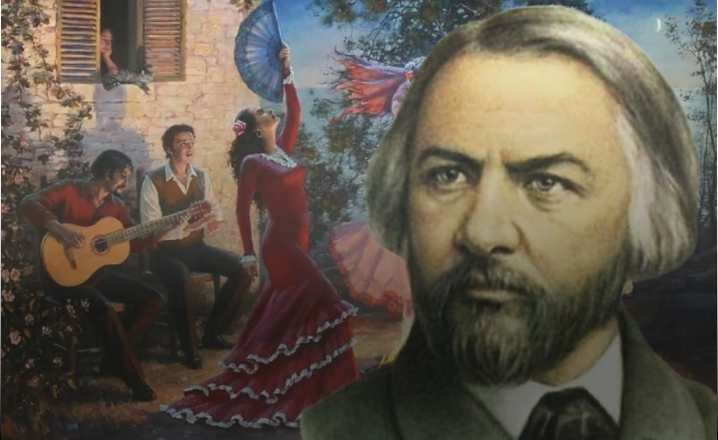
Mikhail Ivanovich Glinka (May 21 [June 1, New Style], 1804 – February 3 [February 15], 1857) is widely regarded as the founder of Russian national music. Though he wrote a relatively small number of works, his operas, songs, and orchestral pieces established musical models—especially the use of Russian folk-like melody and coloristic orchestration—that profoundly influenced later Russian composers such as Balakirev, Mussorgsky, Borodin, Rimsky-Korsakov, and Tchaikovsky. Glinka’s fusion of Western Romantic technique with Russian melodic and dramatic material made him a pivotal figure in 19th-century musical life in Russia and beyond.
Childhood
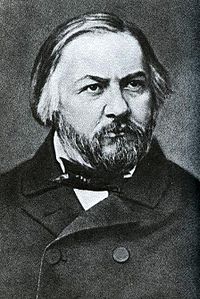
Mikhail Glinka was born into a minor gentry family at the country estate of Novospasskoye in Smolensk province. His upbringing combined the genteel provincial life of the Russian landed class with exposure to the music and languages of Western Europe. From an early age he showed musical aptitude. As a youth he received basic instruction in piano and music theory; later, in Saint Petersburg, he took lessons with teachers who introduced him to contemporary European music. These early years provided both the informal exposure to Russian peasant song and folk material at home and the formal musical grounding that would later allow him to synthesize Russian idioms with European art-music techniques.
Youth
In his late teens and early twenties, Glinka lived in Saint Petersburg, where he continued his musical studies and mixed in intellectual and artistic circles. He studied with noted teachers and was influenced by the cosmopolitan musical life of the Russian capital, which included Italian and German opera and visiting virtuosi. Travel played a formative role: later journeys to Italy, Germany, France, and Spain broadened his horizons—he absorbed operatic styles and orchestral techniques while collecting impressions of local song and drama. These experiences helped sharpen Glinka’s ambition to write large-scale works that could express Russia’s own stories and spirit in art-music forms that European audiences and institutions would recognize.
Adulthood
Glinka’s adult life combined periods of intensive composition, public success, disappointment, and travel. His first major success came in the 1830s: the patriotic opera A Life for the Tsar (often known by the protagonist’s name, Ivan Susanin) premiered in 1836 and established him as a composer of national significance in Russia. Later, Ruslan and Lyudmila (premiered 1842), based on the poem by Alexander Pushkin, displayed bolder orchestral color and more adventurous harmonic and dramatic writing; though Ruslan received a mixed reception at first, its orchestral overture and set pieces later became central to the repertory. During these years Glinka also wrote songs, piano pieces, and orchestral fantasies, and he increasingly took on the role of a musical pioneer whose experiments with Russian themes and musical language pointed the way for later generations. He struggled at times with the absence of robust institutional support for composers in Russia and with the practicalities of staging large-scale works, yet his influence grew steadily as younger Russian musicians drew inspiration from his achievements.
Major Compositions
Although Glinka’s total output was modest in quantity, several works are central to his reputation and to the history of Russian music.
- A Life for the Tsar (1836). Written with a Russian historical and patriotic subject, this opera used folk-like elements and declamatory choral writing to dramatize national history. It quickly became a touchstone for later Russian operatic practice.
- Ruslan and Lyudmila (premiered 1842). Based on Pushkin’s romantic-epic poem, the opera is notable for its imaginative orchestration and for sequences that pushed Russian opera toward more colorful, Romantic dramatic forms; its overture has enjoyed independent popularity.
- Orchestral fantasies and concertante pieces. Glinka’s orchestral works—often described as “fantasies pittoresques”—show his admiration for contemporary European orchestral color (for example, the music of Berlioz) combined with Russian melodic character. He also wrote piano works and many songs (romances) that circulated widely.
Beyond the named masterpieces, Glinka’s songs and small-scale pieces contributed to a growing national repertoire and established stylistic traits—modal inflections, distinctive melodic contours, and an ear for folk-derived rhythmic gesture—that later composers developed into a distinctly Russian orchestral and operatic voice.
Death
In the early 1850s Glinka spent extended periods abroad—in Paris and Berlin—partly for health reasons and partly to engage with European musical life. He caught a chill in Berlin and died there on February 3 [February 15, New Style], 1857. After initial burial in Berlin, his remains were later transported to Saint Petersburg and interred at the Alexander Nevsky Monastery, a reflection of his posthumous national standing in Russia. His death engaged tributes from composers and writers both in Russia and abroad, and the reburial in Saint Petersburg helped cement his place in Russian cultural memory.
Conclusion
Mikhail Glinka’s historical importance does not rest on a vast catalog but on the quality and national significance of a few key works and on the artistic example he set. By showing how Russian themes and melodic character could be shaped within the forms and orchestral language of Romantic music, he opened the way for later Russian masters to develop distinctive national styles. The members of “The Five” and other later composers acknowledged their debt to Glinka’s pioneering fusion of native material with international technique. Today his operas, overtures, and songs remain touchstones for anyone tracing the origins and development of Russian classical music.
Comments are closed