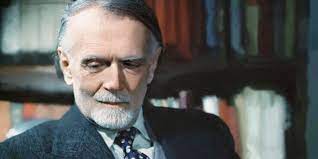
Zoltán Kodály – A Complete Biography
Introduction
Zoltán Kodály (1882–1967) stands as one of Hungary’s most influential composers, ethnomusicologists, and music educators. Alongside Béla Bartók, he transformed the understanding of folk traditions within classical music and established a profound pedagogical legacy that continues to shape music education worldwide. Kodály’s contributions went far beyond composition; he envisioned a society where music was integral to human development and culture. His musical philosophy, deeply rooted in Hungarian folk traditions, reflected a balance between national identity and universal artistic expression.
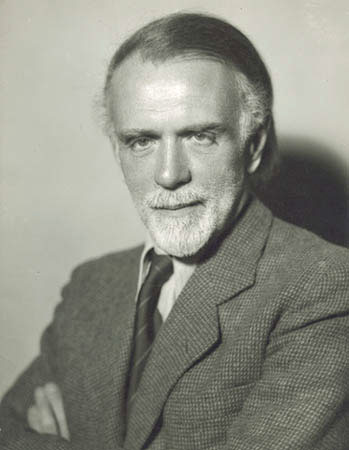
Childhood
Zoltán Kodály was born on December 16, 1882, in Kecskemét, Hungary. His father, Frigyes Kodály, was a stationmaster and amateur musician, while his mother, Paulina Jalovetzky, nurtured his early interest in music. Kodály spent his early years in small Hungarian towns such as Galánta and Nagyszombat (now Trnava, Slovakia), where he was surrounded by folk songs and dances performed by local peasants. These experiences left a lasting impression on him, forming the foundation of his lifelong dedication to the preservation and study of Hungarian folk music.
As a child, Kodály showed remarkable musical aptitude. He began learning the violin and cello, sang in choirs, and composed simple pieces. His father’s frequent relocations for work exposed young Kodály to different regional folk traditions, enriching his understanding of Hungary’s musical diversity. By the time he entered secondary school, he was already determined to pursue music as a serious vocation.
Youth
In 1900, Kodály enrolled at the University of Budapest, where he studied Hungarian and German language and literature. Simultaneously, he attended the Franz Liszt Academy of Music, studying composition under Hans Koessler. His early academic years were marked by an intense curiosity about the relationship between folk music and classical composition.
It was during this period that he met Béla Bartók, a friendship that would prove pivotal for both men and for 20th-century music. Together, they embarked on extensive field trips throughout rural Hungary, collecting and transcribing thousands of folk songs. This ethnomusicological work was revolutionary—it preserved a vanishing oral tradition and laid the groundwork for the modern study of ethnomusicology. Kodály’s scholarly rigor and analytical methods helped to elevate folk music to a respected academic discipline.
By 1906, Kodály had completed his doctoral dissertation on the structure of Hungarian folk song, marking one of the first scholarly treatments of folk music in Europe. That same year, he also composed his Sonata for Cello and Piano, Op. 4, one of his earliest mature works that reflected both his academic interests and his compositional skill.
Adulthood
Kodály’s career as a composer and educator blossomed during the early decades of the 20th century. In 1907, he was appointed professor of theory and composition at the Franz Liszt Academy, where he taught for more than four decades. His influence as a teacher was profound—many of Hungary’s most talented musicians passed through his classes, absorbing his emphasis on musical literacy, vocal training, and the central role of folk music in national culture.
Throughout his adult life, Kodály worked to reform music education in Hungary. He believed that musical understanding should be a basic component of human development, not a privilege for the few. From this philosophy emerged what is now known as the Kodály Method, a pedagogical approach emphasizing singing, ear training, and the use of folk songs as educational tools.
Politically and socially, Kodály remained devoted to the cultural renewal of Hungary. Despite wars and political upheaval, he maintained an optimistic vision of music’s moral and educational power. During World War II, he openly opposed fascist ideology and later played an important role in rebuilding Hungary’s musical life after the war.
Major Compositions
While education and ethnomusicology were central to his life, Kodály was also a prolific and deeply expressive composer. His music blended Hungarian folk elements with the formal structures of Western art music, creating works of great vitality and emotional depth.
Among his most celebrated compositions is the Psalmus Hungaricus (1923), written for the 50th anniversary of the unification of Buda and Pest. The work is a monumental choral-orchestral piece based on a 16th-century Hungarian psalm, reflecting both national pride and spiritual depth. Another cornerstone of his output is the opera Háry János (1926), a humorous and patriotic tale inspired by Hungarian folklore, featuring the famous Háry János Suite, which includes the “Viennese Musical Clock” and the “Intermezzo.”
Kodály’s Dances of Galánta (1933) and Marosszék Dances (1930) are orchestral masterpieces that synthesize folk melodies with symphonic form. His Missa brevis (1944), written during the dark days of World War II, stands as a testament to his spiritual resilience. In chamber music, works like the String Quartet No. 1 (1909) and Duo for Violin and Cello, Op. 7 (1914) reveal his sophisticated craftsmanship and deep understanding of folk idioms within classical frameworks.
Death
Zoltán Kodály continued composing, teaching, and advocating for music education until his final years. Even in old age, he traveled extensively, promoting his educational ideas internationally. He was recognized with numerous honors, including memberships in several academies and universities around the world.
Kodály passed away on March 6, 1967, in Budapest, at the age of 84. His funeral was attended by students, musicians, and admirers from around the globe, reflecting the immense respect he had earned. He was buried in Farkasréti Cemetery, among other great figures of Hungarian culture.
Conclusion
Zoltán Kodály’s legacy is vast and enduring. As a composer, he gave voice to Hungary’s national spirit; as an ethnomusicologist, he preserved its folk traditions; and as an educator, he reshaped the very foundations of how music is taught and experienced. His work embodies a rare union of artistry, scholarship, and humanity. The Kodály Method remains a cornerstone of music education in many countries, ensuring that his belief in the transformative power of singing and musical literacy continues to inspire new generations.
Through his vision, Kodály achieved what few composers have—he bridged the worlds of art, education, and national identity, leaving behind a legacy that resonates far beyond his homeland.
Comments are closed