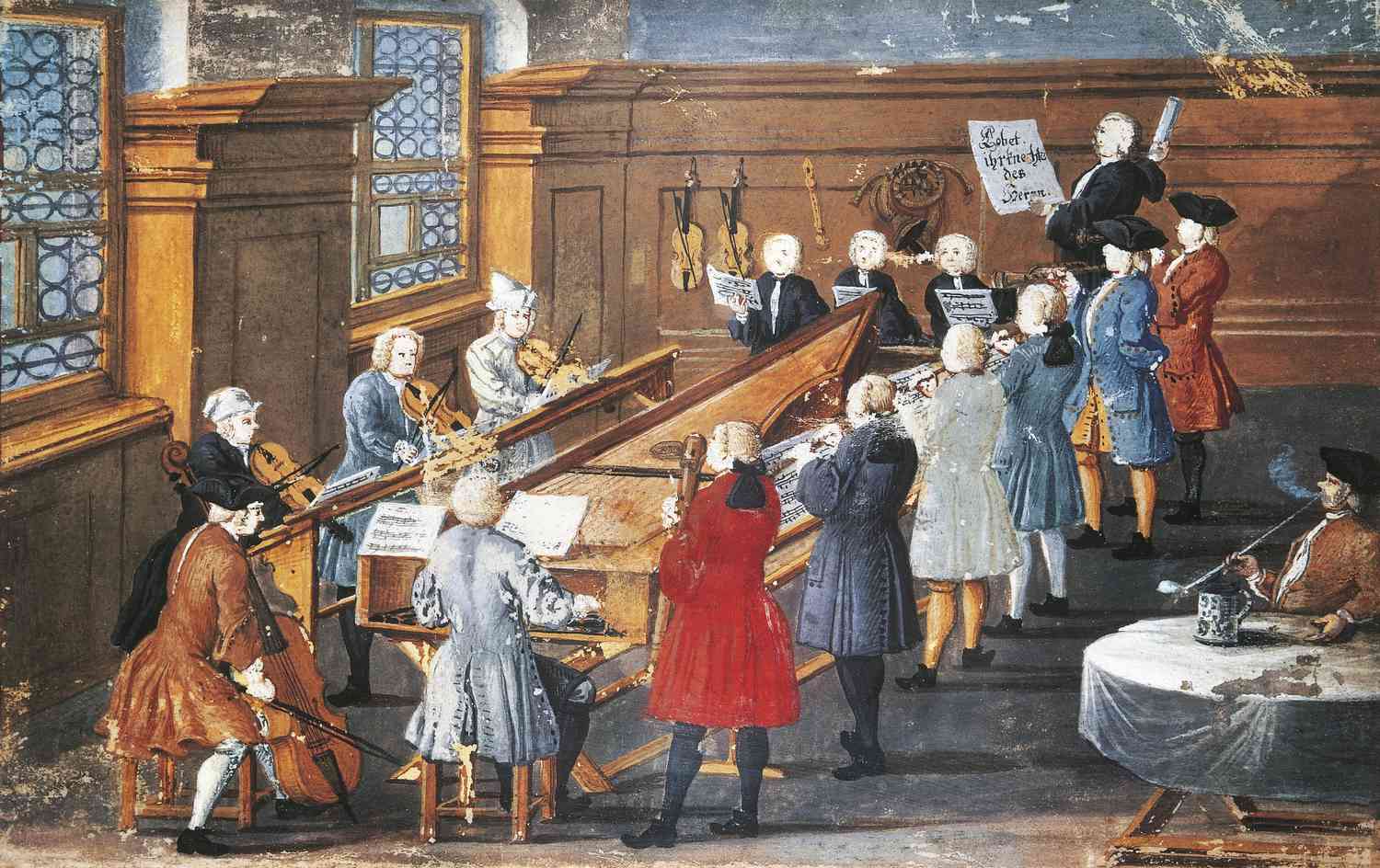
The Complete History of Baroque Music (1600–1750)
Baroque music represents one of the most influential eras in Western cultural history. Spanning approximately from 1600 to 1750, it ushered in groundbreaking developments in musical form, instrumentation, harmonic language, and expressive intent. The Baroque era marked the transition from the Renaissance’s polyphonic refinement to a new world of drama, ornamentation, and heightened emotional depth. This period witnessed the rise of opera, the emergence of the tonal system, the evolution of orchestras, and the flourishing of instrumental virtuosity. Today, Baroque music is celebrated for its brilliance, clarity, and timeless artistic beauty.
1. The Historical Background of the Baroque Era
The Baroque period did not emerge from a vacuum. It was shaped by large-scale political, cultural, and intellectual transformations across Europe. The late 16th and early 17th centuries were marked by religious tensions such as the Protestant Reformation and the Catholic Counter-Reformation, movements that deeply influenced artistic production. Churches and courts commissioned music to reinforce spiritual messages and display political prestige.
At the same time, the Age of Discovery expanded Europe’s global awareness, leading to the exchange of ideas, instruments, and artistic traditions. Scientific innovations by figures like Galileo Galilei, Johannes Kepler, and Isaac Newton transformed how people understood the world. Their emphasis on observation and experimentation mirrored musical experimentation happening in Italy and beyond.
In this context, Baroque music emerged as an art that sought to move listeners emotionally, reflecting the artistic ideals of the period. Composers wanted their music to speak directly to the soul, using harmony, rhythm, contrast, and expressive melodies as tools of persuasion.
2. The Early Baroque (1600–1650): Foundations of a New Musical Style
The early Baroque period was an age of innovation, where composers broke away from the dense polyphony of the Renaissance. The goal was to create music that was more expressive, more dramatic, and more closely tied to the meaning of the text in vocal works.
The Birth of Monody
One of the most important developments was monody, a style featuring a solo voice supported by a simple instrumental accompaniment. This approach allowed singers to convey emotion more clearly and directly than the intricate overlapping lines of Renaissance music. Monody laid the groundwork for modern vocal music, opera, and later, the classic tradition of solo singing.
The Florentine Camerata
The Florentine Camerata, a group of intellectuals, musicians, and poets, played a decisive role. They studied Greek drama and believed that ancient tragedies were sung rather than spoken. Their attempt to recreate this expressive musical storytelling led to the invention of opera, a genre that would become central to Baroque culture. Early operas by Jacopo Peri and Giulio Caccini introduced dramatic singing, recitative, and expressive arias.
The Importance of Basso Continuo
Another revolution was the basso continuo, a continuous bass line played by instruments such as the cello, bass viol, organ, or harpsichord. The continuo provided harmonic structure, allowing composers to explore more varied chord progressions. It created a flexible and expressive foundation that shaped the sound of Baroque music for 150 years.
Monteverdi and the Rise of Drama in Music
Claudio Monteverdi, a towering figure in early Baroque music, transformed opera into a powerful emotional experience. Works like L’Orfeo (1607) integrated expressive recitative, virtuosic singing, and colorful orchestration. Monteverdi also experimented with dissonance and contrast, crafting music full of tension, passion, and dramatic clarity.
Sacred and Instrumental Beginnings
In Protestant countries, sacred music flourished with composers like Heinrich Schütz, who blended Italian innovations with German traditions. Keyboard composers such as Girolamo Frescobaldi shaped the early forms of toccatas, ricercars, and variations, influencing organists across Europe.
3. The Middle Baroque (1650–1700): Structure, Style, and National Identity
The middle Baroque saw the stabilization of musical forms and the emergence of distinctive national styles.
The Establishment of Tonality
Perhaps the most important theoretical achievement of the Baroque was the development of tonality—the system based on major and minor keys. This new harmonic language provided clarity and direction, and it became the foundation of Western music until the 20th century.
The Rise of the Orchestra
During this period, instrumental ensembles became more organized. Composers began writing specifically for families of instruments—strings, woodwinds, brass—leading to the first proto-orchestras. The violin rose to prominence, particularly in Italy, where makers like Stradivari, Amati, and Guarneri created instruments of unparalleled quality.
National Styles Take Shape
Distinctive national musical identities emerged:
- Italy emphasized melody, virtuosity, and expressive opera.
- France, under Jean-Baptiste Lully, developed a graceful, refined style anchored by dance rhythms and ornate ornamentation.
- Germany absorbed influences from both Italy and France, synthesizing them into a rich and balanced musical style.
Sacred Music Flourishes
In the middle Baroque, sacred music retained an important role. Composers such as Dieterich Buxtehude advanced organ music and inspired a young Johann Sebastian Bach. Lutheran traditions emphasized rich chorales and elaborate church cantatas.
The Spread of Opera
Opera spread across Europe and became a prestigious entertainment form for courts and wealthy patrons. The operatic overture, aria, and recitative evolved, giving opera a clearer structure and greater dramatic impact.
4. The Late Baroque (1700–1750): The Golden Age of Complexity and Virtuosity
The late Baroque period represents the apex of musical complexity and artistic sophistication. Composers refined existing forms and produced some of the most enduring works in Western music.
The Flourishing of Instrumental Music
Instrumental music reached new heights with the development of:
- The solo concerto
- The concerto grosso
- The fugue
- The suite
- The trio sonata
Italian composers such as Antonio Vivaldi, Tomaso Albinoni, and Arcangelo Corelli contributed immensely to these genres. Vivaldi’s The Four Seasons remains one of the most iconic compositions of the period.
Johann Sebastian Bach: Master of Counterpoint
Johann Sebastian Bach stands as the pinnacle of Baroque artistry. His mastery of counterpoint, harmony, and form produced masterpieces such as:
- The Well-Tempered Clavier
- Brandenburg Concertos
- Mass in B Minor
- St. Matthew Passion
Bach synthesized the entire Baroque tradition into music of unsurpassed depth and complexity.
George Frideric Handel: The Voice of the Baroque Stage
Handel, a cosmopolitan composer fluent in German, Italian, and English styles, dominated the world of opera and oratorio. Works such as Messiah, Water Music, and Music for the Royal Fireworks remain central to the concert repertoire.
Scarlatti and the Rise of Keyboard Virtuosity
Domenico Scarlatti composed over 500 keyboard sonatas that pushed the boundaries of harpsichord technique. His inventive harmonies, rapid scales, and bold modulations anticipated later classical and even modern styles.
The End of an Era
The Baroque period traditionally ends in 1750, marked by Bach’s death. By then, the musical world was transitioning toward the lighter, clearer textures of the Classical period, led by composers such as Haydn and Mozart.
5. Characteristics of Baroque Music
Baroque music is defined by several essential traits:
A. Dramatic Expression and Emotional Intensity
The Baroque philosophy was rooted in the Doctrine of the Affections, which held that music should evoke specific emotions such as joy, sadness, anger, or devotion. Composers used melody, harmony, and texture to communicate these feelings clearly.
B. Contrast as a Creative Tool
Contrast played a central role in Baroque music:
- Soloist vs. ensemble
- Loud vs. soft
- Fast vs. slow
- Different instrumental groups
This love of contrast gave rise to new forms such as the concerto.
C. Ornamentation and Improvisation
Baroque musicians frequently improvised ornaments such as trills, mordents, arpeggios, and rapid runs. Performers were expected to add personal flair, making each performance unique.
D. Strong Rhythmic Drive
Baroque music often features repeating rhythmic patterns and a steady pulse, creating a sense of movement, energy, and forward momentum.
E. Unity of Mood
A single movement typically maintained one emotional character from beginning to end, emphasizing expressive clarity.
6. The Influence and Legacy of Baroque Music
The Baroque period fundamentally shaped Western music. Many musical concepts that are now taken for granted were either invented or perfected during this era.
Birth of Tonality
The modern system of major and minor keys—still used in classical, jazz, pop, and film music—originated in the Baroque.
Foundations of the Modern Orchestra
The structure of the orchestra, with divided string sections and contrasting winds and brass, took root during this time.
Opera Becomes a Dominant Art Form
Opera, born around 1600, became one of the most enduring artistic genres, influencing culture for centuries.
Rise of Virtuosity
Baroque composers expanded instrumental technique, transforming the violin, keyboard, and wind instruments into vehicles for expressive brilliance.
Enduring Works
Bach’s fugues, Vivaldi’s concertos, and Handel’s oratorios remain essential pillars of the classical repertoire.
20th-Century Revival
Beginning in the early 1900s, scholars and performers revived interest in Baroque music, leading to historically informed performances using period instruments. This movement brought new appreciation for the unique colors and textures of Baroque sound.
Conclusion
The history of Baroque music is a story of artistic revolution. From its origins in the early 1600s to its culmination in 1750, the Baroque era reshaped the musical landscape through creativity, emotional expression, and structural innovation. It brought forth new genres, refined instrumental techniques, and produced some of the most enduring masterpieces in Western art.
Today, Baroque music continues to enchant audiences with its elegance, complexity, and expressive power. Its legacy lives on in concert halls, opera houses, film scores, and the very foundations of modern musical language. The Baroque era remains not merely a historical period but a lasting source of inspiration for musicians, scholars, and listeners around the world.
Comments are closed