
Amy Marcy Beach – A Complete Biography
Introduction
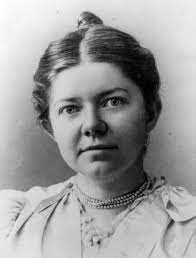
Amy Marcy Cheney Beach (later known as Amy Beach or Mrs. H. H. A. Beach) stands as one of the most important American composers of the late 19th and early 20th centuries. A virtuoso pianist and a prolific composer, she was among the first American women to achieve recognition for large-scale art music in a field dominated by men. Her output spans songs, chamber music, piano works, choral pieces, and orchestral works — including the landmark Gaelic Symphony, which helped establish her reputation domestically and abroad. This biography traces her life from a prodigious childhood through a mature creative career, examining the musical, social, and personal forces that shaped her work.
Childhood
Amy Marcy Cheney was born on September 5, 1867, in Henniker, New Hampshire, into a family that encouraged music. From a very early age she displayed striking musical abilities: she sang accurately as a toddler, was able to improvise and remember melodies, and reportedly taught herself to read by age three. Her mother, Clara Marcy Cheney, was musically inclined, and the household provided a fertile environment for Amy’s early development. By the time she was a young child she had composed short piano pieces and demonstrated an exceptional ear and memory for music.
The family moved to Boston when Amy was a child, and there she received piano lessons that developed her talent. She gave her first public performances as a teenager and was already recognized locally as a gifted pianist. Though gifted, her early musical training followed the typical pattern for a young woman of her social class in that era: thorough pianistic instruction focused on performance and repertoire rather than formal conservatory training in composition or orchestration.
Youth
As a young adult Amy Cheney’s reputation as a pianist expanded. In Boston’s lively musical circles she encountered many leading American musicians and composers of the period. In 1885, at the age of eighteen, she married Dr. Henry Harris Aubrey Beach, a Boston surgeon twenty-four years her senior. The marriage brought Amy into a higher social standing and shaped the course of her career. Dr. Beach supported her musically but also set social expectations: Amy limited public performance and concentrated increasingly on composition, publishing and performing under the name “Mrs. H. H. A. Beach.”
During these years she composed prolifically for piano and voice, building a body of art songs and smaller works that would establish her as a serious composer. Her Mass in E-flat (performed in 1892) and the later Gaelic Symphony (completed in the mid-1890s) marked an artistic maturation: critics and colleagues recognized that she had the technical and expressive resources to write convincingly in large forms.
Adulthood
The middle years of Amy Beach’s life combined public achievement with private responsibility and challenge. The premiere of the Gaelic Symphony in 1896 by the Boston Symphony Orchestra was a watershed: it made her one of the first American women to have a symphony performed by a major orchestra and brought significant attention. The symphony’s use of Celtic-inspired tunes reflected a wider contemporary interest in folk-derived national styles and positioned Beach within the generation of American composers seeking a distinctive voice for the nation’s classical music.
Beach continued to write ambitious large-scale works, including a piano concerto that showcased both her pianistic virtuosity and her compositional ambition. She also composed chamber music and an extraordinary number of songs — many reflecting the Romantic tradition with lyrical voice writing and rich piano parts. Her chamber works (notably the Piano Quintet, Op. 67, and the Violin Sonata, Op. 34) became important staples of her catalog and were often performed during her lifetime.
Tragedy and change arrived in 1910 with the deaths of her husband and, months later, her mother. After this double loss, Beach traveled to Europe for a time, where she sought renewal and new musical contacts. She performed in Europe and absorbed newer currents of style; in later years her music showed some experimentation with newer harmonic language while remaining rooted in late-Romantic expressivity.
Back in the United States, she remained an active performer and composer, giving concerts in which she frequently played her own works. She also participated in musical organizations, taught privately in limited contexts consistent with choices she had made earlier in life, and continued to publish works. Her reputation during the first decades of the 20th century was substantial: she was recognized as a central figure in American music and as a pathbreaking woman composer who negotiated both social expectations and artistic ambition.
Major Compositions
Amy Beach’s oeuvre is wide-ranging. While she wrote hundreds of songs and many piano pieces, a few larger works have been particularly prominent:
- Mass in E-flat major (Op. 5) — An early large-scale choral-and-orchestra work that helped establish her credibility in serious composition and gained performances by respected ensembles.
- Symphony in E minor, “Gaelic” (Op. 32) — Completed in the mid-1890s and premiered by the Boston Symphony Orchestra in 1896, the Gaelic Symphony was notable both as a work and as a cultural milestone: it was the first symphony composed and published by an American woman to reach such public performance. Drawing on English, Irish, and Scottish melodic material, the symphony aligned with contemporary nationalist impulses and displayed Beach’s skill in orchestral color and formal design.
- Piano Concerto in C-sharp minor (Op. 45) — A virtuosic work that combined the composer’s gifts as a pianist with her command of large-scale orchestral form. Beach performed this concerto herself, proving her dual strength as performer-composer.
- Chamber works — The Violin Sonata (Op. 34), the Piano Quintet in F-sharp minor (Op. 67), and other chamber pieces were widely admired during her lifetime for their craftsmanship, lyricism, and dense Brahms-influenced textures filtered through Beach’s own melodic voice.
- Songs and piano miniatures — Beach’s songs, numbering in the hundreds, remain important for their melodic charm and idiomatic writing for voice and piano. Her art songs often set contemporary poetry and display a sensitive union of text and music.
Across genres, Beach’s style is primarily late-Romantic, often compared to Brahms and other European models, yet anchored in an American sensibility and musical life. In later works she explored more adventurous harmonies and textures, reflecting a composer who continued to evolve.
Death
Amy Beach died on December 27, 1944, in New York City. Her later years were quieter but still productive; she continued to compose, revise earlier works, and to be remembered as an important figure in American musical history. After her death, performances of her music declined for several decades as musical fashions changed, but late-20th- and early-21st-century scholarship and advocacy have helped revive interest in her works. Today she is recognized not only for the historical significance of achievements like the Gaelic Symphony but also for the quality of her chamber music, songs, and piano pieces.
Conclusion
Amy Marcy Beach’s life bridges two significant narratives in American musical history: the search for a national musical identity in the late 19th century, and the gradual, hard-won acceptance of women as creators of serious art music. A wunderkind pianist, a disciplined self-educated composer, and a public figure who negotiated the demands of social position and artistic calling, Beach left a body of music that rewards re-examination. Her larger orchestral works demonstrated the breadth of her ambition; her chamber music and songs reveal a constant refinement of craft and subtlety of expression. As scholarship and performance continue to rediscover her output, Beach’s work speaks to modern audiences with lyric warmth, formal assurance, and a distinctive American voice shaped by personal determination and musical curiosity.
Comments are closed