Introduction
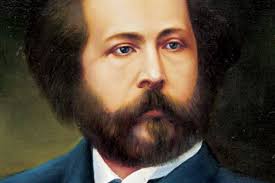
Édouard Lalo was one of the most distinctive voices of nineteenth-century French music. Although he achieved widespread recognition relatively late in life, his compositions helped revitalize French instrumental music during a period when opera dominated the nation’s musical culture. Best known for his celebrated Symphonie espagnole, Lalo combined French elegance with German structural discipline and colorful Spanish influences, creating a musical language that was both original and memorable.
Born in 1823 and active during the Romantic era, Lalo contributed significantly to chamber music, orchestral works, concertos, ballet, and opera. His persistence in the face of decades of professional struggle eventually earned him a respected place among the leading French composers of his generation.
Childhood
Édouard-Victoire-Antoine Lalo was born on January 27, 1823, in Lille, a city in northern France. His family was of Spanish ancestry, a heritage that would later influence some of his most famous compositions. Although his father came from a military background and hoped his son would pursue a more conventional career, young Édouard displayed a remarkable talent and passion for music from an early age.
As a child, Lalo studied violin and cello at the Conservatory of Lille. His instructors quickly recognized his natural abilities, and he developed strong technical skills on string instruments. Music became the central focus of his life, despite his family’s reservations.
The cultural environment of Lille exposed him to both French and broader European musical traditions. During these formative years, he became fascinated by the works of great composers such as Beethoven and Mozart, whose influence would remain evident throughout his career.
Youth
At the age of sixteen, determined to pursue music professionally, Lalo left his family home and moved to Paris against his father’s wishes. The decision was courageous but risky. He arrived in the French capital with limited financial resources and few connections.
In Paris, he studied violin under the renowned teacher François-Antoine Habeneck at the Paris Conservatory. Habeneck was one of the most respected conductors and educators in France and played an important role in introducing French audiences to the symphonic masterpieces of Beethoven.
Because financial support from his family was scarce, Lalo supported himself by giving music lessons and performing as a violinist. Life was difficult, and success did not come quickly. Nevertheless, these years allowed him to refine his skills as both a performer and composer.
During the 1840s and 1850s, he composed songs, chamber works, and instrumental pieces. Although these early compositions received little attention, they demonstrated his growing maturity and his commitment to instrumental music, a genre that was less fashionable in France than opera at the time.
In 1855, Lalo became associated with the Armingaud Quartet, one of the most respected chamber ensembles in Paris. Playing the viola in the group, he gained valuable experience performing works by Beethoven, Schumann, Mendelssohn, and other German masters. This exposure profoundly influenced his compositional style.
Adulthood
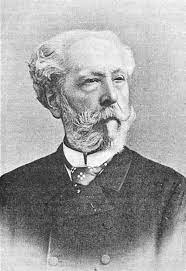
Lalo’s adulthood was marked by perseverance. For many years, he remained relatively unknown despite his talent. While many composers achieved fame in their twenties or thirties, Lalo struggled to gain recognition until he was well into middle age.
A turning point came in 1865 when he married Julie Besnier de Maligny, a distinguished contralto singer. Julie became a major source of encouragement and inspiration. Through her influence, Lalo developed a stronger interest in vocal and theatrical works, particularly opera.
In the late 1860s, he composed Fiesque, an ambitious opera based on a play by Friedrich Schiller. Unfortunately, despite receiving favorable attention in a competition, the opera was never staged during his lifetime. This disappointment was one of many setbacks that characterized his career.
The situation changed dramatically during the 1870s. Following the Franco-Prussian War, French audiences became more receptive to orchestral music, creating opportunities for composers like Lalo. His breakthrough came in 1875 with the premiere of Symphonie espagnole, performed by the famous Spanish violin virtuoso Pablo de Sarasate.
The work was an immediate success and established Lalo’s reputation internationally. Suddenly, after decades of obscurity, he became recognized as a major composer.
Throughout the following years, he produced a series of important works, including concertos, orchestral pieces, ballets, and operas. His reputation continued to grow, and he became an influential figure in French musical life.
Major Compositions
Symphonie espagnole (1874–1875)
Lalo’s most famous composition is undoubtedly Symphonie espagnole for violin and orchestra. Written for Pablo de Sarasate, the work blends virtuosic violin writing with rhythms and melodies inspired by Spanish music.
Although often described as a violin concerto, it differs from the traditional concerto form by incorporating symphonic elements and five movements. The work remains a cornerstone of the violin repertoire and is regularly performed around the world.
Violin Concerto in F Minor
This concerto showcases Lalo’s gift for lyrical melodies and brilliant orchestration. Though overshadowed by Symphonie espagnole, it is admired by violinists for its technical challenges and expressive qualities.
Cello Concerto in D Minor (1876)
One of the finest cello concertos of the Romantic period, this work combines dramatic intensity with elegant melodic writing. It remains a favorite among professional cellists.
Namouna (1882)
Namouna is a ballet that initially received a mixed reception from audiences. However, many musicians admired its innovative orchestration and rhythmic vitality. Later composers, including Claude Debussy and Maurice Ravel, recognized its artistic importance.
Symphony in G Minor (1887)
Lalo’s only surviving symphony demonstrates his mastery of orchestral form. Combining Romantic expressiveness with classical structure, the work has been praised for its energy, craftsmanship, and colorful orchestration.
Le Roi d’Ys (1888)
This opera became Lalo’s greatest theatrical success. Based on a Breton legend about the mythical city of Ys, the work was finally staged when the composer was sixty-five years old. It received enthusiastic acclaim and remains the most frequently performed of his operas.
Chamber Music
Lalo also made significant contributions to chamber music, including:
- String Quartet in E-flat Major
- Three Piano Trios
- Violin Sonata
- Cello Sonata
These compositions helped strengthen the tradition of French chamber music during the nineteenth century.
Death
In his final years, Lalo enjoyed the recognition that had eluded him for much of his life. The success of Le Roi d’Ys and his orchestral works finally secured his reputation as one of France’s leading composers.
Even in old age, he remained active and continued composing. He began work on another opera, La Jacquerie, but was unable to complete it.
Édouard Lalo died in Paris on April 22, 1892, at the age of sixty-nine. He left behind several unfinished projects and a growing legacy. He was buried in the famous Père Lachaise Cemetery in Paris, where many notable French cultural figures are interred.
Following his death, La Jacquerie was completed by composer Arthur Coquard and later performed.
Conclusion
Édouard Lalo’s career is a remarkable story of determination and artistic conviction. For decades, he worked in relative obscurity, composing music that often went unrecognized by the public. Yet he never abandoned his artistic vision.
Today, Lalo is remembered as a crucial figure in the development of French Romantic music. His works brought new vitality to French instrumental composition at a time when opera dominated the musical landscape. Through masterpieces such as Symphonie espagnole, the Cello Concerto, the Symphony in G Minor, and Le Roi d’Ys, he demonstrated an exceptional gift for melody, orchestration, and dramatic expression.
Although he achieved fame late in life, his music has endured far beyond his lifetime. Modern audiences continue to admire the passion, elegance, and originality that characterize his work. As a result, Édouard Lalo remains an important and respected figure in the history of classical music.
Comments are closed