Introduction
Emmanuel Chabrier was one of the most original and influential French composers of the Romantic era. Although he achieved widespread recognition relatively late in life, his music helped shape the future of French composition and inspired later masters such as Claude Debussy, Maurice Ravel, and Francis Poulenc. Best known for his colorful orchestral works, operas, piano music, and songs, Chabrier brought a distinctive blend of elegance, humor, rhythmic vitality, and harmonic innovation to French music. His career was unusual because he spent much of his adult life working as a government civil servant before devoting himself entirely to composition.
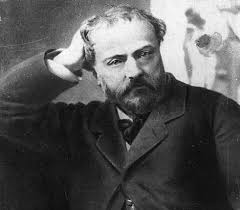
Childhood
Emmanuel Alexis Chabrier was born on January 18, 1841, in the town of Ambert, located in the Auvergne region of central France. He was the only son of Jean Chabrier, a lawyer, and Marie-Anne-Évelina Durosay. Although the family enjoyed a comfortable middle-class lifestyle, they did not initially encourage a professional musical career for their son.
From an early age, Chabrier demonstrated remarkable musical ability. He began piano lessons at the age of six and quickly showed unusual talent both as a performer and as a composer. By the time he was eight years old, he had already written small piano pieces and dances. His childhood was enriched by the presence of his beloved nurse, Anne Delayre, affectionately known as “Nanine,” who remained one of the most important figures in his life.
In 1852, the family moved to Clermont-Ferrand, where Chabrier continued his musical education while attending school. His natural creativity flourished despite the absence of formal conservatory training during these formative years.
Youth
In 1857, the Chabrier family relocated to Paris, offering the young musician greater exposure to the cultural life of France’s capital. However, his parents insisted that he pursue a respectable profession rather than a career in music. Consequently, Chabrier enrolled in law studies while continuing his musical training privately.
He studied piano with Edward Wolff and received instruction in composition from Théophile Semet and Aristide Hignard. Unlike many French composers of his generation, he never attended the Paris Conservatoire. This lack of academic training ultimately became one of his strengths, allowing him to develop a highly personal musical style free from many conventional rules.
After completing his legal studies, Chabrier secured a position in the French Ministry of the Interior in 1862. Although he spent his days working as a civil servant, his evenings were devoted to music, literature, and art. During this period, he became acquainted with some of the most important cultural figures in Paris, including writers, painters, and musicians who would profoundly influence his artistic development.
Adulthood
Throughout the 1860s and 1870s, Chabrier balanced his government career with increasingly serious musical pursuits. He became a prominent figure in Parisian artistic circles and formed friendships with painters such as Édouard Manet, Edgar Degas, and Henri Fantin-Latour, as well as writers including Émile Zola and Stéphane Mallarmé. He was also an early collector of Impressionist paintings, acquiring works before they became widely appreciated.
In 1873, he married Marie Alice Dejean. The couple had three sons, although one died shortly after birth. Despite family responsibilities and professional obligations, Chabrier continued composing and gradually established a reputation among musicians.
A turning point came in 1880 when he traveled to Munich and attended a performance of Richard Wagner’s Tristan und Isolde. The experience profoundly affected him and convinced him that he must devote himself completely to music. Shortly afterward, he resigned from the Ministry of the Interior and became a full-time composer at the age of thirty-nine.
The following years brought increasing success. His compositions gained recognition in France and abroad, particularly for their originality, brilliant orchestration, and innovative harmonies. Although his operatic ambitions often faced practical obstacles, his reputation among fellow composers continued to grow.
Major Compositions
Chabrier’s catalog is relatively small compared to many of his contemporaries, but it contains numerous masterpieces that influenced later generations.
España (1883)
Perhaps his most famous work, España, was inspired by a journey through Spain. The piece captures Spanish rhythms and colors with extraordinary brilliance and remains one of the most popular orchestral works of the nineteenth century.
Joyeuse Marche (1888)
Joyeuse Marche is celebrated for its exuberance, energy, and festive spirit. It became one of the composer’s most frequently performed orchestral works.
L’Étoile (1877)
L’Étoile is a comic opera notable for its wit, charm, and imaginative orchestration. Though not immediately successful, it later became recognized as one of the finest examples of French operatic comedy.
Gwendoline (1886)
Gwendoline demonstrates Chabrier’s admiration for Wagner while retaining a distinctly French character. The opera showcased his growing dramatic ambitions and orchestral sophistication.
Pièces Pittoresques (1881)
Pièces pittoresques consists of ten piano pieces that many critics consider among the most important French piano works of the nineteenth century. Their harmonic language anticipated developments later associated with Debussy and Ravel.
Trois Valses Romantiques (1883)
Trois Valses Romantiques is admired for its elegance, technical brilliance, and inventive harmonic writing.
In addition to these works, Chabrier composed numerous songs, piano pieces, and stage works that contributed significantly to the development of French music. His influence extended far beyond the size of his output.
Death
During the final years of his life, Chabrier’s health deteriorated significantly. He suffered from a severe neurological illness, now generally believed to have been caused by syphilis. Financial difficulties and disappointment over the limited success of some of his theatrical works further contributed to his emotional distress.
Despite these hardships, he continued working on new projects, including the unfinished opera Briséïs. His physical and mental condition steadily worsened, and by the early 1890s he was seriously incapacitated.
Emmanuel Chabrier died in Paris on September 13, 1894, at the age of fifty-three. He was buried in Montparnasse Cemetery. His death marked the loss of one of the most innovative voices in French music.
Conclusion
Emmanuel Chabrier occupies a unique place in music history. A self-made composer who spent much of his life outside the traditional musical establishment, he developed a style distinguished by originality, humor, vivid orchestration, and harmonic daring. His works bridged the gap between French Romanticism and the emerging musical modernism of the late nineteenth and early twentieth centuries.
Although he never achieved the fame of some of his contemporaries during his lifetime, his influence on later composers proved immense. Figures such as Claude Debussy, Maurice Ravel, Erik Satie, and Francis Poulenc admired his music and drew inspiration from his innovative approach to harmony and orchestration. Today, Chabrier is recognized as one of the key architects of modern French music.
His legacy endures through a body of work that combines technical mastery with charm, spontaneity, and imagination. Whether through the vibrant energy of España, the sophistication of his piano compositions, or the wit of his operas, Emmanuel Chabrier remains a beloved and respected figure whose contributions continue to enrich the classical music repertoire.
Comments are closed