Introduction
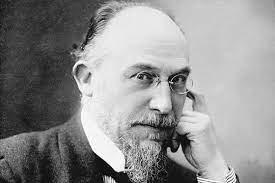
Erik Satie was one of the most original and influential composers in the history of Western music. Born in France during the second half of the nineteenth century, he developed a highly distinctive musical style that challenged the conventions of Romanticism and anticipated many of the innovations of twentieth-century music. Known for his simplicity, wit, and unconventional approach to composition, Satie became a central figure in the artistic circles of Paris and influenced composers such as Claude Debussy, Maurice Ravel, and later members of Les Six.
His works, especially the famous Gymnopédies and Gnossiennes, remain among the most recognizable pieces in classical piano literature. Throughout his life, Satie cultivated an eccentric personality, often blurring the lines between seriousness and humor. Although he experienced periods of poverty and obscurity, his ideas transformed modern music and left a lasting legacy that continues to inspire musicians, composers, and artists around the world.
Childhood
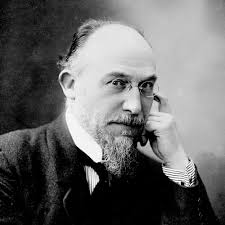
Erik Alfred Leslie Satie was born on May 17, 1866, in the port city of Honfleur. He was the eldest of five children born to Alfred Satie, a shipping broker and translator, and Jane Leslie Anton, who was of Scottish descent.
Satie’s early years were marked by both cultural richness and personal tragedy. His mother introduced him to literature and music, fostering his creative imagination. However, when she died in 1872, six-year-old Erik and his brother were sent to live with their grandparents in Honfleur.
During this period, Satie received his first formal music lessons from a local organist. Although these lessons provided a foundation in music, he found traditional instruction uninspiring. Nevertheless, the medieval architecture, religious ceremonies, and atmosphere of Normandy left a profound impression on his artistic sensibilities.
In 1878, after the death of his grandmother, Satie returned to Paris to live with his father. There, he entered the Paris Conservatory, one of Europe’s most prestigious music institutions.
Youth
Satie’s experience at the Paris Conservatory was largely unsuccessful. Teachers considered him lazy, unmotivated, and lacking in technical discipline. His unconventional musical instincts often clashed with the rigid academic standards of the institution. As a result, he earned poor evaluations and eventually left the Conservatory.
Despite these setbacks, Paris exposed Satie to a vibrant cultural environment. He became fascinated by literature, visual art, and emerging artistic movements. During the 1880s, he briefly served in the French military but was discharged after only a short period.
Seeking independence, Satie immersed himself in the bohemian life of Paris, particularly in the artistic district of Montmartre. He worked as a pianist in cafés and cabarets, including the famous Le Chat Noir. These experiences brought him into contact with poets, painters, and intellectuals who were challenging traditional artistic norms.
It was during this period that Satie began composing works that reflected his unique musical voice. Rejecting the emotional excesses of Romantic music, he favored clarity, repetition, simplicity, and subtle humor. His early compositions attracted attention from avant-garde artists and established his reputation as a musical innovator.
Adulthood
The 1890s marked a significant period of artistic development for Satie. He became associated with the mystical Rosicrucian movement led by Joséphin Péladan and composed music for religious ceremonies and theatrical productions. Although he eventually distanced himself from the movement, these experiences influenced his aesthetic outlook.
One of the most notable events of his personal life was his brief romantic relationship with the painter Suzanne Valadon. The relationship lasted only a few months but deeply affected Satie. It remained the only known serious romantic involvement of his life.
Financial difficulties were a constant challenge. To reduce expenses, Satie moved to the Paris suburb of Arcueil in 1898. He lived there for the remainder of his life in modest conditions. Despite limited resources, he continued composing and cultivating his artistic identity.
In an effort to strengthen his technical skills, Satie enrolled at the Schola Cantorum in Paris in 1905. There he studied counterpoint and composition, demonstrating a commitment to refining his craft. The education he received enabled him to combine his unconventional ideas with greater structural sophistication.
During the early twentieth century, Satie gained increasing recognition. He collaborated with leading artists, writers, and performers. His friendships included figures such as Jean Cocteau and Pablo Picasso. Together they participated in groundbreaking artistic projects that merged music, theater, visual art, and dance.
Satie became an influential mentor to younger composers. His emphasis on simplicity, irony, and innovation resonated with a new generation seeking alternatives to Romantic and Impressionist traditions. By the 1920s, he was widely regarded as a pioneer of modern music.
Major Compositions
Erik Satie’s musical output was relatively modest in size but enormous in influence. His most significant works include:
Gymnopédies (1888)
The three Gymnopédies are among Satie’s most celebrated compositions. Characterized by gentle melodies, sparse textures, and meditative atmospheres, these piano pieces remain staples of the classical repertoire. Their simplicity represented a radical departure from the complexity of late Romantic music.
Gnossiennes (1890–1897)
The Gnossiennes are a series of piano works notable for their unconventional structures and mysterious character. Many lack traditional bar lines and employ unusual harmonic progressions, creating a dreamlike quality.
Sarabandes (1887)
These early piano pieces reveal Satie’s developing style. Their rich harmonies and deliberate pacing foreshadow many aspects of his later works.
Pièces Froides (1897)
This collection demonstrates Satie’s growing interest in humor and irony. The titles and performance instructions often contain witty and unconventional remarks.
Trois Morceaux en Forme de Poire (1903)
Translated as “Three Pieces in the Shape of a Pear,” this work humorously challenges expectations regarding musical form. Despite its title, the composition contains seven sections.
Parade (1917)
Created in collaboration with Jean Cocteau and Pablo Picasso, Parade was a ballet that caused controversy upon its premiere. Its innovative use of sounds, visual design, and theatrical concepts anticipated many developments in modern art.
Socrate (1918)
This dramatic symphonic work reflects a more restrained and classical side of Satie’s style. Based on texts from Plato, it is often regarded as one of his greatest achievements.
Relâche (1924)
One of his final major works, Relâche embodied the spirit of Dadaism and experimentation. It demonstrated Satie’s continued willingness to challenge artistic conventions.
Death
By the early 1920s, years of poor health and heavy alcohol consumption had begun to take a toll on Satie. Despite these difficulties, he continued composing and participating in artistic projects.
In 1925, his health deteriorated significantly due to cirrhosis of the liver. He was admitted to a hospital in Paris, where he spent his final weeks.
Erik Satie died on July 1, 1925, at the age of fifty-nine.
After his death, friends and colleagues entered his small apartment in Arcueil and discovered a remarkable collection of unpublished manuscripts, sketches, and personal belongings. Many of these materials revealed previously unknown aspects of his creative life and led to the posthumous publication of additional works.
The discovery further enhanced appreciation for his originality and contributed to the growth of his reputation during the decades that followed.
Conclusion
Erik Satie occupies a unique position in music history. At a time when many composers pursued grandeur and emotional intensity, he championed simplicity, clarity, and innovation. His unconventional personality and artistic independence allowed him to create music unlike anything that had come before.
Although he spent much of his life on the margins of the musical establishment, his influence eventually reached far beyond his own era. Elements of his style can be heard in modern classical music, minimalism, film scores, ambient music, and contemporary popular genres.
Today, Satie is remembered not only as the composer of the Gymnopédies and Gnossiennes but also as a visionary who helped redefine the possibilities of musical expression. His works continue to captivate audiences with their elegance, originality, and timeless beauty, securing his place among the most important composers of modern music.
Comments are closed