Introduction
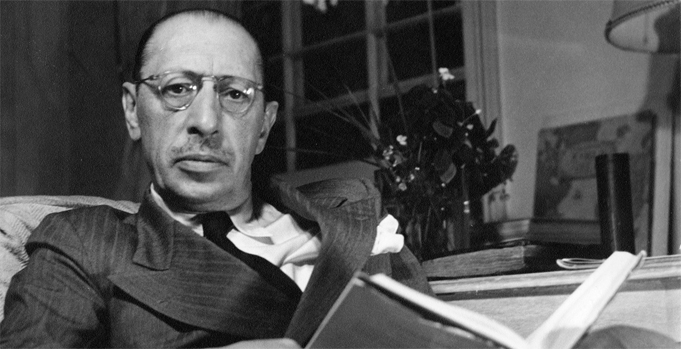
Igor Stravinsky stands among the most influential composers in the history of Western classical music. Renowned for his extraordinary originality, rhythmic innovation, and ability to reinvent his musical style throughout his long career, Stravinsky transformed twentieth-century music. His works challenged audiences, inspired generations of composers, and helped define modernism in music.
Born in Imperial Russia during the late nineteenth century, Stravinsky witnessed dramatic social, political, and cultural changes throughout his life. His career spanned more than six decades, during which he embraced Russian nationalism, neoclassicism, and serialism. From the revolutionary impact of The Rite of Spring to the elegance of his neoclassical works and the intellectual rigor of his later compositions, Stravinsky continually reshaped the musical landscape.
His influence extended far beyond classical music, affecting jazz, film music, ballet, and contemporary composition. Today, he is remembered as one of the greatest and most innovative composers of all time.
Childhood
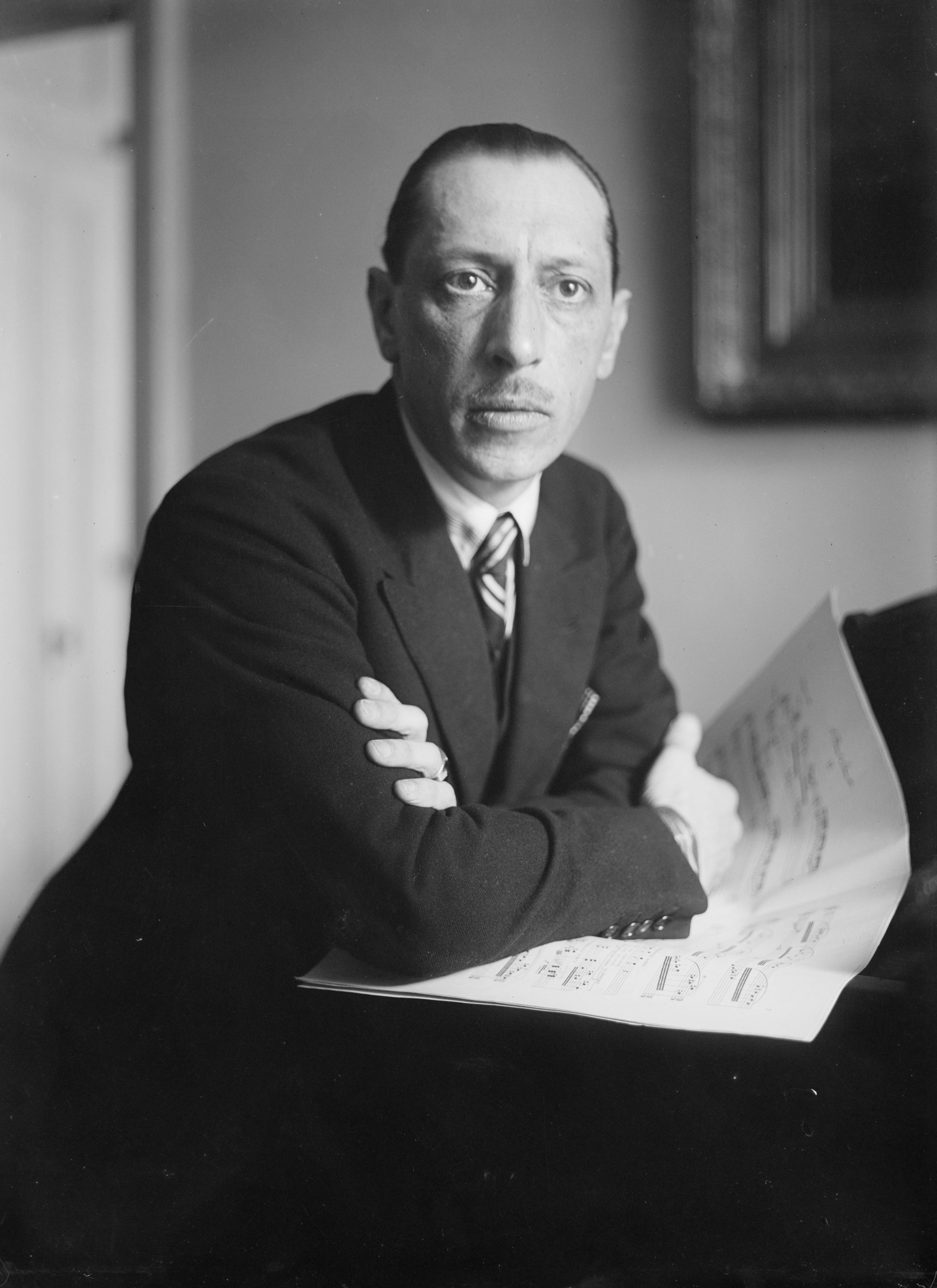
Igor Fyodorovich Stravinsky was born on June 17, 1882, in Oranienbaum, a town near Saint Petersburg, Russia. He was the third of four sons born to Fyodor Stravinsky and Anna Kholodovskaya.
His father was a celebrated bass singer at the Imperial Mariinsky Theatre in Saint Petersburg, while his mother was an accomplished pianist. Growing up in a cultured household, young Igor was surrounded by music from an early age. Distinguished musicians, singers, and artists frequently visited the family home, exposing him to a rich artistic environment.
Despite these influences, Stravinsky did not initially receive intensive musical training. His parents regarded music as a suitable accomplishment but not necessarily as a profession. Nevertheless, he studied piano and developed an appreciation for Russian folk music, opera, and the orchestral repertoire.
As a child, Stravinsky displayed intelligence and curiosity but was not considered a prodigy. He enjoyed literature, history, and languages alongside music. The artistic atmosphere of Saint Petersburg left a lasting impression on him and would later influence many of his compositions.
Youth
Following his parents’ wishes, Stravinsky enrolled at Saint Petersburg University in 1901 to study law. Although he attended classes, his true passion remained music. During this period, he began composing and studying harmony independently.
A pivotal moment in his life occurred when he met Vladimir Rimsky-Korsakov, the son of the famous composer Nikolai Rimsky-Korsakov. Through this friendship, Stravinsky gained access to one of Russia’s most respected musical figures.
Recognizing the young man’s potential, Rimsky-Korsakov agreed to mentor him privately. Under the master’s guidance, Stravinsky studied orchestration, composition, and musical form. This apprenticeship provided him with the technical foundation necessary for his future success.
During the early years of the twentieth century, Stravinsky composed several works that revealed the influence of his teacher. Among these were the Symphony in E-flat Major and Fireworks. These compositions attracted attention in Russian musical circles and demonstrated his growing confidence as a composer.
His reputation expanded significantly when the renowned impresario Sergei Diaghilev heard some of his music. Diaghilev was organizing performances for the Ballets Russes, a groundbreaking ballet company based in Paris. Impressed by Stravinsky’s talent, he commissioned the young composer to create music for a new ballet project.
Adulthood
Stravinsky’s adulthood was marked by remarkable artistic achievements and constant reinvention.
His international breakthrough came in 1910 with the premiere of The Firebird in Paris. The ballet was an enormous success and instantly established him as a major composer. Audiences and critics praised its vivid orchestration, colorful harmonies, and imaginative use of Russian folklore.
He followed this triumph with Petrushka in 1911, a ballet that demonstrated even greater sophistication and originality. The work portrayed the tragic story of a puppet brought to life and featured innovative rhythms and harmonic language.
In 1913, Stravinsky unveiled The Rite of Spring, a work that became one of the most famous and controversial compositions in music history. The premiere sparked a notorious disturbance among audience members. The ballet’s unconventional rhythms, dissonant harmonies, and primitive energy shocked listeners. Although initially controversial, the work later came to be recognized as a masterpiece and a turning point in modern music.
The outbreak of World War I and the Russian Revolution dramatically altered Stravinsky’s life. Unable to return permanently to Russia, he spent many years living in Switzerland and later in France. During this period, financial difficulties encouraged him to experiment with smaller ensembles and new musical forms.
In the 1920s, Stravinsky entered what became known as his neoclassical period. Rather than drawing primarily upon Russian folklore, he looked to the music of earlier centuries for inspiration. Works such as Pulcinella, Octet, and the Symphony of Psalms combined modern techniques with elements of classical and baroque traditions.
Throughout the 1930s, he continued to enjoy international success as both composer and conductor. However, personal tragedy struck when his daughter, wife, and mother died within a relatively short period.
In 1939, Stravinsky emigrated to the United States. He eventually settled in California and became an American citizen in 1945. During his American years, he composed numerous important works, including the Symphony in Three Movements, the opera The Rake’s Progress, and several religious compositions.
The final phase of his career saw another dramatic stylistic transformation. Influenced by younger composers and encouraged by his assistant Robert Craft, Stravinsky embraced serial techniques associated with Arnold Schoenberg. Rather than merely imitating others, he adapted these methods to create a unique late style characterized by clarity, precision, and intellectual depth.
Until the end of his life, Stravinsky remained an active composer, conductor, and public figure. His willingness to evolve artistically distinguished him from many of his contemporaries.
Major Compositions
Stravinsky produced an extensive body of work that spans multiple stylistic periods. Among his most important compositions are:
The Firebird (1910)
This ballet was based on Russian folklore and established Stravinsky’s international reputation. Its brilliant orchestration and vivid storytelling captivated audiences throughout Europe.
Petrushka (1911)
A landmark ballet portraying the emotional struggles of a puppet. The score is notable for its rhythmic vitality and colorful orchestral writing.
The Rite of Spring (1913)
Perhaps his most influential work, this ballet revolutionized twentieth-century music. Its complex rhythms, powerful orchestration, and primal atmosphere transformed modern composition.
Pulcinella (1920)
This ballet marked the beginning of Stravinsky’s neoclassical period. Drawing inspiration from eighteenth-century music, it demonstrated his ability to reinterpret historical styles.
Symphony of Psalms (1930)
One of his most celebrated sacred works, combining choral and orchestral forces in a deeply spiritual and innovative manner.
Symphony in C (1940)
A significant symphonic work showcasing Stravinsky’s mature neoclassical style.
Symphony in Three Movements (1945)
Often viewed as a reflection of World War II, this composition combines energy, drama, and formal sophistication.
The Rake’s Progress (1951)
His final major neoclassical masterpiece, this opera was inspired by a series of paintings and demonstrated his mastery of dramatic composition.
Agon (1957)
A ballet that bridges his neoclassical and serial periods, representing a major milestone in his artistic development.
Threni (1958)
An important sacred work reflecting his late interest in serial composition and biblical themes.
Death
During his final years, Stravinsky remained internationally respected as one of the foremost composers of the twentieth century. Although advancing age brought health challenges, he continued conducting and supervising performances of his works.
In the late 1960s, his health gradually declined. He spent much of his time in New York City, where he continued to receive recognition from musicians, scholars, and audiences around the world.
Igor Stravinsky died on April 6, 1971, in New York City at the age of eighty-eight. His death marked the end of one of the most remarkable careers in music history.
Following his wishes, he was buried on the island cemetery of San Michele in Venice, Italy, near the grave of Sergei Diaghilev, the impresario who had played such a crucial role in launching his career.
Conclusion
Igor Stravinsky’s life was a journey of constant artistic exploration. From his beginnings in Imperial Russia to his status as a global cultural icon, he repeatedly challenged conventions and redefined the possibilities of musical expression.
His revolutionary ballets transformed orchestral music and rhythm, while his later works demonstrated an extraordinary capacity for adaptation and innovation. Few composers have influenced as many generations or shaped as many musical movements.
Today, Stravinsky is remembered not only as a master composer but also as one of the defining artistic figures of the twentieth century. His music continues to be performed throughout the world, inspiring performers, composers, and audiences with its originality, power, and enduring brilliance.
Comments are closed